
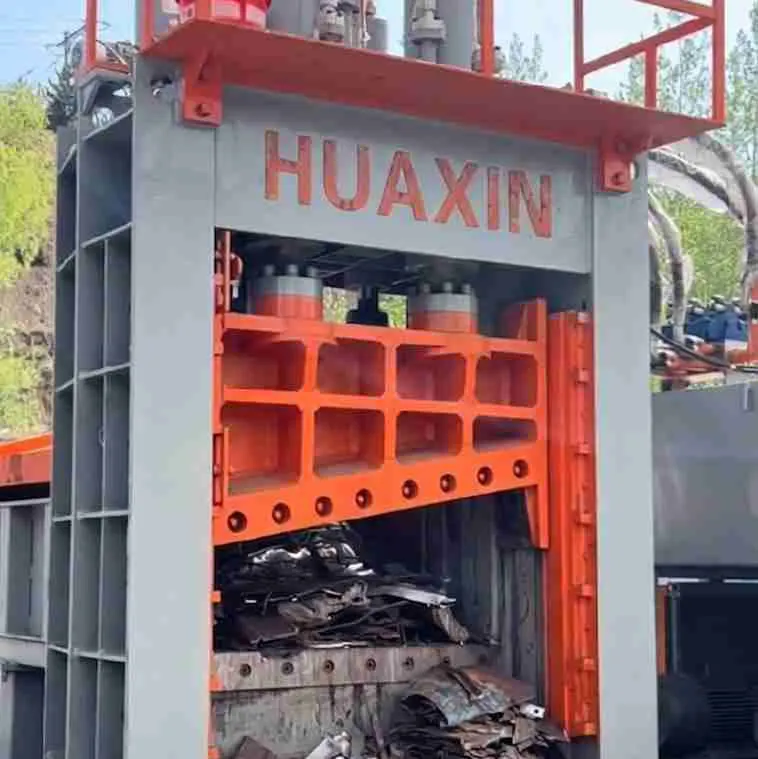
Every yard that buys a production shear learns the same lesson in the first month: the machine was never the bottleneck. The bottleneck is the pile of cut material under the box, waiting for a truck, a conveyor or a loader that is busy somewhere else. At 20 tons an hour that pile forms faster than anyone plans for. For yards evaluating heavy-duty scrap shear setups, operating benchmarks from our 1250 Ton Scrap Metal Shear (Q91-1250) show how hydraulic pressure stability and feeding habits directly shape cost per ton.
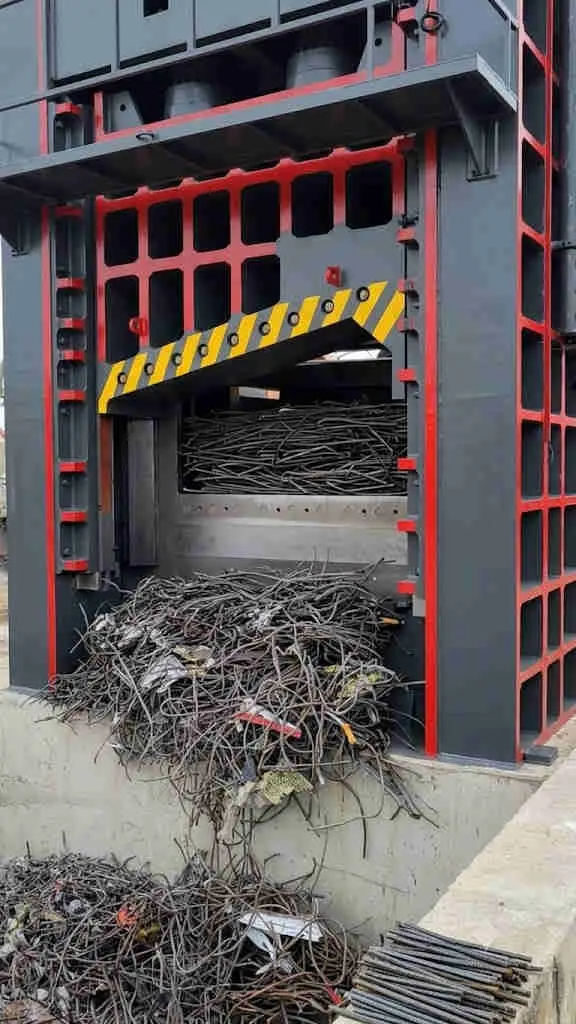
This article is the handling half of a production purchase: how the discharge arrangement, the buffer and the destination get sized against the box’s delivery rate, and what happens when they are not. Figures referenced are from published specifications; the rest is field experience.
The rhythm problem, stated plainly
Cutting is intermittent and hauling is scheduled. The two rates rarely match, and the gap between them is where output accumulates. A shear delivering 20 tons an hour fills a trailer in well under an hour. If the next trailer is two hours away, you have an hour of production that has to sit somewhere.
That somewhere is the specification. Not an afterthought, not a forklift decision made in month two. The buffer volume, the handling method and the destination get decided at quotation, against your layout, because they are what the machine’s output actually lands in.
Three discharge arrangements and what each demands
The Q91-1250 class discharges into whatever your yard can clear at the box’s rate. Three arrangements cover most operations:
- Direct to truck with a small bay. The bay absorbs one trailer’s worth of gap. Works when collection is frequent and predictable. Fails the first week a truck is late.
- Buffer floor with loader handling. More flexible, and the buffer volume is the design decision: enough to absorb the rhythm difference, not so much that handling becomes a second job with its own crew.
- Conveyor to a second stage. Where a baler takes the light fraction or a shredder takes the mixed, the handoff gets specified: drop height, buffer volume, and the cycle rates both stages were sized against.
The line design guide covers how the stages get sized against each other rather than against a rule of thumb.
The diagnostic that costs nothing
Watch the discharge zone at the busiest hour of a normal week and count the minutes material spends banked before it leaves. That number is the specification for whatever you build next. Most yards that run this count discover their handling is sized for the average hour rather than the busy one, and the busy hour is what stops the machine.
The same count tells you whether the problem is the buffer or the destination. A full buffer with trucks leaving on time is a destination problem; a buffer that fills before the truck arrives is a volume problem; and a buffer that never fills but the machine still waits is a loading problem, which the feed diagnostic covers.
What the site plan has to include
Three items belong on the site drawing before the machine is ordered, and all three are cheaper on paper than in concrete:
- Discharge height. The drop from the box to whatever receives the material. Too high and the fall damages the pieces you just sized; too low and the handling cannot reach.
- Buffer footprint. The floor area the accumulation needs at your busiest hour, with the loader’s turning room around it.
- Route out. How loaded material leaves the zone without crossing the feed route. Crossed flows cost minutes every cycle, and minutes at this rate are tons.
The import sequence guide covers the two tracks, factory and site, and why the site track usually sets the installation date.
The honest version of this article
We build shears, and the handling plan is usually the part of a production purchase that decides whether the machine performs. A Q91-1250 in a yard with a cleared discharge plan reaches its band. The same machine behind a full bay waits. The written quotation covers the machine; the site drawing covers everything else, and both should exist before the deposit.
Send your layout, your daily tonnage and your haulage schedule. The recommendation comes back within two business days with the configuration and the flow notes your contractors can build from.
A worked buffer, without invented numbers
Here is the method rather than a figure, because the figure is yours. Watch the discharge zone for one busy hour and count the minutes material spends banked. Multiply those minutes by the machine’s delivery rate in tons per minute. The result is the accumulation your buffer has to absorb between the box and whatever takes the material away. Round it up for the late-truck week, because the late-truck week is when the machine stops.
Two failure modes sit either side of the right answer. A buffer sized for the average hour fills in the busy one and the machine waits with a full bay. A buffer sized for the busiest hour becomes a handling job of its own, with a loader and a crew that the tonnage never justified. The busy-hour count lands between them, and it is an afternoon of watching rather than a consultant’s report.
The cost of crossed flows
One layout mistake shows up in every cycle rather than in any single event: routes that cross. When loaded material leaves across the path feed takes in, the loader waits, the excavator waits, or both share a strip of floor that was sized for one of them. At 20 tons an hour each crossing costs a minute, and a minute per cycle across a shift is tons of output that never appears in a fault log.
The fix is on the drawing, not in the machine. Feed enters from one side, discharge leaves from another, and the two routes stay apart for the whole loop. Where the site makes that impossible, the buffer becomes the separation: material banks on the discharge side while feed continues on the other, and the crossing happens at loader speed rather than at cycle speed. Either version works. What does not work is discovering the crossing after the foundation is poured.
The late-truck week
Every discharge plan gets tested by the week a truck does not arrive. The buffer holds what it was sized for, and then it does not, and the machine waits with a full bay. This is the week that decides whether the plan was real, and it is worth designing for rather than discovering.
Two provisions cover it without overbuilding. A secondary destination for the overflow, even if it is a floor pile that clears by Friday, keeps the machine running when the primary route is blocked. And a haulage schedule with a stated fallback, agreed with your carrier before the machine arrives, turns the late truck from a stop into a reroute. Neither provision costs much at quotation. Both cost a great deal in the week they are needed and missing.
Buyer FAQ
How do I size the buffer between the shear and the trucks?
Count the banked minutes at your busiest hour and multiply by the delivery rate. That gives the accumulation volume the buffer has to absorb.
Is a conveyor better than a loader?
A conveyor wins when a second stage is waiting and the handoff is continuous. A loader wins when the destination varies. The choice follows your flow, and it is a quotation conversation rather than a catalog option.
What if the discharge plan is wrong after installation?
It is fixable, but never cheap: the buffer gets rebuilt, the handling gets re-planned, and the first month of production pays for the lesson. This is why the flow plan belongs on the site drawing before the order.
What do you need to review my layout?
A sketch with the machine position, the discharge route, the buffer area and the truck route, plus your daily tonnage and haulage schedule. We mark it up with the drop height and flow notes the installation needs, and the marked-up sketch is what your foundation and electrical contractors work from alongside the specification sheet.
How often should the flow plan be revisited?
Whenever the material mix or the haulage changes, because both move the rhythm between cutting and clearing. A yard that wins a contract for denser material, or loses a weekly collection, has a different flow than the one the buffer was sized for. And keep the plan honest as the operation changes. The busy-hour count takes an afternoon and it is the cheapest audit in the plant. Run it whenever the material or the haulage changes, and the discharge plan stays a specification rather than becoming a memory of how the yard used to run.
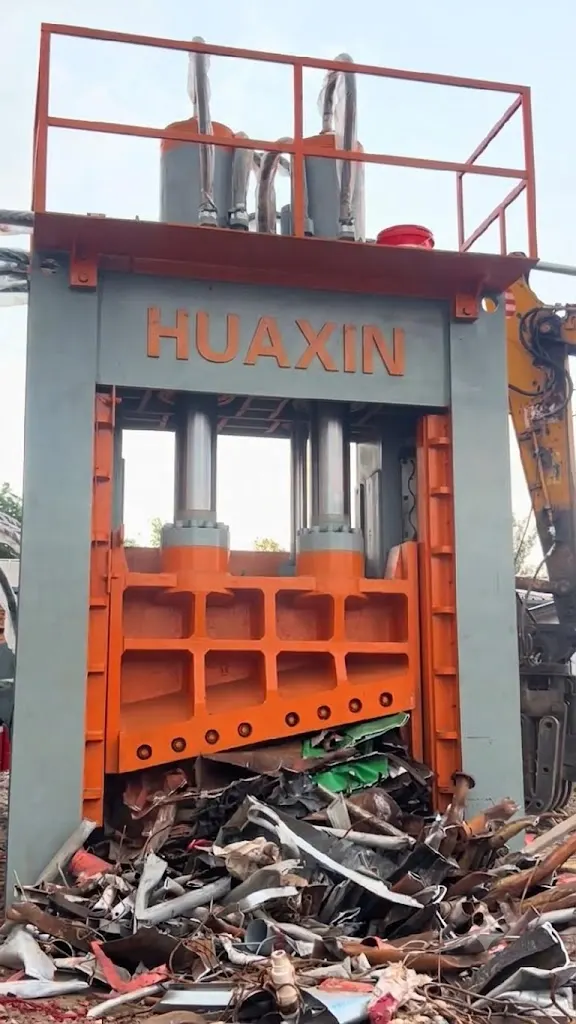
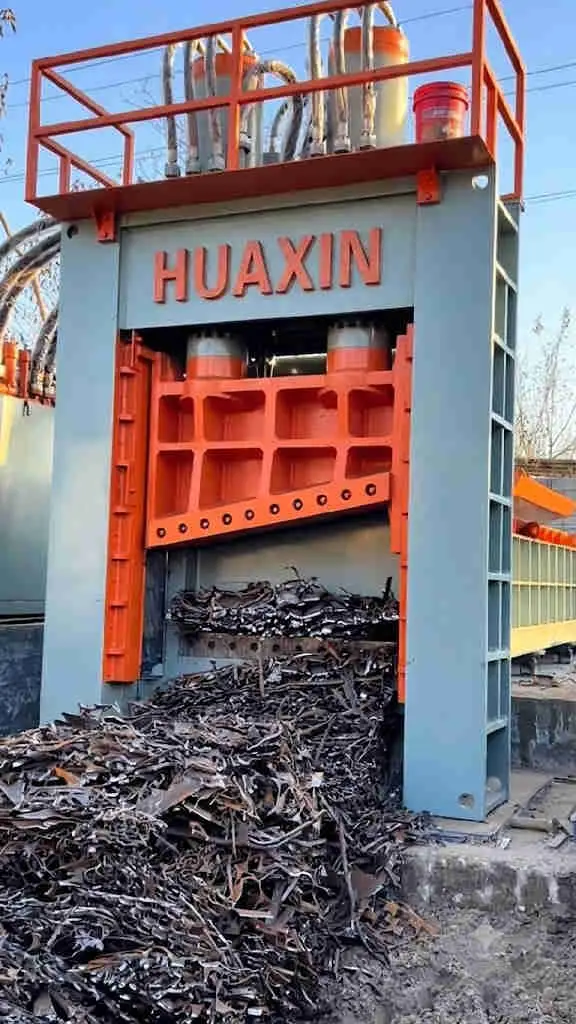
Planning a yard upgrade or need site-specific foundation drawings? Compare full machine parameters on our 1250 Ton Scrap Metal Shear (Q91-1250) page, review our hydraulic scrap shear lineup engineering hub, or contact HUAXIN’s Tangshan engineering team with your feedstock photos and target daily tonnage.
5 Comments