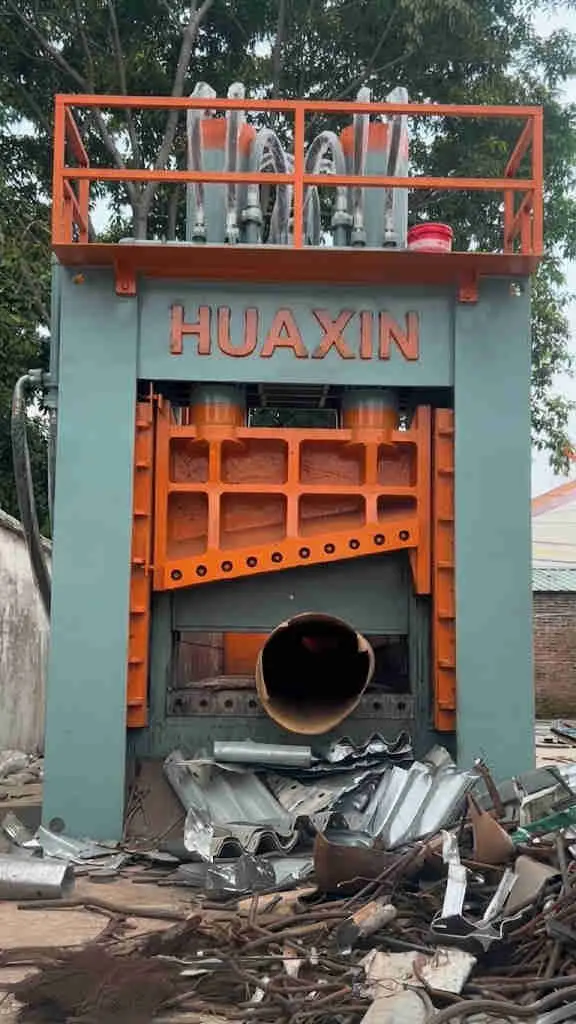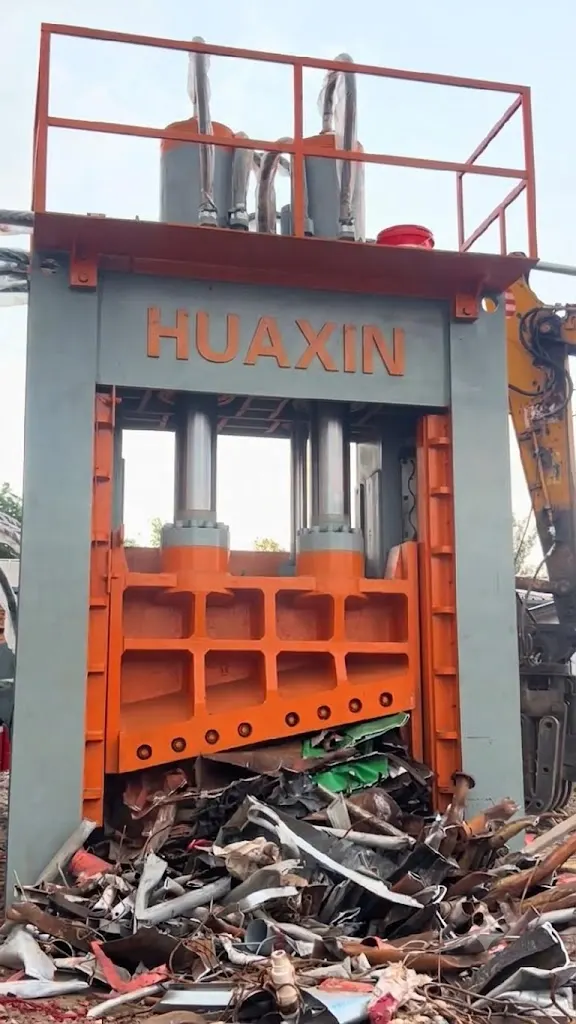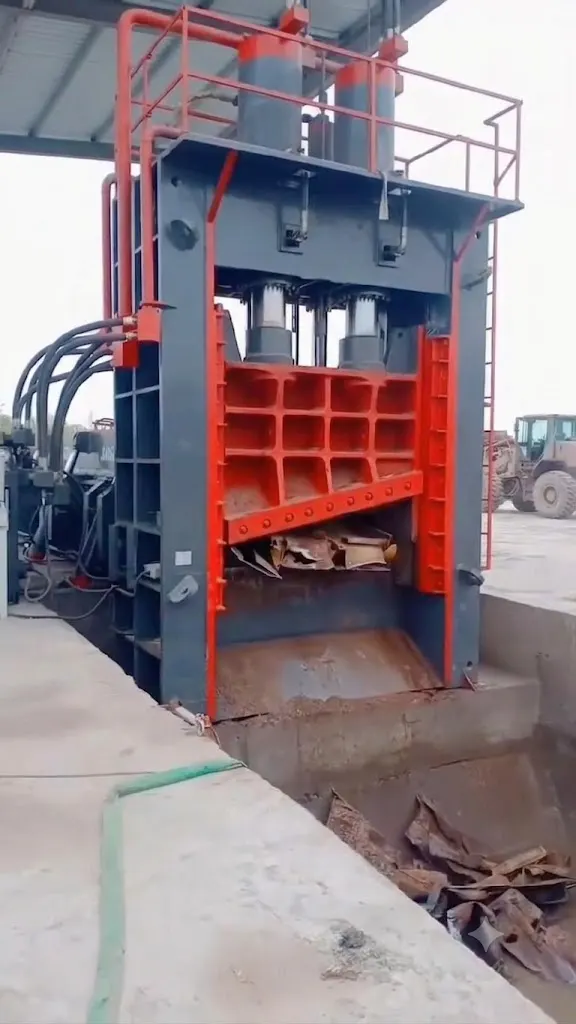
In heavy scrap metal densification and furnace feedstock logistics, deploying a high-efficiency scrap metal baler directly governs cycle speed, shipping container payload, and melting economics. For recycling yards operating the Y81-125 Hydraulic Scrap Metal Baler manufactured by Huaxin Co., Ltd., optimizing compression kinematics, hydraulic pressure staging, and chamber wear protection is essential to producing tight, high-density dealer bundles that command premium mill pricing.
Core Engineering Differences: Pressure Dynamics & Geometry
Precision machining facilities, automotive machine shops, and heavy manufacturing plants generate massive volumes of metal swarf, curly turnings, boring shavings, and cast iron dust. When managing these residuals, plant managers face a critical fork: Should you invest in an industrial scrap metal baler or install a dedicated high-pressure hydraulic metal chip briquetting press?
While both machines apply hydraulic pressure to densify loose metal waste, their mechanical architectures and pressure ratings are completely different. Standard balers operate at 1.5 MPa to 6.0 MPa (217 to 870 PSI) ram face pressure to fold sheet metal. Briquetting presses utilize heavy small-bore cylinders applying 250 MPa to 450 MPa (36,250 to 65,260 PSI) of specific compaction pressure, inducing cold plastic deformation that bonds microscopic shavings into solid metal pucks without binders.
Performance Matrix: Briquetting Press vs. Scrap Baler
| Performance Specification | Huaxin Metal Chip Briquetting Press (SBJ Series) | Huaxin Scrap Metal Baler (Y81 Series) |
|---|---|---|
| Primary Feedstock | CNC swarf, cast iron borings, aluminum turnings (<50 mm) | Sheet metal, auto bodies, stamping trim, light iron, UBC |
| Specific Ram Face Pressure | 250–450 MPa (36,250–65,260 PSI) | 1.5–6.0 MPa (217–870 PSI) |
| Finished Product Shape | Cylindrical briquettes / solid pucks | Rectangular bundles / cubes |
| Compacted Density (Steel) | 5.2–6.2 t/m³ (325–387 lbs/cu ft) | 1.6–2.2 t/m³ (100–137 lbs/cu ft) |
| Coolant / Oil Recovery | Up to 95–98% liquid extracted via base tray | Negligible (liquids pool inside chamber) |
| Foundry Melt Burn-Off Loss | Under 2% to 4% in induction furnaces | 15% to 25% (if swarf is loose or in light bales) |
Equipment Pairing: Boosting Line Productivity by 20% to 30%
Combined Scrap Line Optimization: In mixed scrap operations, pairing your baling press with a pre-sizing dual-shaft scrap metal shredder chops bushy, tangled turnings into uniform chips before briquetting, while pre-cutting rigid plate trim with a hydraulic scrap metal shear increases baler throughput by 20% to 30%.
Fine casting residues and brittle motor fragments can also be directed through a scrap metal crusher to liberate clean, unoxidized granules ready for rapid furnace charging.
Foundry Melting Economics: Sinking vs. Floating Slag Losses
Foundries operating Coreless Induction Furnaces (CIF) penalize scrap suppliers heavily for loose turnings. Loose turnings float on molten slag, where intense heat oxidizes metal into dross. Burn-off losses for loose aluminum swarf frequently exceed 25%. In contrast, high-density briquettes (density >2.2 t/m³ for aluminum, >5.5 t/m³ for iron) sink immediately beneath the liquid slag barrier, achieving melt recovery rates exceeding 96%.
Ready to configure your processing line or request factory-direct FOB/CIF pricing? Review full technical specifications on our Y81-125 Hydraulic Scrap Metal Baler product page, explore our complete scrap metal baler machinery catalog, or contact our technical sales engineering team with your scrap material sample specifications and daily tonnage targets.