In heavy industrial metal reclamation and furnace feedstock preparation, deploying a high-performance dual-shaft scrap metal shredder directly dictates shift throughput, recovery efficiency, and operating safety. For scrap processors operating the HX-DS2000 Car Shell Scrap Metal Shredder manufactured by Huaxin Co., Ltd., optimizing rotor mechanics, blade hook clearances, and torque management is essential to eliminating shaft binding and maximizing net tonnage per operating hour.
Kinematic Principles: Low-Speed, High-Torque Counter-Rotation
Unlike high-speed hammer mills that crush metal through kinetic impact (500 to 1,200 RPM), an industrial dual-shaft shredder relies on low-speed (12 to 25 RPM), high-torque continuous shearing. Two parallel hexagonal shafts rotate in opposite directions toward the center of the cutting chamber. The interlocking claw-shaped blades grab voluminous scrap, draw it into the central cutting zone, and sever it across three simultaneous force vectors: lateral scissor shear, longitudinal tensile tearing, and crushing between rotor spacers.
Because rotor speed is low, the machine generates zero dust explosions, minimal acoustic noise (<85 dB), and operates safely without requiring massive concrete blast enclosures.
Drive Architecture: High-Torque Planetary Reduction & Shaft Engineering
Delivering thousands of kilonewton-meters of cutting torque requires exceptional mechanical transmission engineering:
- Forged Hexagonal Alloy Shafts: Machined from solid forged 42CrMo structural steel, normalized and induction-hardened. The hexagonal profile eliminates keyway stress concentrations, distributing rotational torque evenly across all cutting discs.
- Hardened Planetary Reduction Units: Heavy planetary gearboxes reduce high-speed electric motor input (1,480 RPM) down to 15 RPM, multiplying shaft torque by up to 100-fold.
- Self-Aligning Spherical Roller Bearings: Heavy-duty SKF or Timken spherical roller bearings are housed in split external bearing blocks mounted completely outside the cutting chamber, protected by multi-labyrinth grease seals that prevent metal dust entry.
Upstream Pre-Shearing and Downstream Baling Workflow
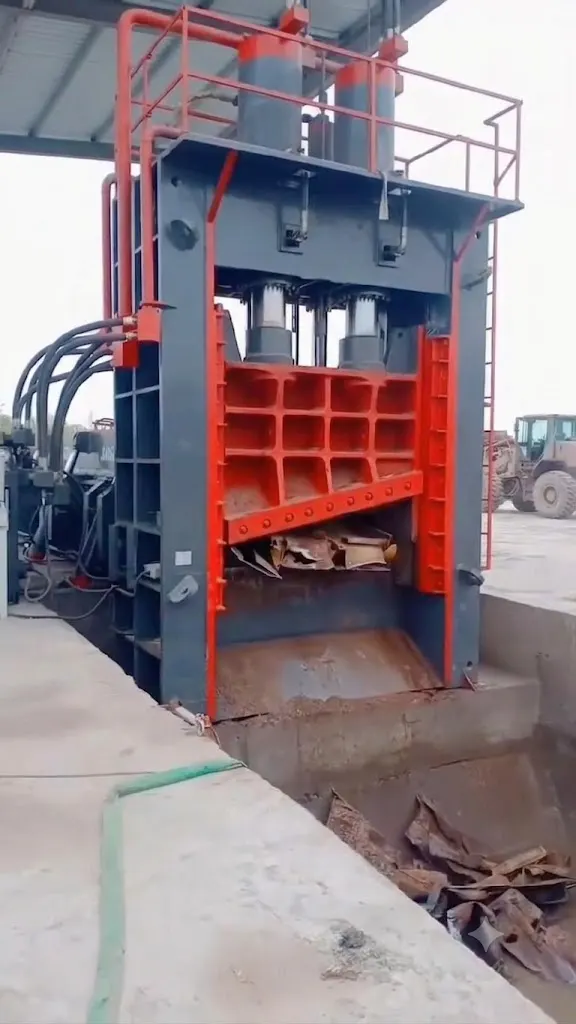
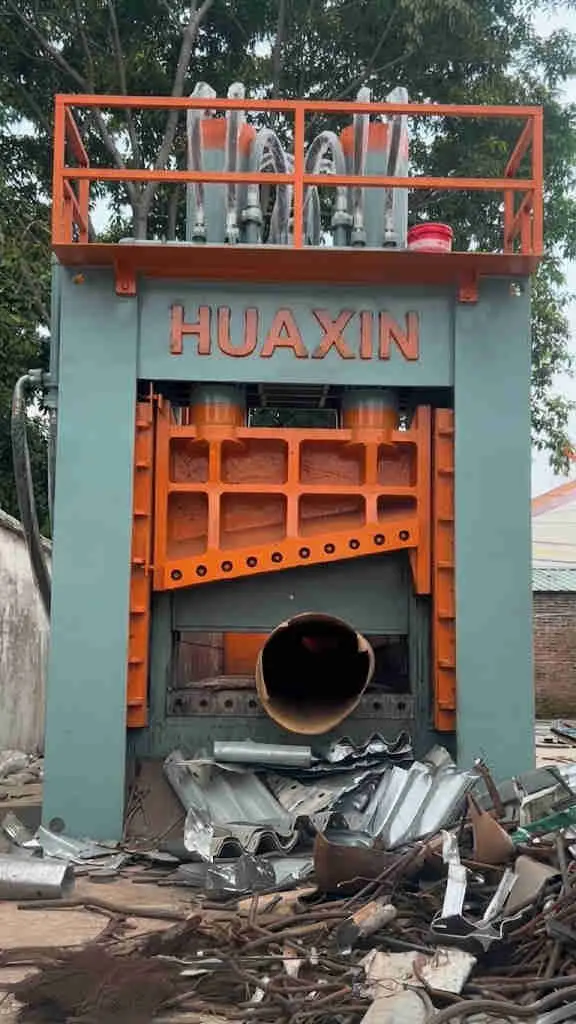
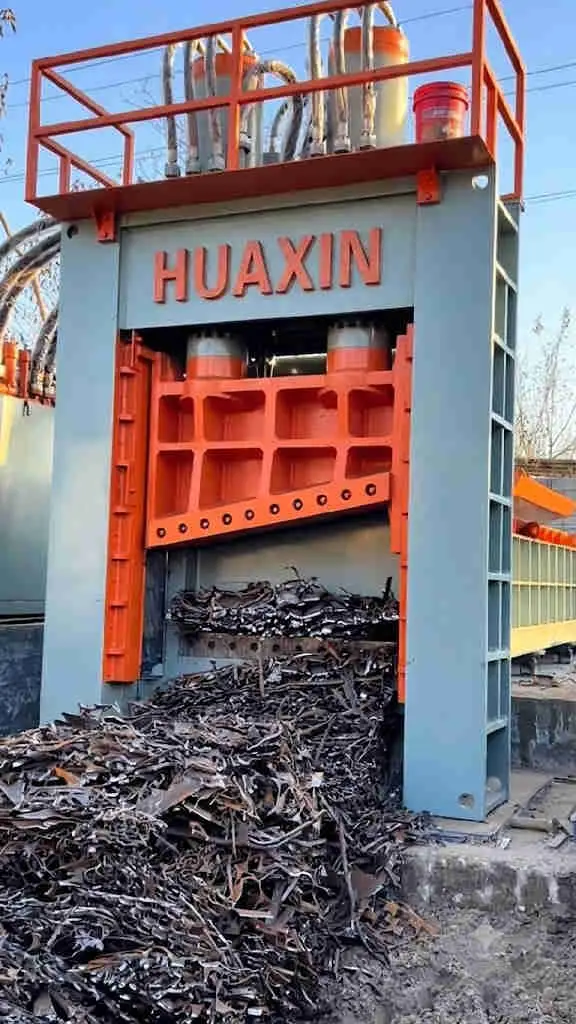
Production Optimization Through Multi-Machine Pairing: Operating your shredder alongside an upstream hydraulic scrap metal shear to pre-cut oversized girders and heavy structural beams increases overall shredder throughput by 20% to 30% while reducing peak electrical spikes.
Downstream, discharging shredded light gauge metals into a high-density scrap metal baler compresses the loose shreds into tightly interlocked furnace packets for maritime export, or feeds a downstream scrap metal crusher for automotive fluff delamination and paint stripping.
PLC Automation and Automated Reverse Cycling
Modern Huaxin shredders eliminate manual operator intervention through intelligent Siemens PLC automation. Current transducers continuously sample motor load. When dense scrap momentarily stalls the blades, the PLC executes a seamless 3-second reverse sequence to clear the chamber before re-engaging forward cutting, maintaining continuous unattended operation across demanding industrial shifts.
Ready to configure your processing line or request factory-direct FOB/CIF pricing? Review full technical specifications on our HX-DS2000 Car Shell Scrap Metal Shredder product page, explore our complete dual-shaft scrap metal shredder machinery catalog, or contact our technical sales engineering team with your scrap material sample specifications and daily tonnage targets.