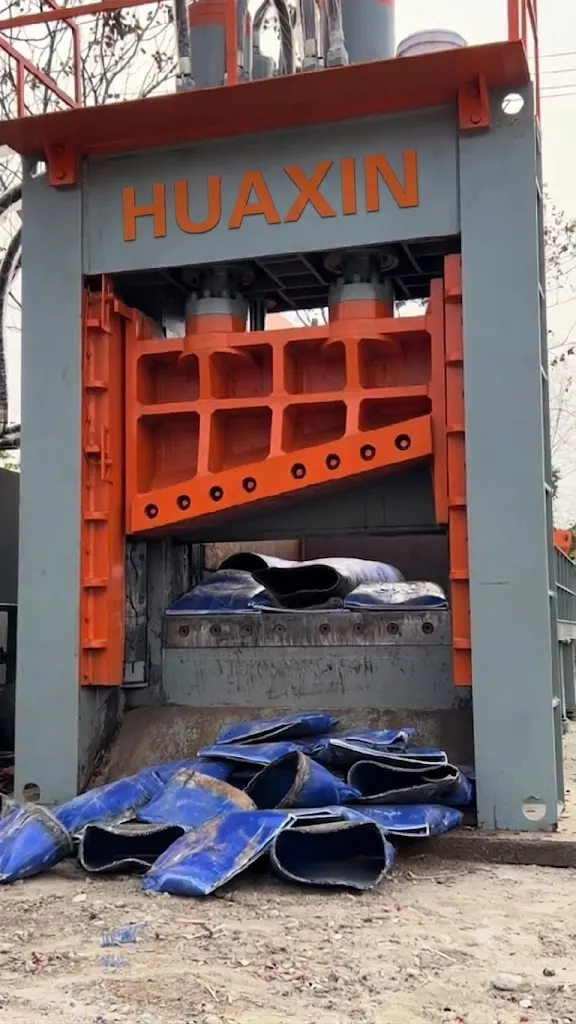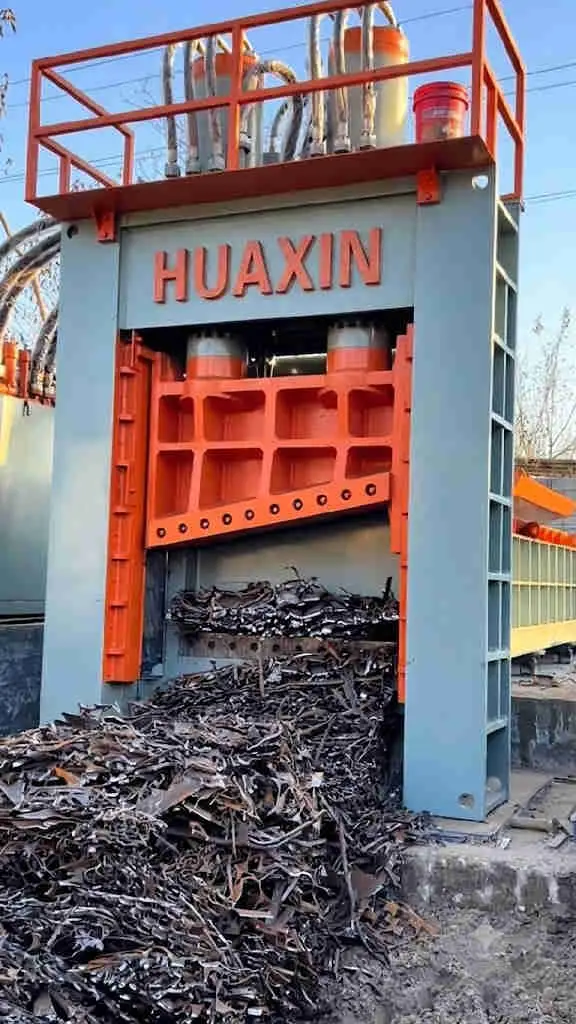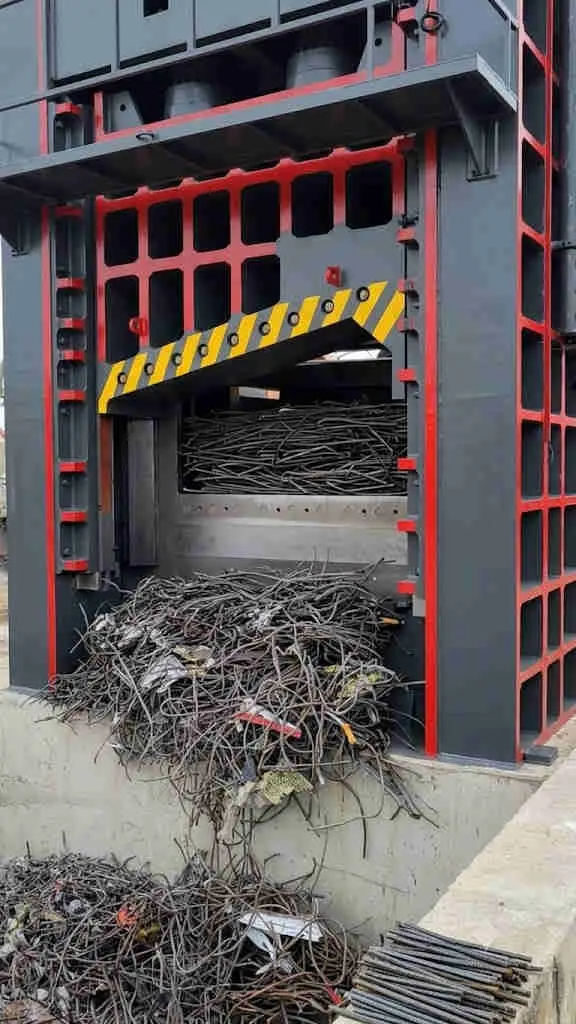
Scrap cast iron is one of the more challenging materials to process in a metal recycling yard. Large castings, heavy machine components, and used engine blocks can be difficult to cut or reduce in size using conventional equipment. When each piece has to be cut with a torch or pressed individually, processing can become slow and labor-intensive. In day-to-day scrap metal crusher production, our 12–15 TPH Scrap Metal Crusher (PSX-630) demonstrates why matching machine capacity to scrap thickness keeps wear costs predictable.
For recycling businesses handling large volumes of cast iron, a hydraulic scrap cast iron crusher offers another approach: applying powerful compression force to break bulky cast iron scrap into smaller pieces. Huaxin Co., Ltd. offers 400-ton, 600-ton, and 800-ton models to suit different materials and throughput requirements.
How Does a Scrap Cast Iron Crusher Work?
A hydraulic cast iron crusher uses a compression principle similar to that of a jaw crusher. A powerful hydraulic cylinder pushes the material against the crushing mechanism, applying force until the cast iron breaks apart.
This approach is designed for heavy, thick cast iron components that can be difficult to process efficiently using conventional cutting methods. Depending on the machine model and feed material, the equipment can also process waste engines without removing the crankshafts.
Watch the machine working in the video below.
800-Ton Scrap Cast Iron Crusher: Designed for Heavy-Duty Processing
For operations that require higher throughput and the ability to process difficult materials, Huaxin Co., Ltd. offers an 800-ton hydraulic scrap cast iron crusher.
800 Tons of Hydraulic Pushing Force
The machine uses a hydraulic cylinder capable of delivering a rated pushing force of 800 tons. This substantial force enables the crusher to handle heavy cast iron scrap and waste engines under suitable working conditions.
It is important to distinguish the machine’s force rating from its processing capacity. The 800-ton rating describes the hydraulic pushing force, while tons per hour (t/h) describes the amount of material processed over time.
Wear-Resistant Materials
The material-contact areas and crushing teeth can be manufactured using NM400 wear-resistant steel or integral cast NM18Cr2 alloy components, depending on the selected configuration.
Material selection matters when processing heavy metal scrap because crushing components are exposed to repeated impact, compression, and wear. The appropriate configuration should be selected according to the material being processed and the expected working conditions.
Processing Capacity
According to the machine specifications provided by Huaxin Co., Ltd., the 800-ton scrap cast iron crusher can process approximately:
- Scrap cast iron: 20 tons per hour.
- Waste engines with crankshafts still installed: 8–10 tons per hour.
For recycling businesses handling both cast iron components and waste engines, this model offers a higher-capacity option without requiring crankshaft removal for the stated engine-processing application.
400-Ton vs. 600-Ton vs. 800-Ton Scrap Cast Iron Crushers
Not every recycling yard needs an 800-ton crusher. The right machine depends on the type of scrap, required hourly throughput, and whether complete waste engines need to be processed with their crankshafts still installed.
| Machine model | Scrap cast iron capacity | Waste engines with crankshafts installed |
|---|---|---|
| 400-ton crusher | Approx. 5 t/h | Not suitable |
| 600-ton crusher | Approx. 10–12 t/h | Approx. 4–6 t/h |
| 800-ton crusher | Approx. 20 t/h | Approx. 8–10 t/h |
The capacities above are based on the stated machine specifications. Actual throughput may vary with the size, shape, composition, and feeding conditions of the material.
400-Ton Hydraulic Cast Iron Crusher
The 400-ton model is intended for recycling businesses that primarily process scrap cast iron and require a more moderate hourly capacity.
- Scrap cast iron processing capacity: approximately 5 t/h.
- Waste engines with crankshafts still installed: not suitable.
If your operation mainly handles cast iron castings and does not need to crush waste engines in this condition, the 400-ton model may be worth considering. Confirm the dimensions and characteristics of your scrap before selecting the machine.
600-Ton Hydraulic Cast Iron Crusher
The 600-ton model provides a higher processing capacity and can also handle waste engines without removing the crankshafts, according to the stated specifications.
- Scrap cast iron processing capacity: approximately 10–12 t/h.
- Waste engine processing capacity: approximately 4–6 t/h with crankshafts still installed.
This model is an option for recycling yards that process both cast iron scrap and waste engines and need more capacity than the 400-ton model provides.
800-Ton Hydraulic Cast Iron Crusher
The 800-ton model is designed for operations requiring higher throughput when processing heavy cast iron scrap.
- Scrap cast iron processing capacity: approximately 20 t/h.
- Waste engine processing capacity: approximately 8–10 t/h with crankshafts still installed.
For businesses handling substantial volumes of heavy castings or waste engines, the 800-ton model offers the highest stated processing capacity among these three options.
How to Choose the Right Cast Iron Crushing Machine
Before investing in a hydraulic scrap cast iron crusher, consider the following factors.
1. What Type of Material Do You Process?
Cast iron castings, heavy machine parts, and complete waste engines can have very different dimensions and shapes. Tell the manufacturer what materials you process and whether crankshafts are removed before crushing. This information helps determine which machine configuration is appropriate.
2. What Is Your Required Hourly Capacity?
Estimate how many tons of scrap cast iron you need to process per hour. The 400-ton model has a stated capacity of approximately 5 t/h, the 600-ton model approximately 10–12 t/h, and the 800-ton model approximately 20 t/h for scrap cast iron.
These figures are useful for an initial comparison, but actual throughput should be evaluated against your own feed material and operating conditions.
3. What Size of Material Can the Machine Accept?
Before ordering, provide photographs and the maximum dimensions of your largest castings or engine blocks. You should also discuss feeding arrangements, the desired output size, available installation space, and the electrical supply at your facility.
These details help the manufacturer assess the application rather than selecting a crusher based on tonnage alone.
Frequently Asked Questions About Scrap Cast Iron Crushers
How do you crush heavy scrap cast iron?
A hydraulic scrap cast iron crusher applies strong compressive force to break heavy cast iron components into smaller pieces. It can be an alternative to processing bulky castings individually with a torch or conventional pressing equipment. The appropriate machine depends on the material and required throughput.
How much scrap cast iron can an 800-ton crusher process per hour?
The 800-ton model described in this article has a stated capacity of approximately 20 tons of scrap cast iron per hour. For waste engines with crankshafts still installed, the stated capacity is approximately 8–10 tons per hour. Actual results depend on the material and working conditions.
Can a scrap cast iron crusher process waste engines without removing the crankshaft?
Based on the stated specifications, the 600-ton model can process approximately 4–6 tons of waste engines per hour, while the 800-ton model can process approximately 8–10 tons per hour, with crankshafts still installed. The 400-ton model is not suitable for this application.
What is the difference between a 400-ton, 600-ton, and 800-ton cast iron crusher?
The main differences are the rated hydraulic pushing force and the stated processing capacity. The 400-ton model is intended for lower-throughput cast iron processing, the 600-ton model offers a higher capacity and can process certain waste engines, and the 800-ton model provides the highest stated capacity among the three. Final selection should also consider material dimensions and operating requirements.
Get a Quote for a Scrap Cast Iron Crusher
Huaxin Co., Ltd. manufactures scrap metal recycling equipment, including hydraulic scrap metal shears, metal balers, shredders, and crushers. Our 400-ton, 600-ton, and 800-ton scrap cast iron crusher models are designed for different processing requirements.
To help us recommend a suitable machine, please share the type of scrap you process, photographs of the material, its approximate dimensions, and your target hourly capacity. If you process waste engines, let us know whether the crankshafts will remain installed.
Email: [email protected]
WhatsApp: +86 159 0036 3543
Contact Huaxin Co., Ltd. to discuss your scrap cast iron processing requirements and compare the available crusher models.
Looking for a custom layout or spare-parts package tailored to your yard? Compare full machine parameters on our 12–15 TPH Scrap Metal Crusher (PSX-630) page, review our scrap metal crusher engineering hub, or contact HUAXIN’s Tangshan engineering team with your feedstock photos and target daily tonnage.