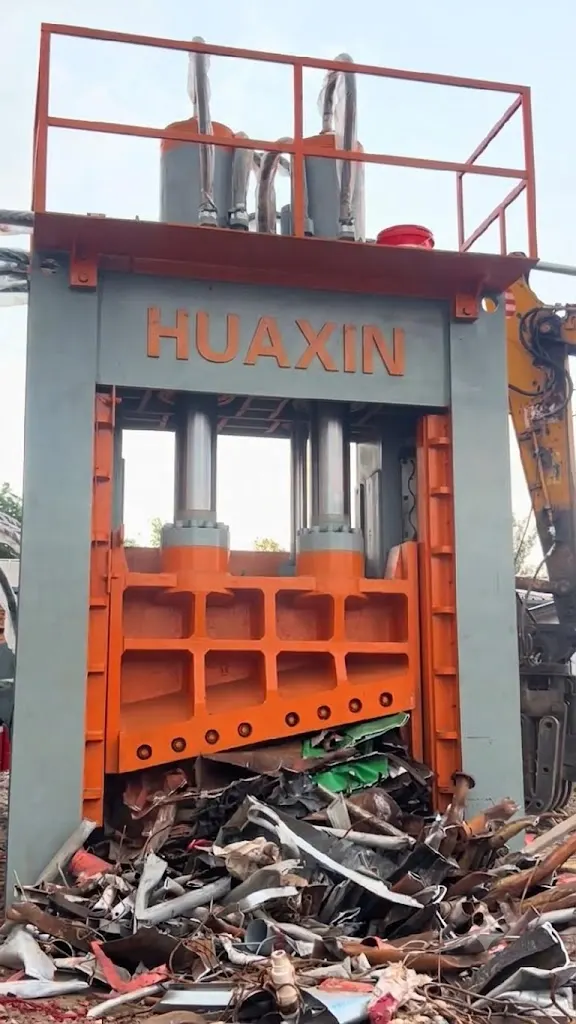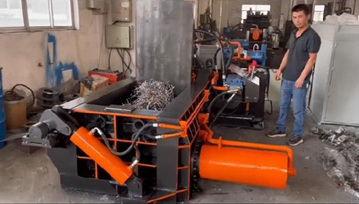
At 100mm, plate stops being a material the machine handles and becomes the number that decides which machine you buy. The force required climbs steeply past 60mm, and the 1250 Ton Scrap Metal Shear Machine (Q91-1250) is where continuous 100mm cutting becomes honest. This article covers what 100mm plate demands and how to check the fit against your own material. Across real-world industrial scrap metal shear installations, experience with our 1250 Ton Scrap Metal Shear (Q91-1250) confirms that proper material prep and hydraulic maintenance drive long-term profitability.
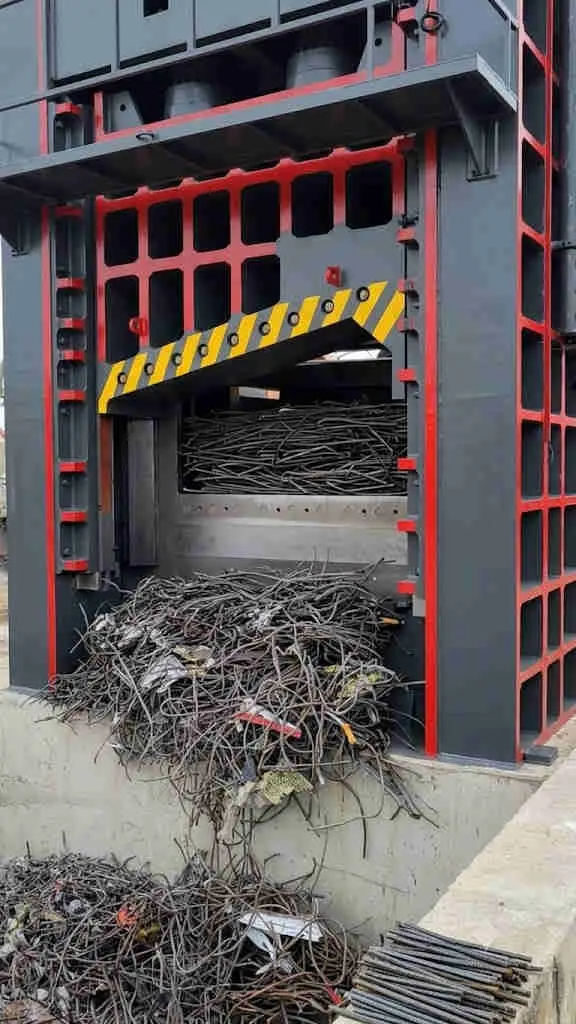
What 100mm plate does to the force
Cutting force scales with thickness, but not linearly, and past 60mm the curve steepens. A machine rated for 60mm continuous plate works far harder at 80mm and is out of its depth at 100mm, not because the difference looks large on paper but because the material’s resistance grows faster than the thickness. The Q91-1250 carries 120mm continuous and 150mm occasionally, which puts 100mm plate inside its working range with headroom.
The headroom is the point. A machine working at its edge on 100mm plate stretches its cycle, shortens its blade interval and runs its hydraulics hot, and all three show up in the tonnage before they show up as a fault. The 1250’s rating leaves room for the heavy tail of a normal month, which is what continuous duty actually means. The force rule covers the headroom logic.
What the blade needs on thick plate
Thick plate demands a different blade than structural steel, and the difference is in the toughness of the steel rather than the hardness. A hard edge that chips on thick plate is worse than a tough edge that dulls gradually, because a chip takes the whole set out of service where a dull edge just rotates. The blade grade, the hardness and the edge geometry all get quoted against the thick plate you actually cut.
The blade steel guide covers the specification rows, and the maintenance guide covers the rotation discipline. On 100mm plate the rotation log matters more than on lighter feed, because the wear arrives faster and the cost of a missed rotation is a chipped set rather than a dull edge.
How to check the fit against your plate
The check is a measurement, and it takes an afternoon. Find the thickest plate that arrives weekly, measure it, and count how often pieces past each threshold arrive. Weekly plate at 100mm is a 1250 conversation. Monthly 100mm plate sits inside the occasional rating of a smaller class. A few times a year is a blade note rather than a class decision.
The frequency is what decides, because the class follows the weekly piece, not the record piece. A yard that sizes for the record plate pays for force it uses once a month, and a yard that sizes for the average lives at its edge on the weekly piece. The HMS guide covers the same frequency logic on a related material.
What thick plate does to the discharge
Thick plate leaves the machine as heavy sections, and the discharge has to accept them at the box’s rate. A destination sized for light scrap banks up under 100mm plate, and the machine waits with a full box while the handling catches up. The discharge follows the heaviest routine piece, not the average, and the buffer is sized against the minutes the truck takes to return.
The discharge planning guide covers the flow arithmetic, and the box guide covers the geometry that admits the plate whole. On thick plate both matter more than on any lighter feed.
What the plate arrives with
Thick plate rarely arrives clean, and the condition changes the cut more than buyers expect. Plate from demolition carries paint, rust and sometimes concrete, all of which hit the blade before the steel does. Plate from a fabrication shop arrives as offcuts with the occasional weld bead or attachment, and the weld is harder than the plate around it. The sorting gate strips what it can, and on thick plate the gate is blade insurance in the same motion it is value recovery.
The charging discipline guide covers the same logic on other heavy feed, and the maintenance guide covers what contamination does to the interval. A thick plate operation that skips the gate shortens its blade life for no cutting return, and the wear bill arrives monthly rather than seasonally.
Engineering & Field FAQ: Thick Plate at 100mm: When the Force Class Decides
What plate can a 1250 ton shear cut?
120mm as continuous duty and 150mm occasionally, per the published specification. 100mm plate sits inside the working range with headroom, which is what continuous duty actually requires.
Is 100mm plate a different class from 60mm?
Yes. The force curve steepens past 60mm, and a machine rated for 60mm works far harder at 100mm. The 1250 is where continuous 100mm cutting becomes honest.
How do I know if my plate needs the 1250?
Measure the thickest plate that arrives weekly. Weekly 100mm plate is a 1250 conversation; monthly 100mm is an occasional-rating case on a smaller class. The frequency decides.
What do you need to recommend the right class?
The thickest routine plate, how often pieces past 100mm arrive, and your daily tonnage. The written recommendation comes back within two business days. The measurement matters more than the tonnage, because the class follows the weekly piece rather than the record piece, and getting the weekly piece right is the whole test.
Need help sizing cutting force, blade length, and hydraulic power for your throughput? Compare full machine parameters on our 1250 Ton Scrap Metal Shear (Q91-1250) page, review our Q91 & NS scrap shear hub engineering hub, or contact HUAXIN’s Tangshan engineering team with your feedstock photos and target daily tonnage.