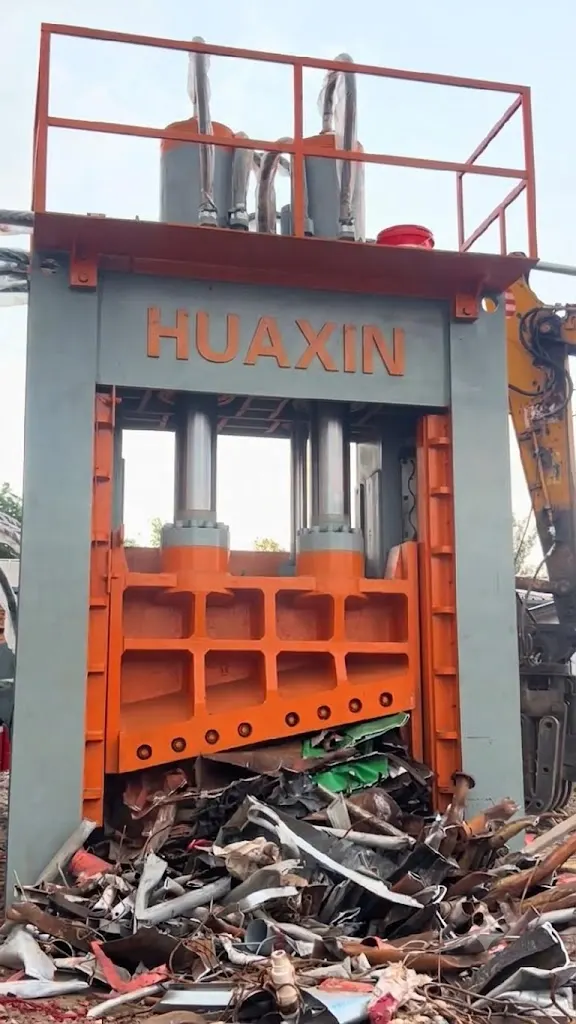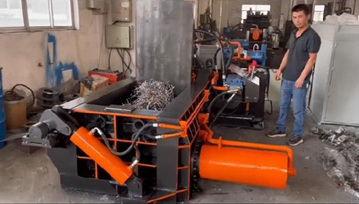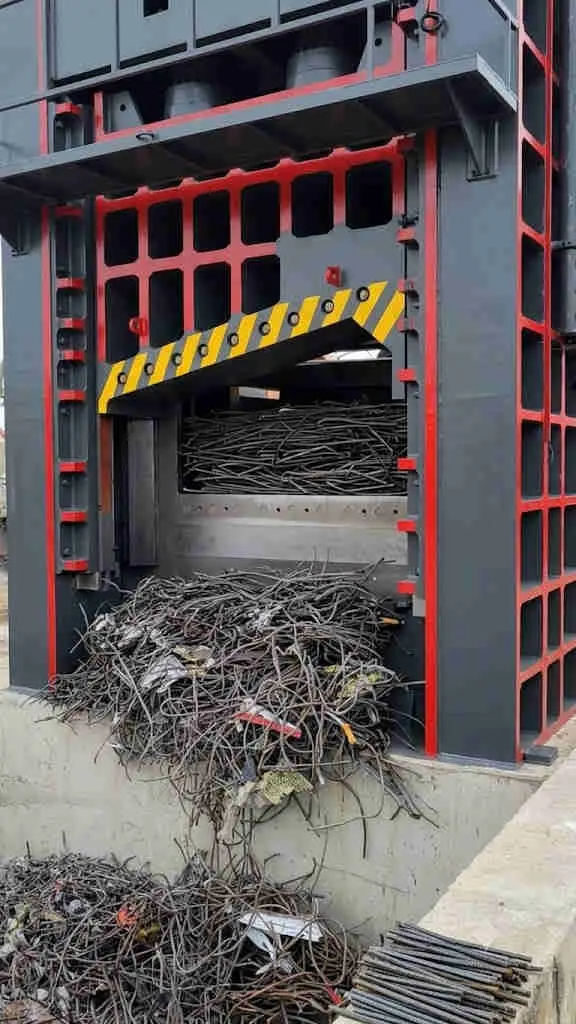
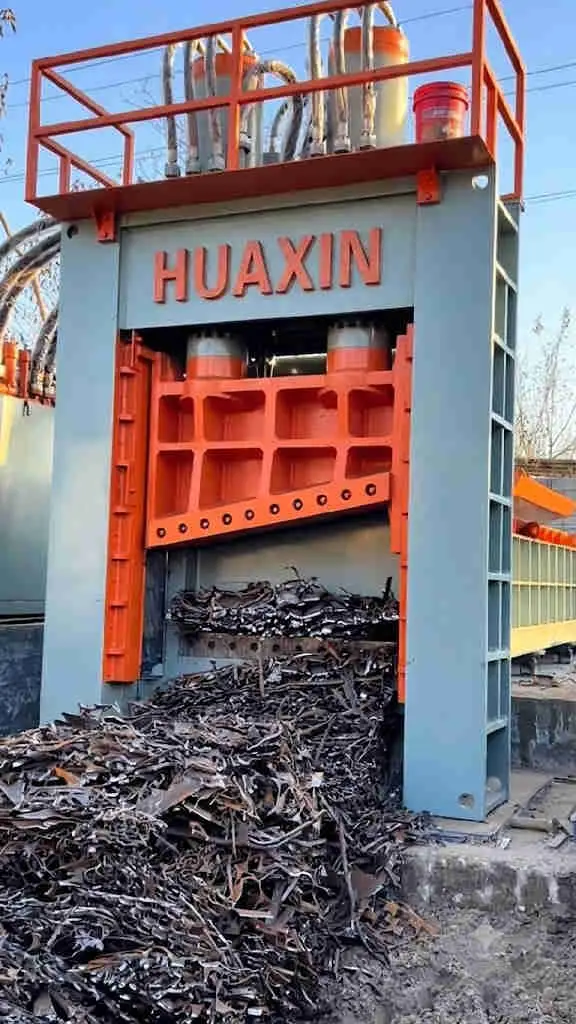
Rail is the material that separates the classes at the top of the range. It is dense, hard and shaped to resist load, which is exactly the combination a shear has to overcome in a single cut. The 630 Ton Scrap Metal Shear Machine (Q91-630) is where continuous rail cutting becomes honest, and this article covers what the material demands from the force, the blade, the feed and the discharge. For yards evaluating heavy-duty scrap shear setups, operating benchmarks from our 630 Ton Scrap Metal Shear (Q91-630) show how hydraulic pressure stability and feeding habits directly shape cost per ton.
Why rail is a different material
Rail is not thick plate and it is not a structural section. It is a deep, narrow profile made from high-carbon steel, with a head that is thicker than the web that supports it. The blade works through the hard head first, then the web, then the base, and the section is deep enough that it wants to twist under load. That combination, hard steel in a deep section, is what pushes rail up the range.
The practical consequence is that the force class follows the rail weight, measured. Light rail and used sections sit inside the 630’s range; heavy mainline rail in long lengths pushes toward the classes above. The force rule covers the headroom check, and rail is one of the materials where the check matters most, because a machine working at its edge on rail wears blades faster than on any lighter feed.
What the blade needs on rail
Rail cuts hard, and the blade specification follows the hardness of the material. A blade graded for structural steel will cut rail, but it will rotate sooner than the published interval, because the high-carbon head dulls the edge faster than mild steel does. The blade steel, the hardness and the edge geometry all get quoted against the rail you actually cut, not against a generic figure.
The blade steel guide covers what the specification should say, and the maintenance guide covers the rotation discipline. On rail, the rotation log matters more than on any lighter material, because the wear arrives faster and the cost of a missed rotation is a chipped edge rather than a dull one.
Feed and discharge: what rail changes
Rail arrives in long lengths, and length is the geometry problem rail brings. A rail section that is longer than the blade span forces a reposition, and a rail that is longer than the box cannot enter cleanly at all. The blade length and the box opening both get checked against the longest rail in a normal month, and the check is the same arithmetic as the structural feed: count the long pieces, multiply by the reposition minutes, and the annual figure is the cost of a too-short configuration.
On the discharge side, rail is heavy for its size. Cut sections land hard, and the discharge arrangement has to accept a heavy piece at the box’s rate rather than a stream of light scrap. The discharge planning guide covers the flow arithmetic, and rail is one of the materials where the discharge is the difference between the published band and the reported one.
When rail points at the class above
The 630 carries rail as continuous duty up to its published section range, and the occasional rating covers the heavier sections that arrive a few times a month. The honest test is frequency: weekly heavy mainline rail is a 1000 Ton Scrap Metal Shear Machine (Q91-1000) conversation, while the same rail as a monthly arrival sits inside the 630’s occasional rating.
The heavy-end comparison guide covers the ladder above, and the HMS watershed guide covers where the production classes separate from the yard classes. The frequency test is the whole test, and it takes an afternoon at the gate with a logbook.
How the rail’s condition changes the cut
Used rail is rarely clean. Wear on the head, rust in the web, and the bolts or clips that held it down all arrive with the section, and each one changes the cut. A worn head is softer than a new one and cuts more easily, while a rusted web can jam the blade if the section is fed flat. The bolts and clips are the real problem, because they hit the blade before the steel does and dull the edge for no cutting return.
The sorting gate is the answer, the same position that serves every dirty material. Clips and bolts come off before the rail reaches the box, or the rail gets set aside until they do. It is one operator’s attention at intake, and on rail it is the cheapest wear insurance in the yard, because the clips are harder on the edge than the rail itself. The charging discipline guide covers the same logic on other heavy feed.
What the section does under the blade
Rail’s deep profile is what makes it want to twist, and the twist is what wears the edge unevenly. Laid on its base, the rail cuts through the head and web in a stable plane. Fed on edge, the taller, thinner section twists under load, and the blade loads one corner of the edge before the rest does any work. The right orientation depends on the section, and the crew learns it in the first week or it never sticks.
The hold-down is the other half. A rail clamped flat cuts clean; a rail that shifts mid-cut strays off square and wears one corner. On rail, the hold-down specification is worth confirming against the section at quotation, because a stronger hold-down is cheaper than a year of chipped edges. The feeding guide covers the habits.
The rotation log on rail, run properly
Rail shortens the rotation interval, and the log is what keeps the interval honest. Three lines per rotation: the date, the tonnage since the last one, and the dominant material. Three months of that log tells you the interval your rail actually needs, which is rarely the number a brochure would have guessed, and it catches the silent changes before they reach the wear bill.
A new supplier with harder rail shortens the interval and shows up in the log weeks before it shows up in the blade purchase. A seasonal shift from used rail to new shortens it again. The yard that keeps the log adjusts the interval; the yard that does not discovers the change at the worst moment, which is usually the middle of a heavy week. The maintenance guide covers the mechanics.
Engineering & Field FAQ: Railway Rail on a Scrap Metal Shear: Force and Blade Notes
What rail can a 630 ton shear cut?
Light and used rail sections within the published range, as continuous duty. Heavy mainline rail in long lengths pushes toward the class above, and the frequency decides: weekly heavy rail is a 1000 conversation, monthly is an occasional-rating case.
Why does rail wear blades faster than structural steel?
The high-carbon head is harder than mild steel, and hard material dulls the edge faster. The blade specification follows the rail you cut, and the rotation log keeps the interval honest rather than discovering the wear at the worst moment.
How do I check the fit against my rail?
Measure the heaviest rail that arrives weekly and the longest section in a normal month, and check both against the published ranges. The force follows the weight, and the geometry follows the length, and getting either one wrong shows up in the blade log or the torch bill.
What do you need to recommend the right class?
The rail weight and section, how often heavy rail arrives, and your daily tonnage. The written recommendation comes back within two business days, including when the answer is the class below the one you asked about.
Planning a yard upgrade or need site-specific foundation drawings? Compare full machine parameters on our 630 Ton Scrap Metal Shear (Q91-630) page, review our hydraulic scrap shear lineup engineering hub, or contact HUAXIN’s Tangshan engineering team with your feedstock photos and target daily tonnage.