
Most scrap machinery articles help you decide between models. This one is different, because at 2000 tons the decision is rarely about the machine alone. By the time a plant is seriously looking at the largest shear in our range, the real task is planning a high-volume line. That means power, foundation, cranes, material flow and maintenance for a machine expected to run for many years. Our 2000 ton scrap metal shear cuts 170 mm plate continuously and delivers 250 to 300 t per 10-hour working day. In daily scrap cutting equipment production, matching that capacity to scrap thickness is what keeps wear costs predictable.
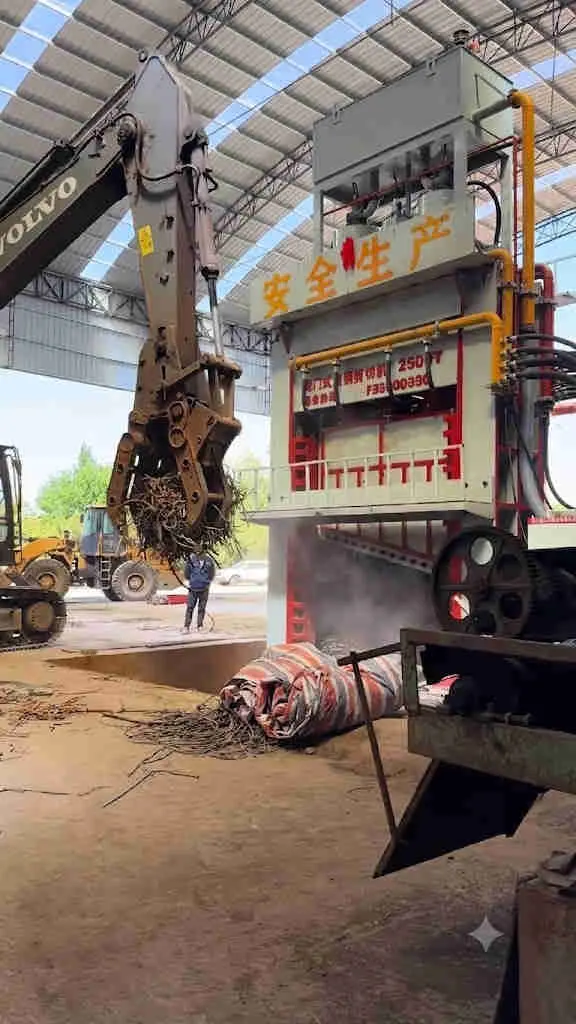
This article looks at our flagship hydraulic gantry shear. All figures come from its product page. Where a figure depends on your site, we say so rather than guess.
Who this machine is for
The product page is blunt: this is not a machine for a large yard. It is specified by operations at the top of the scale, plants whose material defeats every machine below it and whose throughput has outgrown mill-scale installations.
Four application types are listed: bridge and infrastructure demolition, ship recycling and marine structures, integrated mill and furnace-line plants, and large clearing and recovery programmes after storms, accidents or city-wide demolition. What they share is heavy, mixed, often reinforced material arriving in volume.
If that does not describe your plant, a smaller machine is probably the better purchase. Our comparison of the 1250 and 1600 ton machines shows how to think about the steps below this one.
2000 ton gantry shear: the headline figures
| Item | Q91-2000 |
|---|---|
| Shearing force | 2,000 t (20,000 kN), the largest in our range. |
| Blade length | 2,600 mm or 2,800 mm |
| Motor power | 8×55 kW or 10×55 kW |
| Minimum transformer | 557 kVA (8×55 kW) or 694 kVA (10×55 kW). |
| Max plate, continuous (mild steel) | 170 mm |
| Output (10-hour working day) | 25–30 t/h, 250–300 t/day, material-dependent |
| Cycle time | 20 to 35 seconds per cut |
| Feed box length | 7 m, 7.5 m or 8 m |
| Drive options | Electric (grid), generator or diesel |
| Blades | M6V, H13, X45 or D2 tool steel, four-edge reversible. |
Why it is a project, not a purchase
With 440 to 550 kW of installed motor power and 250 to 300 tons a day, this machine is a plant project rather than an equipment purchase. Foundation, electrical supply, craneage for erection and line integration all have to be engineered around it. There is also no easy “trade up later” at this scale. The specification has to be right the first time.
Start with the plant. Then fit the machine into it.
Step one: define the material profile
Collect real numbers for the material you expect. You need the share of plate versus sections versus bales, the thickest plate you see every week, and the heaviest oversized pieces. If you are comparing against a 1600 ton machine, the question is whether your daily plate and section profile will outgrow what it holds continuously.
The product page gives two clear thresholds. Regular plate above 150 mm, or sections that defeat a 1600 ton machine, point to the 2000. So does throughput above 240 tons per 10-hour day. Below those lines, the 1600 ton class is the more economical machine, and we will recommend it.
Step two: decide the shift pattern
The machine is specified for continuous three-shift duty. That shapes everything else. On a single shift you are probably buying more than you need. If you run around the clock and the shear feeds a furnace, the maintenance plan becomes a central part of the decision.
At 250 to 300 tons per day, the maintenance plan is part of the specification. A maintenance schedule and spares recommendation come with the machine. Treat them as working documents, and plan staff and shutdown windows around them. Our note on three-shift economics shows how to price downtime at this duty.
Step three: engineer the power
The electrical package is a major civil-works item. We size the supply, cabling and protection against the final configuration before shipment. Voltage can be set at 230, 380, 400, 415, 440 or 480 V, at 50 or 60 Hz. Grid connection is the usual choice at this size, and generator or diesel drive can be configured where the site needs it.
Transformer sizing follows a simple rule: minimum kVA equals (motor kW + 5) divided by 0.8, rounded up. The 8×55 kW package therefore needs at least 557 kVA, and the 10×55 kW package at least 694 kVA. These are minimums for the shear alone, not the total demand of the plant. Our article on diesel versus electric machines covers the trade-offs if grid power is limited.
Your electrical engineer should confirm four points early:
- The incoming supply can carry the 557 or 694 kVA minimum on top of existing plant load.
- The protection and switchgear required by local code.
- The cable route and who supplies the cable.
- Whether the PLC ties into plant control, and how.
Step four: plan the foundation and the lift
The machine ships as separate heavy items: the gantry frame and shear head, cylinder packages, hydraulic power unit and electrical cabinet. They are packed for container or flat-rack sea freight. A packing list and lifting plan are issued against your receiving crane capacity.
The shear stands on a reinforced concrete foundation built to our civil drawings. Those drawings, installation drawings and a commissioning checklist come with the machine. Get them to your civil engineer early, because ground conditions and local standards shape the final design. An engineer can attend for erection supervision, start-up, operator training and maintenance-plan handover. Our article on installing a 1000 ton shear sets out a pre-installation checklist that applies equally here.
Step five: design the material flow
Many high-volume lines fail here. Feed box length is chosen from your furnace charge requirement, and the intake and discharge arrangement is designed with your material handling rather than left to site improvisation.
Draw the full path. Heavy pieces need a crane or loader route into a feed box 7 to 8 metres long. Bales need a staging area. Sized pieces need a destination and someone to move them, whether that is a furnace charge bucket or a truck loading bay.
Send us your layout and we will model the material flow against the shear cycle. A shear that waits for material, or cannot clear its output, wastes its capacity. Our recycling line design guide offers a framework for this.
What the 2000 ton scrap metal shear cuts
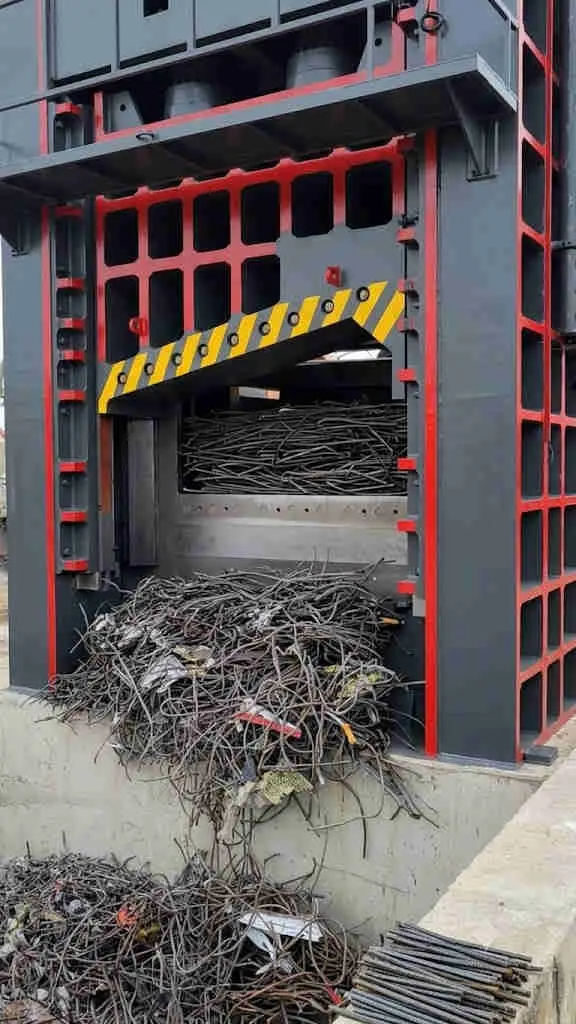
Beyond plate, the list covers baled scrap and continuous HMS 1 and 2 under three-shift operation. It also takes light through the heaviest H-beams and I-beams, heavy structural profiles, thick-wall pipe and rebar. It specifically includes rebar-bound concrete sections from bridge demolition, opened in one pass.
Material beyond the 170 mm continuous rating needs a specification conversation rather than a catalogue model. A custom 2500 ton build is available on request, so tell us early if your heaviest pieces go past that line.
Blades and maintenance
Blades are four-edge reversible, in M6V, H13, X45 or D2 tool steel. Wear depends heavily on what you cut, so the quotation states the expected interval for your mix rather than a universal figure.
At three-shift duty, stock a spare blade set before commissioning. Plan blade rotation as a scheduled job, not a reaction to a chipped edge.
Safety and control
The machine uses full PLC automation, remote operation that keeps the operator clear of the shear zone, an emergency stop and overload protection that reacts to abnormal hydraulic pressure. At this scale, add site-level measures: exclusion zones, controlled access, clear signage and trained crane and loader operators. Rules differ between countries, so involve a qualified safety adviser.
What to send us for a flagship quotation
We need your material mix with plate and bale share, heaviest plate or section, and target tons per day. Add shift pattern, feeding method, site power, plant layout and the furnace or end use. At this scale we also discuss control integration and maintenance planning.
Send them through our contact page. You receive a configuration recommendation and written quotation within 48 hours. If your numbers support the 1600 ton class instead, we will tell you.
A shear this size is rarely the only machine in the plant. Light sheet, profiles and appliance shells belong in a shredder, and a baler handles non-ferrous output. For the furnace side of the equation, see our guide to HMS 1 and HMS 2.
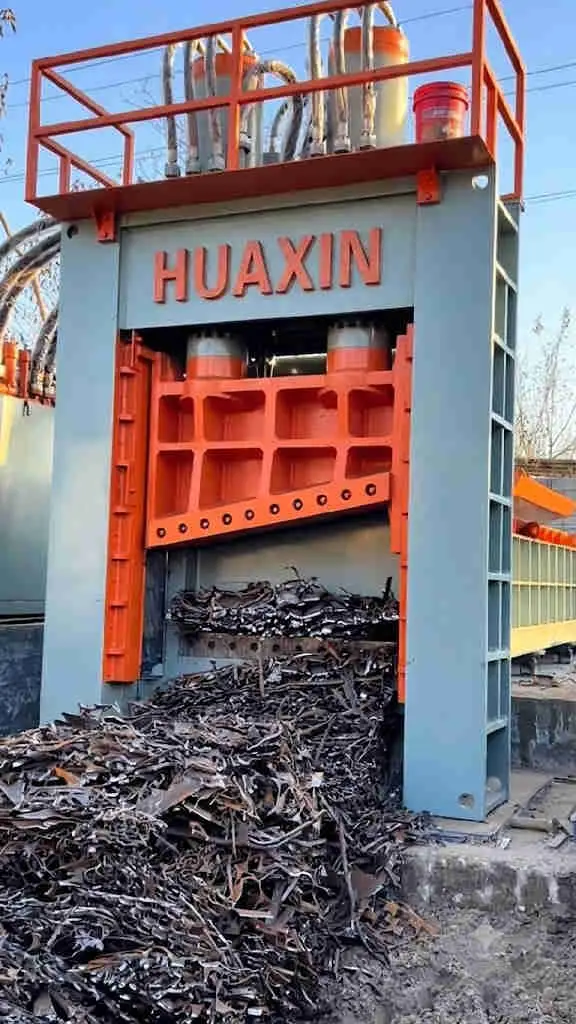
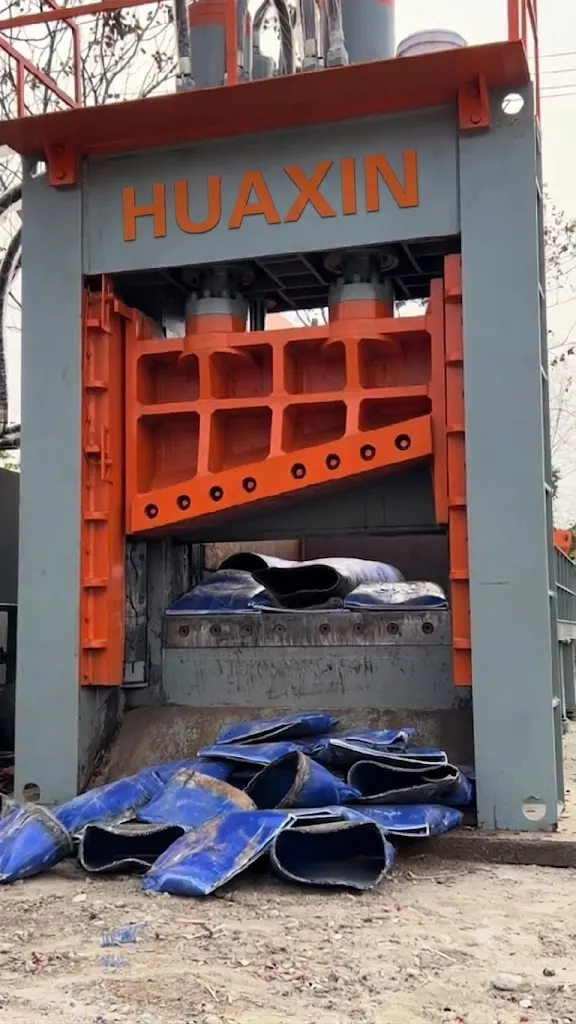
Planning a custom layout or spare-parts package. Browse the hydraulic gantry shear series, or contact HUAXIN’s Tangshan engineering team with your feedstock photos and target daily tonnage.
One Comment