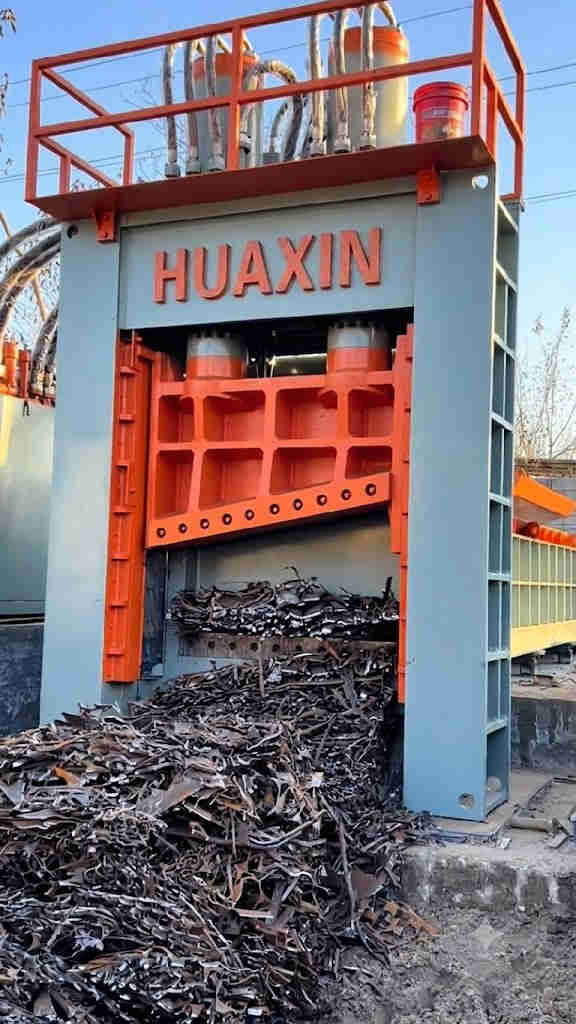
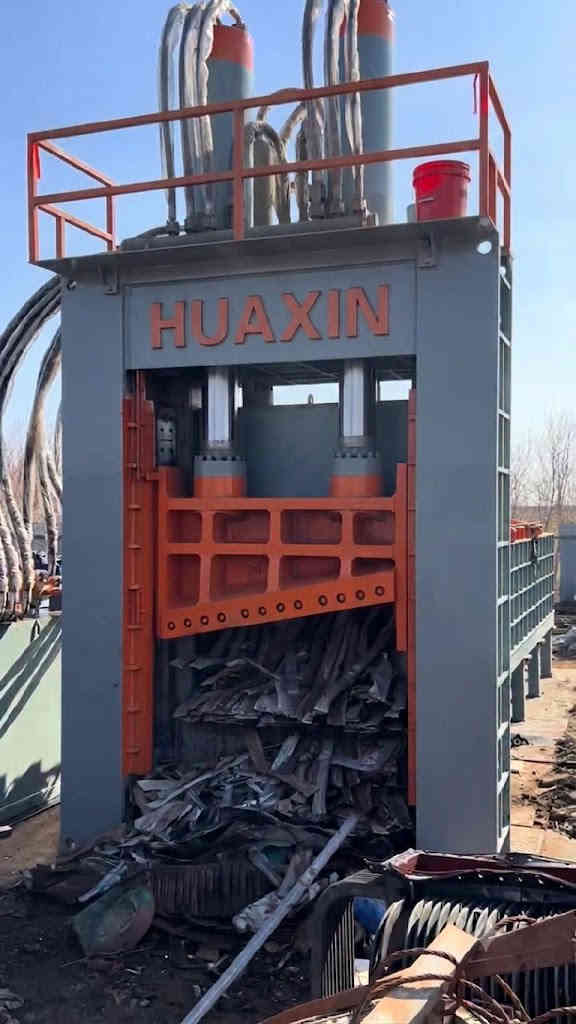
Hydraulic Gantry 630 Ton Scrap Metal Shear Machine – Q91-630
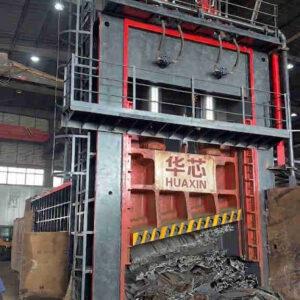
The Q91-630 is a 630 Ton scrap metal shear built on a heavy-duty hydraulic gantry frame for continuous HMS duty in large scrap yards and steel mills. Continuous HMS 1 & 2: rated for round-the-clock mixed ferrous intake of 60–80 tons per day. Heavy-Duty Frame: stiffened gantry structure and oversized cylinders sized for heavy sections, not light offcuts. Blade Life Under Load: H13 or M6V tool steel at 56–62 HRC, four-sided reversible, with regrind intervals stated for continuous duty. Right-Size Guidance: if your intake is under 50 t/day, we will tell you to buy the 315T or 400T instead. Matches for large scrap yards, steel mills and metal processing plants running continuous ferrous intake CE / ISO 9001 certified. Send your material mix and daily volume for a quotation within 48 hours.
Why Choose Huaxin
- Real Factory, 30+ Years Manufacturing Experience
- 24/7 Technical Support
- Customized Solutions Available
- Installation & Training Support
Description
630 Ton Scrap Metal Shear for Sale – Heavy-Duty Gantry Built for Continuous HMS Duty
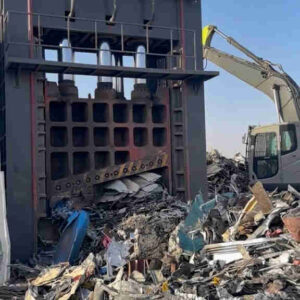
The Q91-630 is a 630 Ton hydraulic scrap metal shear engineered for one job above all others: holding a continuous duty cycle on heavy mixed ferrous intake. If your yard now takes in HMS 1 & 2 plate, structural offcuts, demolition skeletons and bundled rebar in the same day and needs 60 to 80 tons of sized scrap out the other end, this is the tonnage class that does it without being pushed past its limits.
Who Actually Needs 630 Tons of Shearing Force
Six hundred and thirty tons is not a number you buy because it sounds impressive. It is the class of machine that large recycling plants and small steel mills specify when three conditions line up:
- Heavy, mixed intake: HMS 1 & 2 and heavy structural sections arrive daily, not occasionally.
- Sustained daily volume: 60 to 80 tons of sized output per shift, every shift, including peak intake weeks.
- Limited feeding labour: you want the shear itself to do the sizing work, not a crew with torches and loaders.
If your plant matches that profile, the Q91-630 scrap metal shear sits in the band where downtime becomes expensive enough that frame stiffness, cylinder margin and blade life start to matter more than the sticker price of the machine.
Why the 630T Class Is the Continuous-Duty Threshold
There is a real difference between a shear that can make a cut and a shear built to keep making that cut through a ten-hour shift on heavy material. In the Q91 range, the lighter models handle light and medium ferrous scrap in duty cycles that suit smaller yards. The 630 ton scrap metal shear is the first model in the range we recommend for genuinely continuous work on HMS 1 & 2 and heavy plate — the point where hydraulic margin, cooling and blade wear stop being marginal, and where “heavy duty” stops being a marketing word. Our own 200 ton entry-level gantry shear carries the same guidance in its own selection table: anything approaching continuous HMS duty belongs on a 630T or above.
Upgrading From a 315T or 400T? Signs You Are Overloading the Machine
A large share of our 630 ton scrap metal shear enquiries start the same way: the buyer already owns a smaller gantry shear that is now running well past the duty it was specified for. The machine still cuts, so it is easy to postpone the upgrade — until the symptoms start costing money.
Three Signals That a Smaller Shear Is Being Overworked
- Oil temperature climbing: hydraulic oil running hotter than it did a year ago means the pump and valve block are working near their limit on every cycle.
- Blade edges rolling or chipping early: when a blade set wears out faster than the material mix justifies, the shear is being asked for force it was not sized for.
- Cycle time drifting upward: the same cut that used to take 25 seconds now takes 35, and the queue behind the shear keeps growing.
If two or more of those show up in your plant, the honest answer is usually not a rebuild — it is a tonnage class that matches the duty.
Q91-630 vs Q91-400 vs Q91-315
| Item | Q91-630 (this model) | Q91-400 | Q91-315 |
|---|---|---|---|
| Shearing force | 630 ton | 400 ton | 315 ton |
| Blade length | 1,500 or 1,600 mm | 1,300 or 1,400 mm | 1,200 or 1,300 mm |
| Motor power | 2×45 or 3×45 kW | 2×37 or 2×45 kW | 2×22 / 37 / 45 kW |
| Daily capacity | 60–80 tons/day | 35–55 tons/day | 25–45 tons/day |
| Feeding tank length | 6 / 6.5 / 7 m | 5 / 5.5 / 6 m | 4.5 / 5 m |
| Continuous HMS 1 & 2 | Yes – rated for it | Mixed ferrous, heavy sections; not continuous HMS | Mixed ferrous to 30 mm; occasional HMS only |
When You Should Not Buy a 630T
We will say this plainly, because selling a buyer the wrong machine costs us more than it earns: if your daily intake stays below roughly 50 tons and you rarely see heavy plate or structural sections, a 500 ton demolition-focused shear or a smaller gantry model will do the same work with a lower purchase price and lower running cost. A 630T only makes sense when the duty is genuinely continuous. Tell us your material mix and daily volume and we will recommend the smaller model if that is what your numbers support.
Key Specifications – Q91-630 Heavy-Duty Gantry Shear
| Item | Specification |
|---|---|
| Model | Q91-630 Hydraulic Scrap Metal Shear – gantry type |
| Shearing force | 630 ton |
| Blade length | 1,500 mm or 1,600 mm |
| Motor power | 2×45 kW or 3×45 kW |
| Cycle time | 20–35 seconds per cut (heavy sections at the upper end) |
| Daily capacity | 60–80 tons/day, material-dependent |
| Feeding tank length | 6 m / 6.5 m / 7 m |
| Power source | Electric grid, diesel generator, or on-site power station |
| Input voltage | 380V / 400V / 415V / 230V, 50 Hz or 60 Hz |
| Blade material | H13 or M6V tool steel, 56–62 HRC, four-sided reversible |
| Automation | PLC full-auto, remote control, emergency stop, overload protection |
| Certification | CE / ISO 9001 |
| Origin | Tangshan, China |
Blade length, motor power and feeding tank are configured to your material profile — the table above lists the standard options for the 630 ton class.
What the Q91-630 Cuts – Continuous HMS 1 & 2, Plate and Heavy Sections
Material Table
| Material | Q91-630 duty rating |
|---|---|
| HMS 1 & 2 | Continuous duty – the core application of this model |
| Steel plates | Up to 60 mm continuously; up to 80 mm in occasional cuts |
| H-beams / I-beams | Light through heavy sections, including demolition offcuts |
| Rebar | Loose or bundled construction and demolition rebar |
| Steel pipes | Single or bundled, within wall-thickness limits |
| Angle and channel steel | Light through heavy structural profiles |
| Car bodies | Flattened or pre-treated shells |
| Mixed ferrous scrap | General large-yard intake and steel-mill returns |
Capability Boundary – Continuous, Occasional, and Step Up
We publish the boundary rather than a single optimistic number, because a machine bought against the wrong boundary becomes an expensive lesson:
- Continuous duty: HMS 1 & 2 and mixed ferrous intake, plate to 60 mm, structural sections and bundled rebar — all shift long, all day.
- Occasional duty: plate up to 80 mm and the odd oversize section. Occasional means occasional: a few cuts an hour at most, not a routine pattern.
- Step up instead: if plate or oversize sections arrive daily, or your throughput target exceeds 80 tons/day, size the line to a 1000 ton high-throughput shear rather than pushing this model past its rating.
Hydraulic Gantry Structure
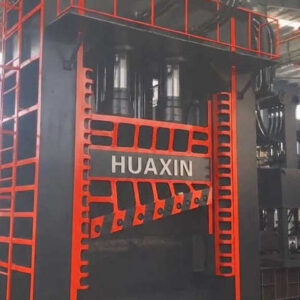
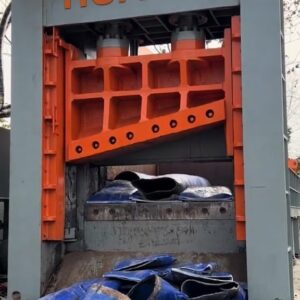
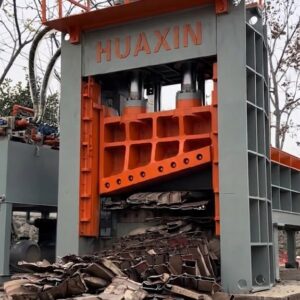
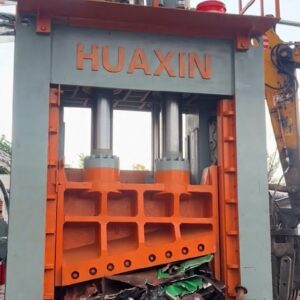
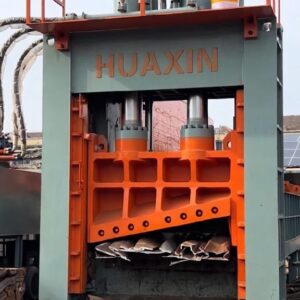
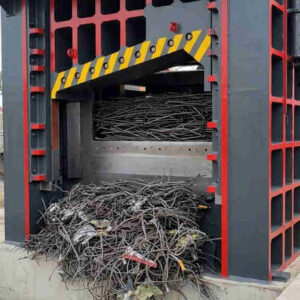
The frame is the part a buyer cannot see on a quotation and the part that decides whether the machine is still cutting straight in year eight. On a heavy duty gantry shear this is not a detail, it is the specification: the Q91-630 uses a stiffened gantry structure with oversized hydraulic cylinders sized for heavy sections rather than light offcuts, premium cylinders and an optimised valve block for stable pressure through the full stroke, and a feeding tank length of 6 to 7 metres so long sections feed without re-handling. Heavy sections generate far higher lateral loads than light scrap; this is the class where the frame margin stops being optional.
Blade System and Regrind Intervals
Blades are H13 or M6V tool steel at 56–62 HRC, four-sided reversible, so each blade is used four times before replacement. We deliberately do not print one universal blade-life figure for the whole range: under continuous HMS duty, regrind intervals depend on how much heavy plate passes through the throat versus lighter mixed ferrous. In the quotation we state the expected regrind interval for your actual material mix, and the full scrap metal shear range shares the same blade geometry family, so spares stay interchangeable across tonnage classes.
How the Q91-630 Gantry Shear Works
One Full Cycle
The Q91-630 runs a four-stage cycle that repeats continuously through the shift:
- Feed: the grab or loader drops material into the 6–7 metre tank.
- Clamp and compress: the side rams compact and hold the charge against the rear support.
- Shear: the moving blade descends through the charge against the fixed blade, sizing the material to the chamber length.
- Discharge: sized pieces drop out to the conveyor or bin behind the machine while the blade returns.
Cycle Time on Heavy Sections
Published cycle time for the 630 ton class is 20 to 35 seconds per cut. Light mixed ferrous sits at the fast end of that band; heavy plate and thick structural sections push toward 35 seconds, and that is the honest figure to plan a throughput model on — not the best case. Buyers sizing a line for 60–80 tons/day should model on the upper end, because peak-intake weeks are exactly when the shear has to hold its pace.
Power, Control and Automation Options
Motor and Voltage Configurations
Standard configurations are 2×45 kW or 3×45 kW, selected against your material mix and target throughput. Input voltage is configured to your plant supply — 380V, 400V, 415V or 230V at 50 Hz or 60 Hz — so the machine arrives matched to your switchboard rather than needing a transformer retrofitted on site.
PLC Control and Safety
Full PLC automation controls the cycle sequence, with remote operation so the operator stays clear of the shear zone and an emergency stop that reacts to abnormal hydraulic pressure or machine conditions. On a 630 ton machine, where a misjudged cut involves real energy, remote operation and positive stop protection are the features operators care about most.
Grid, Diesel or On-Site Power Station
Like the rest of the Q91 range, the Q91-630 can be supplied for grid connection, for a diesel generator, or wired into an on-site power station. Grid power is the usual choice at fixed large yards; diesel supply suits mobile or temporary operations. Tell us your site conditions and we will size the power package accordingly.
Shipping, Installation and After-Sales Support
Packing and Sea Freight
A 630 ton gantry shear ships as a set of heavy items rather than one crate: the gantry frame and shear head, the cylinder packages, the hydraulic power unit and the electrical cabinet travel separately, packed for container or flat-rack sea freight. We issue a packing list and lifting plan matched to your receiving crane capacity before shipment, so your port handling is arranged against real numbers.
Installation, Commissioning and Operator Training
Installation requires a prepared foundation, crane access and a qualified electrician for the power connection. We provide installation drawings and a commissioning checklist, and an engineer can attend site for start-up and operator training on request. Operator training covers loading practice, chamber sizing for the furnace, blade inspection and the daily checks that keep a continuous-duty machine running.
Spare Parts and Response
Wear packages for the 630 ton class cover blades, seals, valve-block components and hose assemblies. Because the Q91 range shares blade geometry across tonnage classes, spares are held for the family rather than per model, which keeps lead times short. We maintain a spare-parts recommendation list with every quotation so your maintenance team can stock the critical items before the machine is installed.
Why Yards Choose HUAXIN for Heavy-Duty Gantry Shears
- We will talk you out of the wrong tonnage. If 50 tons/day describes your intake better than your ambition, we recommend a smaller model and say so in writing.
- The boundary is published, not hidden. Continuous, occasional and step-up figures appear on every product page, so the specification you buy against is the specification you receive.
- Blade geometry shared across the range. One blade family across tonnage classes keeps spares simple and regrinds convenient.
- Factory-direct supply. Buying a hydraulic scrap metal shear from the manufacturer in Tangshan keeps the specification, the spares and the service in one pair of hands.
- Configured to your site. Voltage, blade length, tank length, power package and automation level are set from your material profile and site conditions before the order is cut.
Related Equipment
At 60 to 80 tons a day of heavy ferrous this shear is the centre of the operation, but not every stream suits it. Mixed light material and appliance scrap belong in a dual shaft shredder, and where the yard sells non-ferrous onward, a scrap metal baler turns loose copper and aluminum into dense bales.
FAQ – 630 Ton Scrap Metal Shear
What does a 630 ton shear cut continuously?
HMS 1 & 2, mixed ferrous intake, heavy structural sections, bundled rebar and steel plate up to 60 mm — all shift long. Plate up to 80 mm and the odd oversize section are occasional cuts, not a daily pattern.
Is the Q91-630 a better choice than running two 315T shears?
Usually yes, if your duty is genuinely continuous. Two smaller shears mean two power packages, two sets of controls, two operators and two maintenance points, and neither is rated for continuous HMS on its own. Where two machines do win is flexibility: if you run separate lines on different materials at the same time, that changes the arithmetic. Send us your layout and we will model both options.
What power supply does the Q91-630 need at a large yard?
Standard motor packages are 2×45 kW or 3×45 kW at 380V, 400V, 415V or 230V, 50 Hz or 60 Hz. A 3×45 kW package with everything running is a substantial load, so we size the supply, cabling and protection against the final configuration before shipment rather than after.
What intake data do you need to size a 630T line?
To quote the right configuration, tell us: the material mix and the heaviest plate or section you see regularly, target tons per day, whether intake is steady or seasonal, feeding method (grab, loader, conveyor), site power available, and the furnace or end-use your sized scrap feeds. Those six points determine blade length, tank length, motor package and automation level.
How often do blades need regrinding under continuous HMS duty?
It depends on how much heavy plate passes the throat versus lighter mixed ferrous — heavy plate consumes edge life faster. Blades are four-sided reversible, so each blade gives four working edges before replacement. We state a regrind interval for your specific material mix in the quotation instead of publishing one number that fits no real yard.
Can the Q91-630 be powered by a generator or diesel engine?
Yes. The Q91-630 can be supplied configured for a diesel generator or a grid connection, and the voltage is matched to your plant supply before shipment. For continuous duty at 60–80 tons/day, we recommend sizing the generator or supply with margin above the motor rating, because peak-intake weeks are when a marginal power package shows itself.
How much does a 630 ton scrap metal shear cost?
The figure follows the specification — blade length, tank length, motor package and the continuous-duty rating you actually need. Because this class is usually replacing a smaller shear rather than adding capacity, we quote against your current intake numbers so the step up is judged on cost per ton rather than a headline price. Send your material mix and the quotation follows within 48 hours.
Still sizing the line? Send your material mix, daily volume and site power details, and we will reply with a configuration recommendation and a quotation within 48 hours — including a recommendation for a smaller model if your numbers point that way. Buyers comparing the next tonnage band up can also review the 400 ton gantry shear and the 315 ton mid-tonnage shear.
Additional information
| Machine Type | Hydraulic Scrap Metal Gantry Shear Machine |
|---|---|
| Model No. | Q91-630 |
| Shearing Force | 630Ton |
| Material Processed | Light, Medium and Heavy Scrap Metal |
| Application | Scrap Metal Recycling |
| Industry | Scrap Recycling (medium-scale) |
| Automation | Full Auto |
| Drive System | Hydraulic |
| Brand | HUAXIN |
| Origin | China |
| Certification | CE ISO9001 |