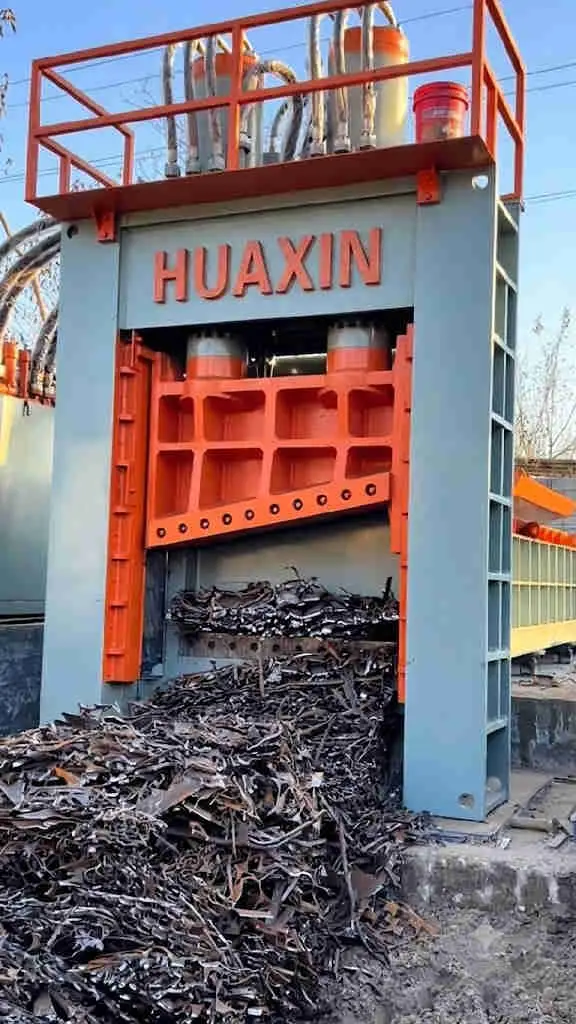
Rebar bundles are one of the least pleasant materials a scrap trader handles. They arrive tied, awkward and light for the space they occupy, they take up yard room that denser material would use better, and the mill that buys them has opinions about what form they should arrive in. We build the machines that solve this problem, and this article sets out the three routes we sell, with the drawbacks of each stated as plainly as the advantages. When sizing hydraulic scrap shear equipment for continuous duty, field data on the 630 Ton Scrap Metal Shear (Q91-630) highlights the link between frame rigidity, cycle speed, and operating cost.
Why rebar bundles are a problem in the first place
A bundle of rebar is mostly air. Tied together, it occupies floor space and truck space without carrying the weight that space could hold, so freight is expensive per ton and the yard fills faster than the tonnage suggests. The bigger issue sits at the buyer’s end. Mills care about what goes into the furnace, and a loose bundle is not a charge specification, it is a pile of steel that has to be handled again before it melts.
The trade has settled on three answers to this, and which one is right for you depends on your rebar diameter, your hourly volume, what your mill accepts, and what your port can handle. We manufacture all three types of machine, so the comparison below is not a sales pitch for one product line. It is the same conversation we have with buyers who call us about rebar every week.
Option 1: Bale the bundles with a scrap metal baler
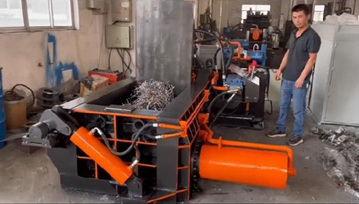
The first option is to compress the bundles into dense bales. A 630 ton scrap metal baler handles lighter rebar, while heavier bundles push you toward the 800 ton or the 1000 ton metal baler. The advantage is density: a bale packs the most steel into the least space, which cuts your freight cost per ton and clears your yard. Our baler range covers the full ladder from small yards to mill scale.
The drawbacks are real and you should hear them before you order. A machine in this class weighs more than 50 tonnes complete, which means it ships as break bulk cargo rather than in a container. Break bulk costs more to load, and not every port on your coast can take it, so the machine that looks affordable on the quotation can arrive with a shipping bill that changes the arithmetic. Check your port’s capabilities before you compare prices.
The second drawback sits with your buyer. Some steel mills will not take high-density rebar bales, because a dense bale does not behave in the furnace the way looser charge material does. If your mill is one of them, baling solves your yard problem and creates a sales problem, and no amount of compression fixes that. Ask your buyer first, then choose the machine.
Option 2: Shear the bundles into 30 to 60 cm pieces
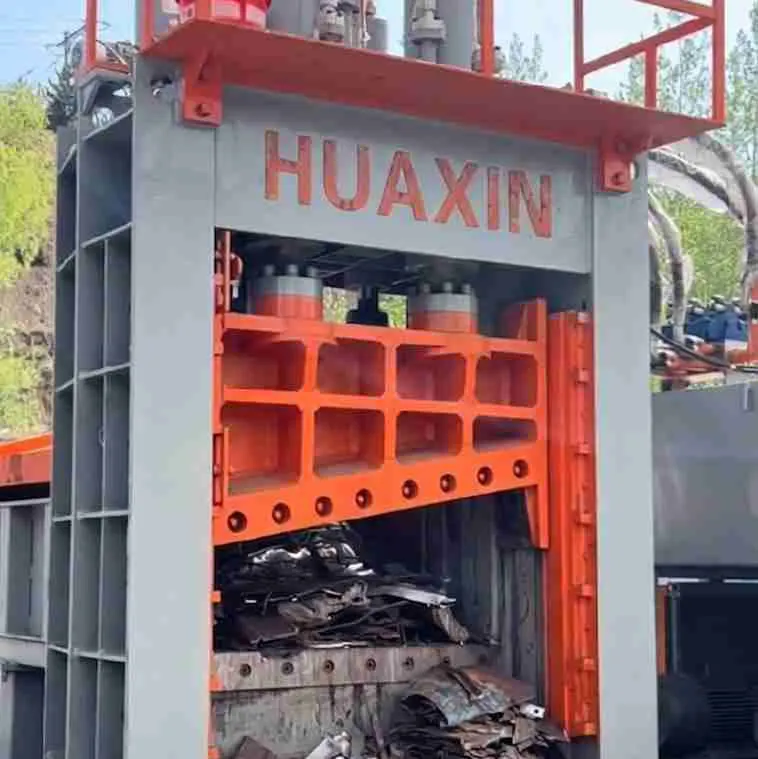
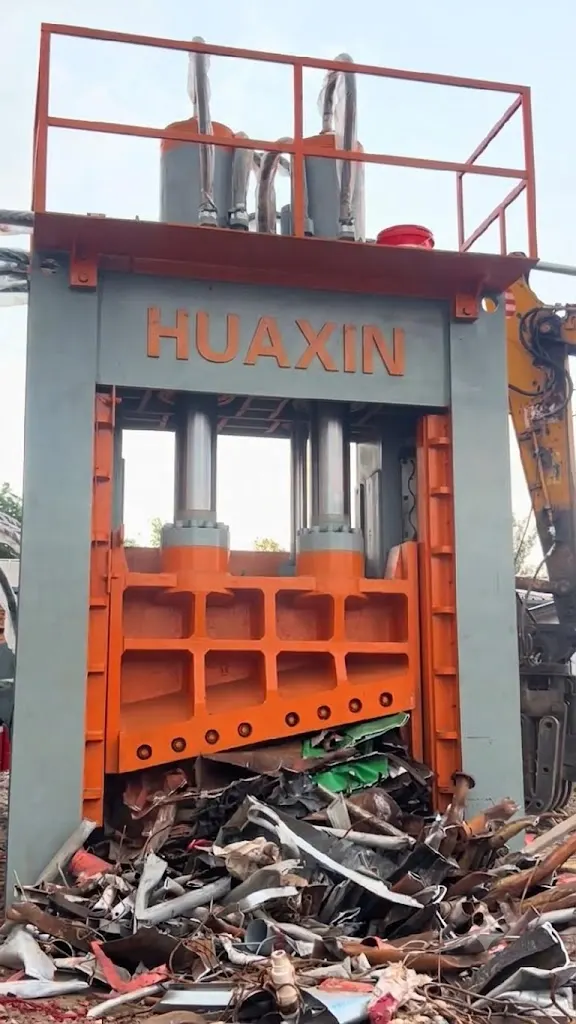
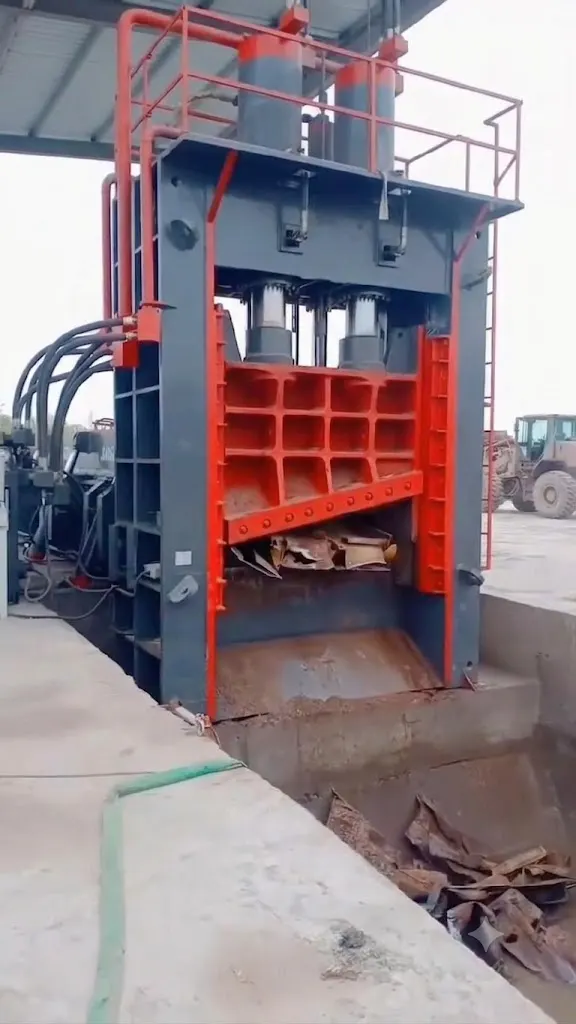
The second option is to cut the bundles into short pieces with a scrap metal shear. Cut length is adjustable, and 30 to 60 cm is the range most rebar buyers ask for. This is the form mills accept most readily, because cut rebar behaves like ordinary furnace charge and goes in without further handling. If your buyer has opinions about charge size, this is the option that meets them.
Machine selection follows rebar diameter and the tonnage per hour you need. Lighter bundles run on a 630 ton shear. Higher throughput or heavier bar points at the 1000 ton or the 1250 ton scrap metal shear. In China, where rebar processing is a large industry, the 2000 ton shear has become the standard machine for this work.
We can show you the numbers rather than ask you to take them on trust. One of our customers runs a 2000 ton shear on rebar at roughly 30 tonnes per hour, and the video below shows that machine working on site. If you are weighing this option, come and see it running yourself. The bundle handling guide covers the sizing questions in more detail.
The machine in the video is the same configuration we quote for high-volume rebar work, running on material close to what a trading yard receives every day. Watching a machine cut real bundles tells you more about cycle behaviour and discharge flow than any specification table, which is why we would rather show you the video than send a brochure.
Option 3: Shred the bundles with a rebar shredder
The third option is the one designed specifically for this material. Our rebar shredder takes whole bundles and tears them into 10 to 20 cm pieces, which is shorter than a shear produces and closer to what some mills and foundries prefer. Because the machine is built around rebar rather than adapted from a general-purpose design, it does the job with less power than you might expect.
The figures are worth stating plainly. A rebar shredder in this class processes 20 to 25 tonnes per hour on about 80 kWh, which works out to a low electricity cost per tonne compared with the other two options. If your power tariff is high, that number matters more over a year than the purchase price does. Energy is the reason this option exists: the same output from a larger machine is possible, but the running cost is not the same.
The trade-off is piece size. A shredder produces 10 to 20 cm fragments, which some buyers prefer and others do not, so check your mill’s specification before you decide. The shorter the charge piece, the faster it melts, but not every buyer wants the shortest piece.
Comparing the three options side by side
| Factor | Baler | Shear | Rebar shredder |
|---|---|---|---|
| Output form | Dense bale | 30 to 60 cm pieces | 10 to 20 cm fragments |
| Mill acceptance | Mixed, some mills refuse dense bales | Widely accepted | Accepted where short charge is preferred |
| Typical machine size | 630 to 1000 ton | 630 to 2000 ton | Dedicated rebar design |
| Shipping | Over 50 t, break bulk, port limits | Heavy, check crate and route | Lighter than baler or shear |
| Energy per hour | High, compression duty | High, intermittent cut | About 80 kWh at 20 to 25 t/h |
| Best for | Maximum density, short haul | Mill-ready charge, flexible length | Low running cost, short charge |
No row in that table picks a winner on its own. The decision is a sum of your diameter, your hours, your buyer and your port, and the honest answer for a small yard with a nearby mill is rarely the same as for a trader shipping overseas.
How to choose between them
Start with your buyer, not the machine. If your mill takes cut rebar at 30 to 60 cm, the shear is the direct answer and the rest of the decision is sizing. If your mill prefers short charge and your power is expensive, the shredder’s energy figure carries the decision. If your buyer takes bales and your haul is short, the baler’s density wins on freight alone.
Then check the two constraints that decide whether a machine can actually reach you. Shipping weight and your port’s break bulk capability narrow the field faster than any specification sheet, because a machine that cannot be landed is not an option regardless of its price. After those two checks, the tonnage and diameter figures settle the size, and our written recommendation comes back within two business days with the class and configuration your numbers support.
As a manufacturer we build all three machine types, which means the recommendation you get from us is not shaped by which line we would rather sell. Tell us your rebar diameter, your hourly target, your mill’s requirement and your port, and we will tell you which of the three options your operation actually needs. Sometimes the answer is the smaller machine, and we will say so.
Engineering & Field FAQ: How to Process Scrap Rebar Bundles: Three Options from a Recycling Machine Manufacturer
What is the cheapest way to process scrap rebar bundles?
It depends on what you are measuring. The baler gives the lowest freight cost per tonne because of density. The shredder gives the lowest running cost at about 80 kWh for 20 to 25 tonnes. The shear sits between them and produces the form most mills accept without argument.
Which machine size do I need for rebar?
Diameter and hourly volume decide. Lighter bundles run on a 630 ton baler or shear. Higher volumes and heavier bar move to the 800 to 1000 ton baler or the 1000 to 1250 ton shear. In China the 2000 ton shear is the standard for high-volume rebar work.
Can I see the machines running before I order?
Yes. The video above shows a 2000 ton shear processing rebar at about 30 tonnes per hour at a customer’s site. You are also welcome to visit our workshop and see the line running on real material. If neither works for your schedule, tell us what you need to see and we will record it on the machine you are considering.
Do you ship the machines yourselves?
We arrange the shipping and handle the export documentation. Be aware that machines over 50 tonnes go as break bulk cargo, which costs more to load and limits the ports that can receive them. We confirm the shipping scope in writing before the order so there are no surprises on the quotation.
What information do you need to recommend a machine?
Your rebar diameter, the tonnes per hour you want to process, your mill’s charge specification, and your port’s break bulk capability. Send those four and the written recommendation comes back within two business days, including when the honest answer is the smallest machine that does the job.
Want cycle-time calculations or container loading details for your scrap mix? Compare full machine parameters on our 630 Ton Scrap Metal Shear (Q91-630) page, review our heavy-duty scrap metal shear series engineering hub, or contact HUAXIN’s Tangshan engineering team with your feedstock photos and target daily tonnage.