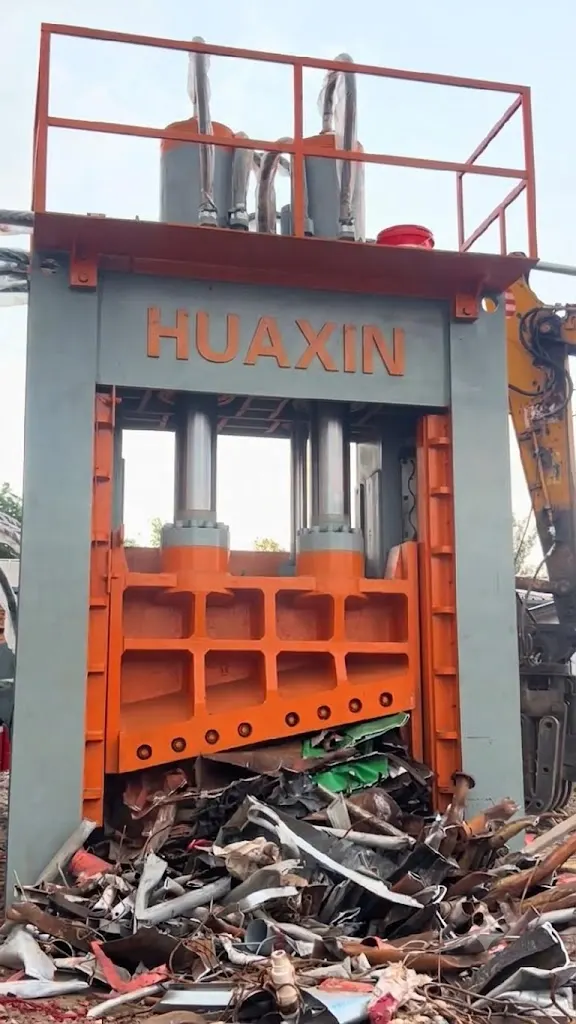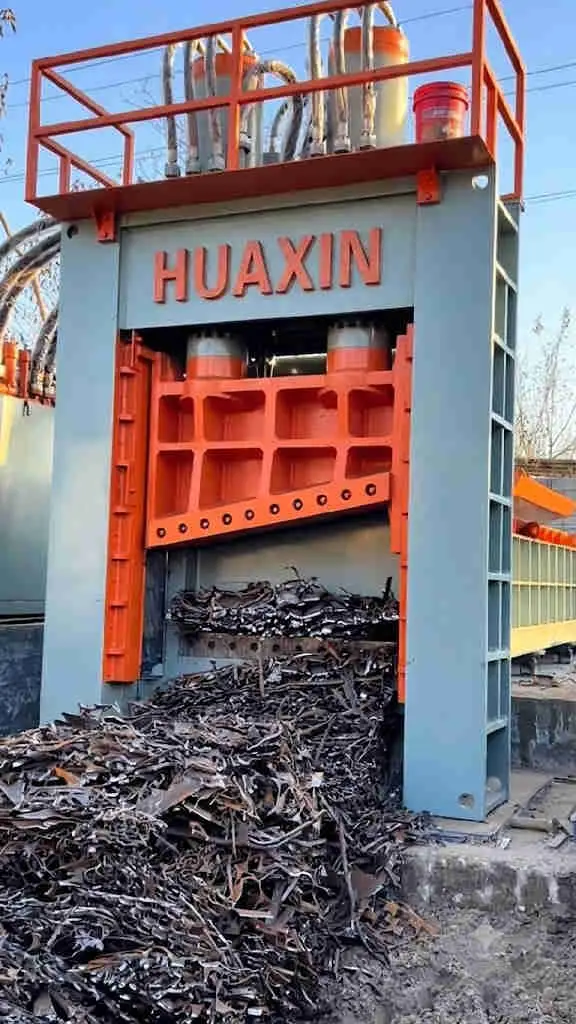
Mixed light scrap is the material most small yards actually receive, and it is the feed a 200 ton gantry shear was built around. Sheet offcuts, thin section, wire and light profiles all land in the same feed box, and the machine sizes them into something sellable. This article covers what the entry class does well with mixed light feed, where it struggles, and how the discipline around the box decides the tonnage. In day-to-day scrap cutting equipment production, matching machine capacity to scrap thickness is what keeps wear costs predictable.
What mixed light scrap actually is
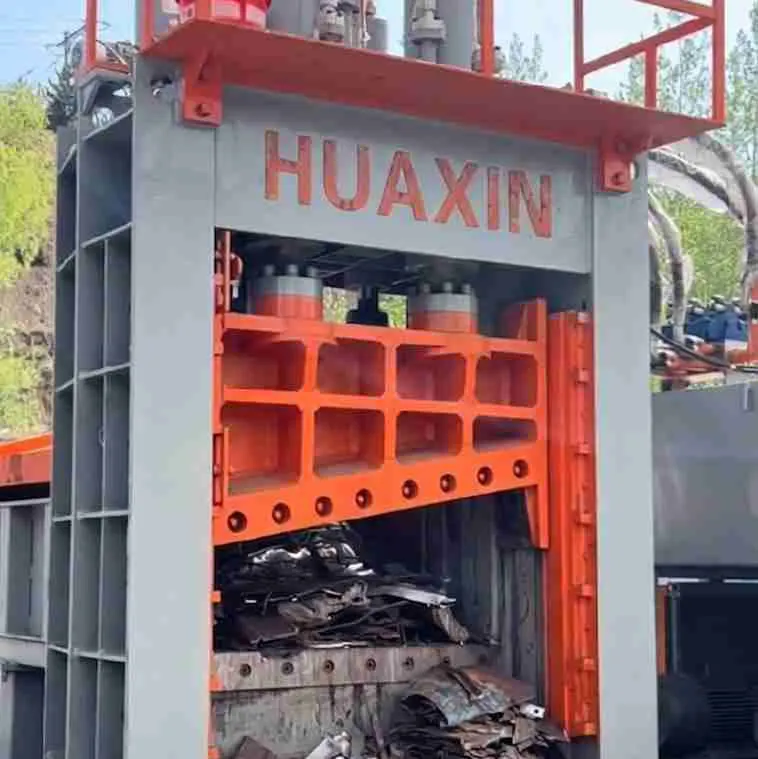
Mixed light scrap is a category, not a material, and the range inside it is wider than most buyers realize. Sheet offcuts from fabrication shops. Thin sections from demolition. Wire and cable offcuts. Light profiles and stampings. Each cuts differently, and the mix changes day to day. That is the real challenge: the machine has to handle all of it without being reconfigured for any of it.
The 200 ton class handles the category as a whole, and its material table lists the light feed it was designed around. What makes the difference on any given day is the density of the mix. A box charged with dense sheet moves more tons per bite than the same box charged with loose wire, and the cycle time is the same in both cases.
This is why the tonnage on mixed light feed varies more than on any single material. The same machine turns out different numbers on different mixes. Read the band against your own typical mix rather than a generic figure. The material matching guide maps the streams.
If the mix carries more heavy section than light feed, the larger classes are in our gantry shear range.
200 ton scrap metal shear specifications for light feed
These are the figures we quote against. Output assumes a 10-hour working day.
| Item | Q91-200 |
|---|---|
| Shearing force | 200 t (2,000 kN) |
| Blade length | 1,100 or 1,200 mm |
| Motor power | 22–30 kW, 2×22 kW option |
| Output | 2.0–4.5 t/h, 20–45 t/day |
| Max plate (mild steel, continuous) | 25 mm |
| Feed box length | 4 / 4.5 / 5 m |
| Cycle time | 20–30 s |
| Control | PLC auto cycle, remote control, emergency stop |
On mixed light feed the force is rarely the limit. Box density is.
Where the entry class shines
The entry class shines on mixed light feed because the machine is forgiving. It takes a wide range of sections without reconfiguration, cuts the mix down to a uniform size, and keeps cycling while the operator sorts. That forgiveness is the point of the class. A yard receiving an unpredictable mix needs a machine that does not demand a predictable feed.
The throughput follows the feed density, not the machine. Dense days with sheet-heavy loads move real tonnage, toward 4.5 t/h. Light days of wire and thin profiles move less, closer to 2 t/h. The machine is identical on both days, which is why the band is a range rather than a number.
The band guide covers those assumptions, and the computation guide converts the cycle rate into your shift tonnage with your own mix in it.
Where it struggles
The entry class struggles on two things, and both are about the feed rather than the force. The first is bulk. A box charged with loose, tangled wire fills without weighing much, and the machine cuts air for part of every cycle. The second is contamination: mixed light scrap arrives with wood, plastic and non-ferrous mixed in, and each piece of non-steel dulls the edge for no cutting return.
The first problem is a charging discipline question. A box packed dense, with the material pushed down rather than piled loose, moves more weight per bite. The second is a sorting question, and it is the same gate every material wants. Neither is a machine limitation, and both are cheaper to fix than a step up to the 315.
The feeding discipline guide covers the charging habits, and the maintenance guide covers what contamination does to the edge.
Sorting before the box pays
The sorting pass is where mixed light scrap earns its margin, because the mix determines what the cut is worth. Non-ferrous pulled before the box sells at its own price instead of being buried in the ferrous cut. Oversize pieces set aside keep the machine from fighting material it was never sized for, such as plate over 25 mm. And the dense steel, separated from the light, charges the box the way the band assumes.
The pass costs one operator’s attention at the gate. It returns the value the mix would otherwise hide. On mixed light feed this is more than housekeeping, because it separates a yard that sells a sorted cut from one that sells whatever the crane happened to drop in.
The material matching guide covers the streams and their buyers, and the daily tonnage band guide covers the set-aside pile as a signal.
Reading the band on a mixed feed
The band on mixed light feed measures your mix, not a fixed target. A yard that runs dense sheet-heavy loads sits near 45 tons a day. A yard that runs wire and thin profiles sits nearer 20. The difference is the material, not the machine, and the real number comes from weighing a normal week rather than from a brochure.
Watch the box, not the tonnage. A box packed dense with the material pushed down moves weight; a loose box moves air. The operator controls that, and the tonnage follows the operator’s habit more than most yards admit.
The cycle guide covers what the machine reports about its own charging, and the log that records it is the document that makes the second purchase easy.
Engineering & Field FAQ: Mixed Light Scrap on a 200 Ton Shear
Can a 200 ton shear handle mixed light scrap?
Yes, and it is the material the class was built around. Sheet offcuts, thin section, wire and light profiles all cut within the rated range, with plate up to 25 mm. The machine handles the mix without reconfiguration.
Why does my tonnage vary so much day to day?
Because the density of the mix varies. Dense sheet-heavy loads move more tons per bite than loose wire, and the cycle time stays at 20 to 30 seconds. Weigh a normal week and read the 20 to 45 t/day band against your own mix.
Is sorting worth it on light scrap?
It is where the margin lives. Non-ferrous pulled before the box sells at its own price, and the dense steel, separated from the light, charges the box the way the band assumes. The pass pays for itself in the value it recovers.
What do you need to recommend the right setup?
Your typical mix, the daily tonnage, and how much non-ferrous is currently mixed in. The written quotation comes back within 48 hours, including when the answer is the machine you already have.
Looking for a custom layout or spare-parts package for your yard? Compare full machine parameters on our 200 Ton Scrap Metal Shear page, review our industrial scrap cutting machines, or contact HUAXIN’s Tangshan engineering team with your feedstock photos and target daily tonnage.