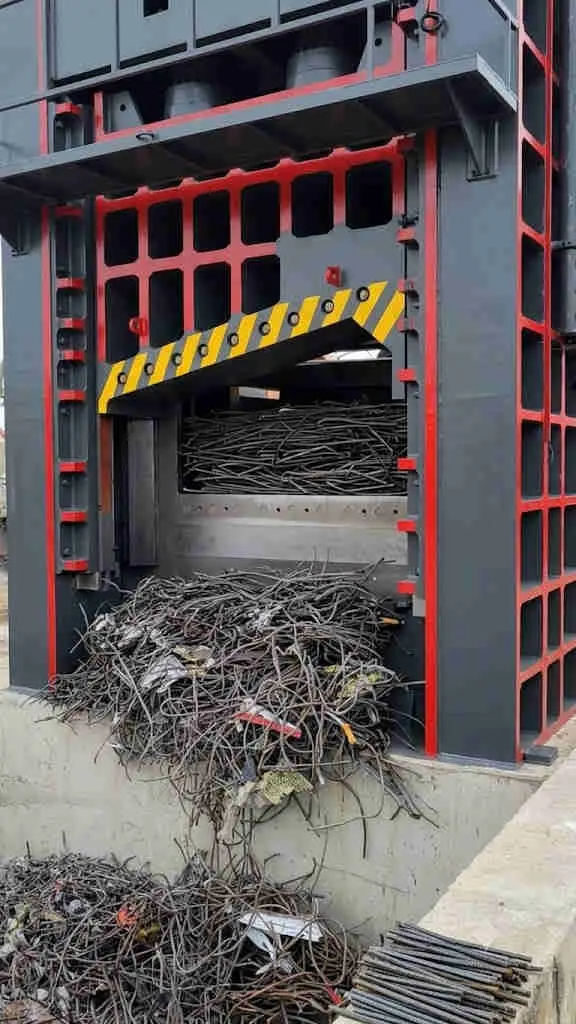
Rebar is the first material most yards learn a gantry shear on, and the 200 ton class is where most of them start. The fit is a good one. Rebar sits comfortably inside the material limits of a 200 ton scrap metal shear, the 20 to 30 second cycle runs clean, and a single operator keeps the whole thing moving. This article covers what that looks like in practice, where the limits sit, and what changes when the bar starts arriving in bundles. For yards still comparing heavy-duty scrap shear setups, the same operating habits explain how hydraulic pressure stability and feeding discipline shape cost per ton.
If your yard feeds bars, rebar, and light pipe manually without a pit foundation, see our 200 Ton Alligator Shear.
Looking strictly at hinged-jaw models? Explore full specs across our 200T & 250T alligator shears or compare heavy box units in our Q91 gantry shear series.
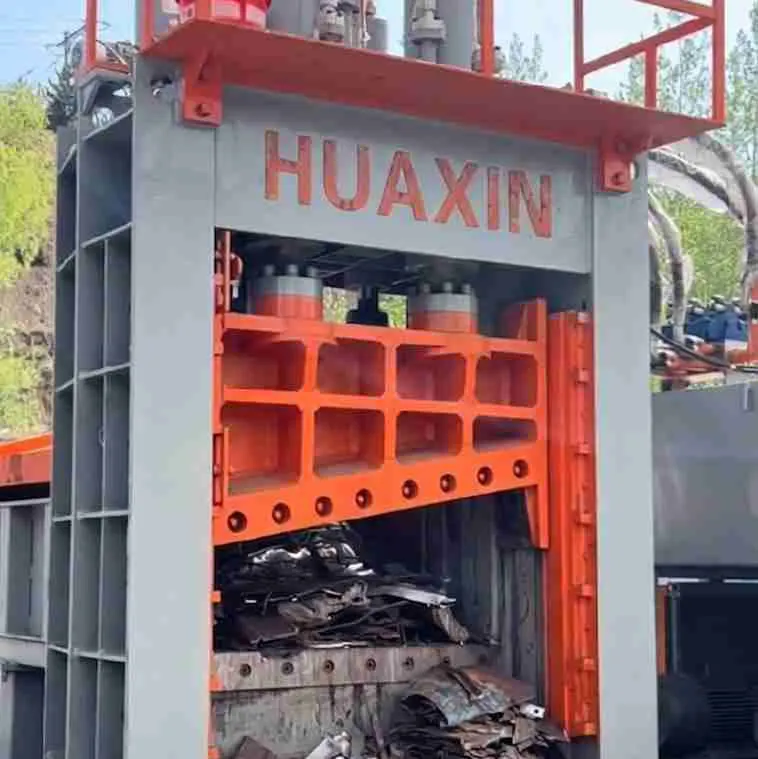
Why rebar fits the 200 ton gantry shear
Rebar is forgiving material. It is uniform in section, clean to cut, and dense enough that a 200-ton machine turns out real tonnage without straining. The material table on the product page lists rebar among the everyday feed. The output band of 20 to 45 tons per day (2.0 to 4.5 t/h over a 10-hour day) is built around exactly this kind of material. Think light to medium sections that arrive in steady volume rather than in heavy bursts.
The cycle is the quiet part of the story. A 20 to 30 second cut on rebar means the machine spends its shift cutting rather than repositioning. The tonnage comes from repetition. Yards that keep the feed box charged and the bar oriented straight see the top of the band; yards that fight the feed see the bottom. The machine is the same either way.
The numbers behind the rebar work
These are the figures we quote against for the 200 ton class.
| Item | Q91-200 |
|---|---|
| Shearing force | 200 t (2,000 kN) |
| Blade length | 1,100 or 1,200 mm |
| Motor power | 22–30 kW, 2×22 kW option |
| Output (10-hour day) | 2.0–4.5 t/h, 20–45 t/day |
| Max plate (mild steel, continuous) | 25 mm |
| Feed box length | 4 / 4.5 / 5 m |
| Cycle time | 20–30 s |
| Blade steel | M6V, H13, X45 or D2 tool steel, four-edge reversible. |
Rebar sits near the top of that output band when the feed is clean. Bent, tangled or concrete-faced bar pulls it down.
What the cycle rate actually delivers
A common mistake is reading the cycle time as the throughput. The cycle is the cut. The throughput is the cut, plus the load, minus the waiting. On rebar the load is quick and the waiting is short, which is why the entry class punches above its tonnage on this material. The number still depends on two habits: charging in rhythm rather than in surges, and keeping the bar straight in the box so the cut lands square.
You can read the difference off the blade log. A yard feeding rebar straight with a charged box gets long rotation intervals. A yard charging whatever the crane brings, bundled bar mixed with bent lengths, gets shorter intervals on the same machine. The cycle-to-tonnage guide covers the arithmetic.
Where the entry class stops
Rebar stays comfortable until two things change. The first is diameter. Light bar, the sort used in slabs and walls, cuts without strain. Heavy structural bar in the larger diameters pushes toward the top of the material table, and past a point it belongs on the class above. The second is presentation: bar that arrives as clean lengths is one job, and bar that arrives as tangled bundles is another.
The tangled bundle is where most operators discover the limit. A bundle behaves as one mass until it gives, and the moment it gives under load is harder on the blade than cutting the same bar loose. The 315 Ton Scrap Metal Shear Machine, with 315 t of force and 30 mm plate capacity, is the class to look at when bundles become the daily feed.
One person runs it, and that matters
The entry class is specified for one-person operation, and on rebar that is not a marketing claim. One operator at the PLC station, an excavator or grapple feeding the box, and the machine runs. Labour is the quiet advantage of the class. The same tonnage moved by hand-fed equipment needs a second or third person, and those wages recur every month.
The one-person claim assumes a disciplined feed. The operator can run the machine alone, but not while also untangling bundles by hand. Where the bar arrives clean, the class earns its labour case. Where it arrives tangled, the sorting happens before the box or the bottleneck simply moves upstream. The feeding discipline guide covers the habit.
How the bar length meets the blade
Rebar arrives in standard lengths, and the blade length decides whether bundled bar cuts in one pass or needs repositioning. The 200 ton shear comes with a 1,100 mm or a 1,200 mm blade. Pick the one that covers the width of the bundles you actually receive. A blade that covers the bundle whole cuts it in one cycle; a blade that forces the operator to shift the bar costs a minute per piece, and minutes across a shift are tons.
The calculation is easy to do with your own numbers. Count the wide bundles in a normal week, multiply by the minutes each reposition takes, and you have the annual cost of a too-short blade. That figure ends a brochure argument quickly, because it comes from your yard rather than from a spec sheet. The blade length guide covers the arithmetic.
Feeding the box so the edge lasts
Blade life on rebar is mostly a feeding habit. Bar that enters straight cuts square and wears the edge evenly. Bar that enters at an angle loads one corner first, and that corner chips before the rest of the edge has done any work. The difference shows up in the rotation interval, not in any single cut. It is the first thing to check when a yard’s blade bill climbs without a change in material.
Two habits protect the edge. Orient the bar so the long axis runs along the feed box. Let the hold-down clamp before the stroke, because a bar that shifts under load wears unevenly even when it entered straight. Both are crew habits rather than machine settings, and both are cheaper to train in week one than to correct in year two. The maintenance guide covers the mechanics.
When the rebar arrives with the concrete still on
Demolition rebar rarely arrives clean. Concrete still attached to the bar is common on teardown work, and it changes the cut in a specific way. The concrete hits the blade first and dulls it against abrasive material. The steel behind it then cuts less cleanly than it would have. A machine cutting concrete-faced bar shortens its blade intervals for no cutting return.
The answer is the sorting gate, the same one that separates bundles from loose bar. Concrete-faced pieces get set aside, or the concrete gets knocked off before the bar reaches the box. It is one more position at intake. On demolition feed it is the cheapest wear insurance in the yard.
Engineering & Field FAQ: Rebar and Light Section on a 200 Ton Shear
What rebar can a 200 ton shear cut?
The light and medium diameters that make up most demolition and construction scrap, at 20 to 45 tons per day on a 10-hour day. Heavier structural bar pushes toward the top of the material table, and bundled bar is a different job from loose lengths.
Is rebar the right material to start a yard on?
It is one of the better ones. The material is clean, the volume is steady, and the entry class is built around it. A yard that starts on rebar learns feed discipline on forgiving material, then carries that discipline up the range.
Why does bundled rebar cut differently?
A bundle is one mass until the wire or the bindings give, and the machine loads harder at that moment than it does on loose bar. Loose lengths cut cleanly. Bundles want the class above once they become the daily feed rather than the exception.
How do I know if I need the 315 instead?
Count the bundles. If they are most of what arrives and the bar is heavy, the 315 is the right step. If the bar arrives loose and light, the 200 stays right, and the written recommendation we send names the class your numbers support.
What does a week of running rebar actually look like?
Steady, if the feed is right. The box stays charged, the bar cuts clean at the cycle, and the tonnage builds without drama. The days that look busy but move little metal are almost always the days the feed slipped: a shared loader, a pile of tangled bar at the gate, or a blade that should have rotated. A logbook line captures all three without an instrument.
Summary Checklist: Rebar and Light Section on a 200 Ton Shear
Rebar is the right material to start a gantry yard on. The entry class is the right machine for loose, light bar in steady volume. The limits are specific: bundles, heavy structural diameters, and concrete still attached. Count the bundle mix, watch the binding, and let the material decide the next class the same way it decided this one. Send the counts, and the written quotation that comes back within 48 hours is built on them.
The habit worth forming first is the log. Keep a daily line with the tonnage and the dominant material, a rotation entry with the interval, and a note when the bundle mix changes. Three months of that log makes the second purchase easy. The specification then comes from your own records instead of a wish list, and a written specification is the only kind a factory can actually build to.
Planning a yard upgrade? Compare full machine parameters on our 200 Ton Scrap Metal Shear page, review our hydraulic scrap shear lineup, or contact HUAXIN’s Tangshan engineering team with your feedstock photos and target daily tonnage.