Not every baler is built to make a big square block of mixed steel. Some are built for a very different job: turning light, valuable, non-ferrous material into small, dense bales that sell by density. If your business is aluminum, copper or used beverage cans, that difference matters a lot. In day-to-day scrap metal baler production, our 200 Ton Scrap Metal Baler (Y81F-200) demonstrates why matching machine capacity to scrap thickness keeps wear costs predictable.
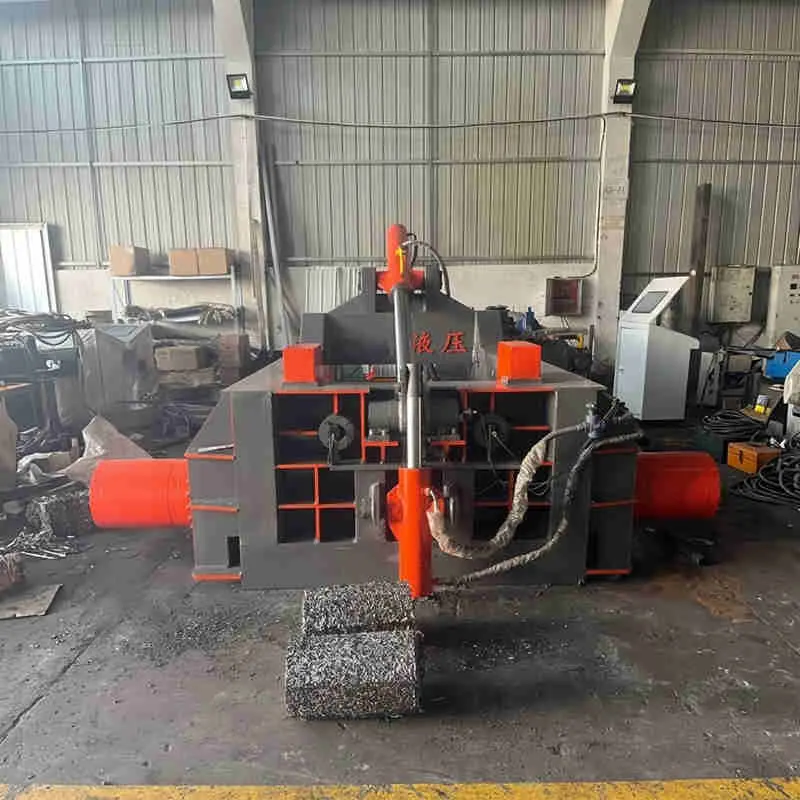
This article is about one such machine, our 200 Ton Horizontal Scrap Metal Baler, model Y81Q-200. We will explain what it does, who it fits, and what you should ask before you buy.
What makes this baler different
The Y81Q-200 is a horizontal side-press baler. Instead of a single large ram pressing a big rectangular bale, it uses several cylinders working in sequence. According to the product page, the configuration is:
- 80 t × 2 main cylinders
- A 200 t side cylinder
- A 50 t door cylinder
- A 3 t tipping cylinder
The output is a cylindrical bale of φ150×500 mm, weighing about 120 kg. The page lists the bale weight as 80 to 120 kg with a density of at least 1,500 kg/m³, and notes that the weight is an estimate that varies with material. That is a small, very dense package, which is exactly what non-ferrous buyers tend to want.
Key Machine Specifications: Y81Q-200 Horizontal Side-Press Baler
| Item | Y81Q-200 |
|---|---|
| Main cylinder force | 200 ton (side-press) |
| Chamber size | 1000×800×500 mm (welded) |
| Bale size | φ150×500 |
| Bale weight | Up to 120 kg (estimated, varies with material) |
| Motor | 22 kW |
| Duty rating | Single to two shifts |
| Control | Manual, semi-automatic or full PLC |
| Power | Electric 3-phase at 380 V, 400 V or 415 V (50 Hz), other voltages available; diesel optional |
| Certification | CE |
What it is built to bale
The product page lists aluminum, copper, UBC cans and light steel, summed up as “anything sold on density.” The typical customers named are non-ferrous smelters, UBC processors and aluminum alloy plants.
The page also gives a short suitability table:
- Aluminum: acceptable duty, with density moving with bulk density.
- Copper: suited to the side-press chamber.
- UBC cans: handled without pre-sorting when unmixed.
- Light steel: best results with continuous feeding.
That last line is useful. A machine like this works best with a steady, consistent feed. If your material arrives in big, irregular batches, ask us how the chamber should be configured for your situation.
How a cycle works
Material is charged from the floor or a hopper. The main cylinder compresses it until the bale reaches its set size. The bale is then tied and discharged, and the cycle repeats. The page describes it as four steps: charging, compressing, tying and discharging.
The finished bale is weighed, tagged and staged for the truck. Because bales are finished under load, the delivered bale should match the specified weight rather than an optimistic estimate. That matters when you sell by weight and by density.
Why density is the whole point
When you sell aluminum or copper, you are usually paid by weight, and the buyer cares how well it will go into a furnace. A dense bale takes less space in a truck and in storage. A bale that does not meet your buyer’s acceptance specification may have to be broken up and re-baled, which wastes money.
Our product page says it plainly: a bale that matches your buyer’s acceptance specification is worth more per ton than a denser bale that has to be broken and re-baled. Before you buy any baler, ask your buyers what they want. Bale size, weight and density tolerances differ from one buyer to another, and some will refuse bales that do not fit.
Power and site supply: Y81Q-200 Horizontal Side-Press Baler
The Y81Q-200 runs a 22 kW power pack. Standard voltages are 380 V, 400 V or 415 V at 50 Hz, with 60 Hz supply to order. A diesel-driven pack is available where mains power does not reach.
That is a small installed load compared with large shears and shredders, which can make this machine easier to site. But still confirm your voltage, frequency and starting method before you order. Fixing a mismatch after delivery is slow and annoying.
Controls: manual, semi-automatic or PLC
The page lists three control levels. Manual is the simplest, semi-automatic reduces operator effort, and full PLC automation suits operations with enough volume to justify lightly supervised running. Each step up is quoted as an option rather than assumed, so the price you see matches what you are actually buying.
For a small processor running a single shift, manual or semi-automatic may be enough. For a plant running two shifts with a steady feed, the PLC is easier to justify. Ask for each option to be priced separately so you can decide.
Wear parts you should plan for
Every baler has parts that wear. On this machine, the product page mentions wire guides and tying hooks as items that wear faster than buyers expect, because they handle every bale. It suggests ordering a spare set with the machine, which usually costs less than ordering after a first failure.
That is practical advice. A small spare kit costs little compared with a day of lost production. When you order, ask us for a recommended spare parts list for your material and your shift pattern.
Feeding tips from the product page
If your intake arrives mixed, the page suggests charging the heavier fraction first and following with lighter scrap. The reasoning is simple. The bale is densified against a dense core rather than a hollow one, which tends to give a better result.
It is a small habit, but it shows how much operator technique affects bale quality. Train everyone who feeds the machine, not just the person who usually does it.
Where it sits in the range: Y81Q-200 Horizontal Side-Press Baler
The Y81Q-200 is not the only 200-ton baler we make. We also list the Y81F-200, which has its own specification, so the sensible approach is to compare the two product pages before choosing. If you are upgrading from this class, the product page notes that buyers often look at the Y81T-500 high-density baler, while buyers consolidating duty look at the Y81Q-135 front-out baler.
The full lineup is on our scrap metal baler page. If you also cut your own scrap before baling, see our shear range.
Installation, shipping and support
The quotation includes a drawing package for foundation and services. The page suggests sending it to your civil contractor early, since foundation questions are a common cause of commissioning delay. Plan bale storage too. Stacked bales of the stated weight need rack or floor space, and many sites underestimate this.
The page says a commissioning engineer can attend for leveling, electrical connection, no-load and load runs and operator training, with remote commissioning for repeat configurations. Lead times and warranty terms are listed on the product page, but they are written into each contract, so confirm the figures for your own order rather than relying on a general statement.
Questions to ask before ordering
- What density will my specific material reach in this chamber?
- Does the bale size meet my buyer’s written specification?
- Which control level do I really need?
- What spare parts should I stock first?
- What voltage, frequency and starting method will I use?
- Where will bales be stored and loaded?
If you can answer those, you are in a good position to ask for a quotation.
Getting a quotation
Send us your material, your expected daily tonnage, your power supply and your bale requirements. The product page says to expect an itemized quotation within two business days. If possible, include a photo or a small sample description of your material. You can send everything through our contact page.
Looking for a custom layout or spare-parts package tailored to your yard? Compare full machine parameters on our 200 Ton Scrap Metal Baler (Y81F-200) page, review our scrap metal baler engineering hub, or contact HUAXIN’s Tangshan engineering team with your feedstock photos and target daily tonnage.