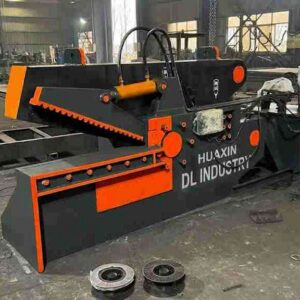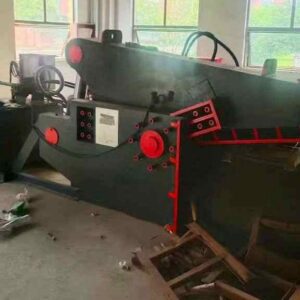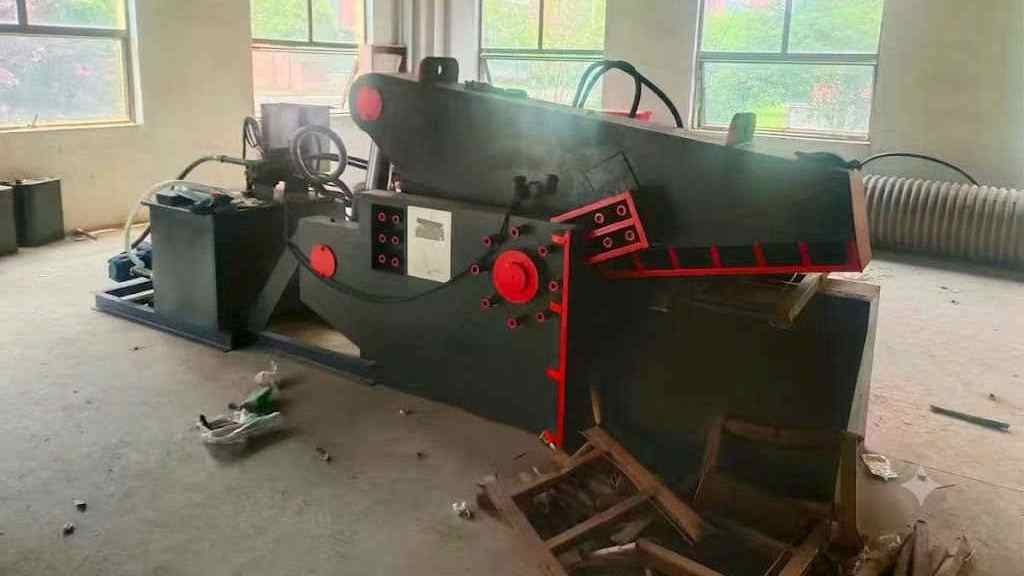
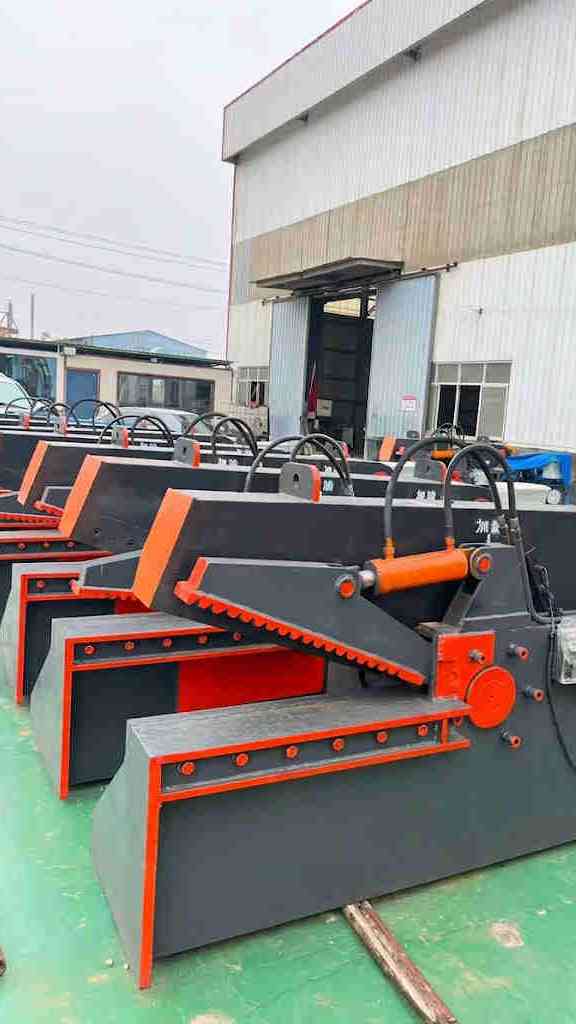
200 Ton Alligator Shear – Q43-200
The Q43-200 is a 200 Ton hydraulic alligator shear for small yards, demolition crews and fabrication workshops cutting rebar, bar stock and light sections. No Foundation Needed: sits on a level surface and relocates when the job moves. Diesel-Ready: electric motor at your voltage, or a diesel engine for off-grid sites. Cuts 20 mm Plate: Ø45 mm round bar, 40×40 mm square bar, light I-beams. One Person, 8–10 Cuts/min: four-sided reversible blades at 48–56 HRC. Matches small scrap yards, mobile sites and workshops at the entry point of the Q43 line CE / ISO 9001 certified. Send your material profile, heaviest cross-section and power conditions for a quotation within 48 hours.
Why Choose Huaxin
- Real Factory, 30+ Years Manufacturing Experience
- 24/7 Technical Support
- Customized Solutions Available
- Installation & Training Support
Description
200 Ton Alligator Shear for Sale – The Workshop and Portable-Site Machine
The Q43-200 is a 200 Ton hydraulic alligator shear — also known as a crocodile shear — built for the yards and workshops where a gantry shear is too much machine: small intake, mixed light material and no concrete foundation to pour. It cuts rebar, round and square bar, angle and channel steel and light sections in one button-pressed cycle, on a frame that needs no foundation bolts and runs on grid power or a diesel engine.
Who the Q43-200 Is Built For
This is the entry point of the Q43 alligator shear line — the machine for operators still cutting with a torch or a manual shear:
- Small scrap yards and mobile sites processing light ferrous intake — rebar, offcuts, skeleton scrap and workshop debris — rather than tonnage.
- Demolition crews that need rebar and light structural sections cut at the site, on a machine that relocates when the job moves.
- Fabrication workshops and steel stockholders cutting bar stock and offcuts in-house instead of paying a processor per ton.
If your intake is drifting toward plate above 20 mm or past 15 tons a day, the honest machine is not this one — it is the 250 ton class or the Q91 gantry shear range. This page will tell you plainly when that is the case.
Where the Alligator Shear Fits — and Where It Does Not
An alligator shear is a lever-action machine: the blade pivots down through the material while the hold-down cylinder keeps it still. That design buys compactness, a low price of entry and foundation-free installation — and it gives up raw force and continuous-duty rating in exchange. The Q43-200 is a cutting machine, not a tonnage machine: 8 to 10 cuts a minute of light material, one operator, no civil works.
When the daily question becomes “how many tons” instead of “can it cut this”, the answer stops being an alligator shear. Continuous HMS intake, plate above 30 mm and three-shift duty belong to the 315 ton gantry class and above — we will say so in the quotation if your numbers point that way.
Key Specifications – Q43-200 200 Ton Alligator Shear
| Item | Specification |
|---|---|
| Model | Q43-200 Hydraulic Alligator Shear (crocodile shear type) |
| Shearing force | 200 Ton (2,000 kN) |
| Hold-down press force | 32 Ton |
| Blade length | 800 mm or 1,000 mm |
| Max. blade opening | 380 mm (800 mm blade) / 460 mm (1,000 mm blade) |
| Cutting speed | 8–10 cuts per minute |
| Max. steel plate | 20 mm |
| Round bar | Up to Ø45 mm |
| Square bar | Up to 40×40 mm |
| Motor power | 22 kW |
| Power source | Electric motor or diesel engine |
| Input voltage | 380V / 400V / 415V / 230V, 50 Hz or 60 Hz |
| Blade material | High-alloy tool steel, 48–56 HRC, four-sided reversible |
| Installation | No foundation bolts required; sits on a level surface |
| Certification | CE / ISO 9001 |
| Origin | Tangshan, China |
What the Q43-200 Cuts
Material Ratings
| Material | Q43-200 duty rating |
|---|---|
| Rebar | Construction and demolition rebar, bundled or loose — the daily work of this class |
| Round bar | Up to Ø45 mm |
| Square bar | Up to 40×40 mm |
| Angle and channel steel | Light structural profiles |
| I-beams | Light sections within the 200 Ton force rating |
| Steel pipes | Single light pipes within wall-thickness limits |
| Steel plate | Up to 20 mm |
| Mixed light scrap | Workshop offcuts, skeleton scrap and general yard intake |
Ratings assume the material sits in the blade’s high-force zone. Because the alligator shear works on the lever principle, force varies with position along the blade — material loaded at the tip cuts with less force than material loaded at the root, which is why we confirm your heaviest cross-section before quoting.
Capability Boundary
- Daily duty: light ferrous — bar, rebar, offcuts and light sections — at small-yard volumes.
- Occasional duty: plate up to 20 mm; heavier sections now and then are what the force is for.
- Step up instead: if plate above 25 mm or throughput past 15 tons a day is a daily feature, the 250 ton alligator shear or the Q91 gantry range is the tier to size to.
Built to Move — No Foundation, Diesel-Ready, One Operator
The Q43-200 is delivered on a frame that sits on a level surface: no foundation bolts, no civil works, no commissioning wait. A single trained operator runs it from the push-button panel while material is loaded by hand or grapple. That combination is what makes this class popular with sites that are not permanent.
- Relocatable. The job moves and the machine follows — skid- or trailer-mounted configurations are available on request.
- Off-grid ready. The diesel engine option makes cutting possible where the grid has not arrived.
- One-person crew. No feeding team, no second operator on the floor.
Blades and Running Costs
Blades are high-alloy tool steel at 48–56 HRC with four usable faces — rotate, regrind and rotate again before a replacement is needed. On rebar and light-section duty a set covers a long working season. We state the expected regrind interval for your material mix in the quotation rather than publishing a generic figure that will not match your yard.
How the Q43-200 Cuts
- Step 1 — Loading: scrap is placed in the shearing zone in front of the blade, by hand or grapple.
- Step 2 — Clamping: the hold-down cylinder descends and pins the material so it cannot shift mid-cut.
- Step 3 — The cut: the blade is driven down by the hydraulic cylinder, taking the material with 200 tons through the lever action.
- Step 4 — Return: blade and hold-down retract, and the next cycle starts — 8 to 10 cuts a minute in continuous mode.
Power Supply and Configuration
The standard package is a 22 kW motor with input voltage set to your switchboard at 380V, 400V, 415V or 230V, 50 Hz or 60 Hz. Where grid power is limited or absent, the diesel engine configuration replaces the motor entirely. Blade length is chosen against the sections you cut most: the 800 mm blade suits tight footprints and short stock, the 1,000 mm blade takes longer material in one pass. Every option is fixed before the order is cut, not after delivery.
Shipping, Commissioning and After-Sales
The machine ships as one main unit with a spares package — container or flat-rack, with a packing list and lifting plan issued against your receiving equipment. Installation drawings and a commissioning checklist come with the machine, and an engineer can attend start-up and operator training. Spares cover blades, seals, hoses and valve components; because the Q43 line shares one blade family across tonnage classes, stock you hold later serves the larger models too.
Why Small Yards Choose HUAXIN
- Factory-direct purchasing. You buy from the manufacturer’s Tangshan plant rather than a trading layer that owns neither the drawings nor the service.
- The boundary is published. What this class should and should not be asked to cut is stated on this page — and repeated in your quotation.
- One blade family across the Q43 line, so regrinds and replacements stay simple as you grow into larger tonnages.
- Track record. Machines running in 50+ countries, 24/7 technical support and spare parts shipped within 48 hours.
Other Equipment in the Line
The alligator shear is the entry machine for small yards, and the next step up the line is usually a shredder rather than a bigger shear: mixed light scrap and appliance material are torn rather than cut, and the output feeds magnetic and eddy current separation. See the scrap metal shredder range, or a scrap metal baler if you are selling non-ferrous onward.
FAQ – 200 Ton Alligator Shear
What is a 200 ton alligator shear used for?
Cutting light ferrous material in yards, workshops and demolition sites: rebar, round and square bar, angle and channel steel, light I-beams, light pipe and mixed light scrap. It is the class for sites where cutting is still partly manual and the material is light rather than tonnage-heavy.
How much does a 200 ton alligator shear cost?
The number follows the configuration — blade length, motor package, power source and mounting all move it. HUAXIN quotes EXW, factory-direct, with a transparent line-by-line breakdown. Send your material type, heaviest cross-section and daily volume and the quotation follows within 48 hours.
Can the Q43-200 cut rebar?
Yes — construction and demolition rebar is the daily work of this class, loose or bundled, sized in one pass. Rebar that arrives inside concrete is a bigger conversation: send photos of your material and we will tell you what this force rating honestly handles.
Does the Q43-200 need foundation bolts?
No. The machine sits on a level surface and can be positioned freely on site — which is why it is popular with contractors who relocate. Skid or trailer mounting can be configured on request.
Electric or diesel power?
Both. The standard machine takes an electric motor at your local voltage and frequency; the diesel engine option covers sites without reliable grid power.
How many cuts per minute does it make?
8 to 10 cuts per minute on light material. Actual output depends on cross-section, material mix and how fast the operator can feed — we model it against your workflow in the quotation.
Which blade length should I choose?
800 mm for tight footprints and short stock, 1,000 mm when longer sections should go through in a single cut. The choice is usually decided by the longest member you handle regularly.
How is an alligator shear different from a gantry shear?
Force and duty. The alligator shear is a compact lever machine: cheaper, foundation-free, one person, light-to-medium sections. A gantry shear is a production machine: far more force, continuous HMS duty and real daily tonnage. Compare the gantry shear range before you decide.
What do you need to quote a 200 ton alligator shear?
Material type, maximum cross-section, required daily throughput, available power and destination port. Photos or a short video of your scrap help us recommend the right configuration — including the honest right tonnage.
Sizing your first shear? Send your material profile, heaviest cross-section, daily volume and power conditions for a configuration recommendation and quotation within 48 hours. Compare the 250 ton class or review the full scrap metal shear range.
Additional information
| Item | Alligator Shear |
|---|---|
| Model | Q43-200 |
| Power type | Hydraulic type |
| Shearing Force | 200 Ton (2,000 kN) |
| Press Force on Material | 32 Ton |
| Blade Length | 800 mm or 1000mm |
| Max. Blade Opening | 380 mm for 800mm blade |
| Cutting Speed | 8-10cuts/min |
| Max. steel plate | cut max. 20mm thickness steel plate |
| Motor Power | 22KW |
| Power Source | Electric motor / Diesel engine |
| Blade Material | High-alloy tool steel |