Direct Manufacturer Since 1989 • 200T–2,500T Cutting Force • 6 Hydraulic Shear Series
Heavy-Duty Hydraulic Scrap Metal Shears (200T–2,500T) for Sale
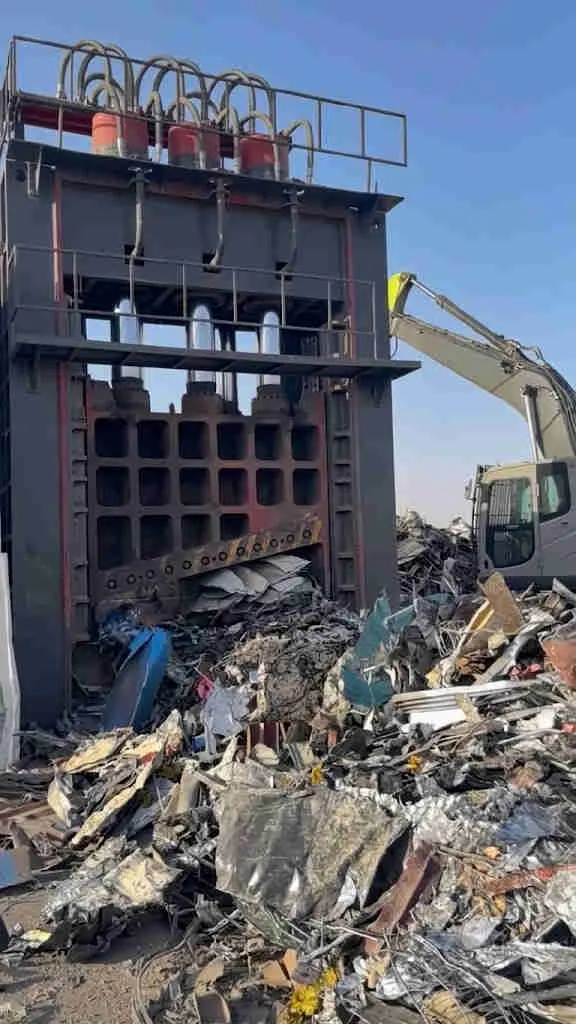
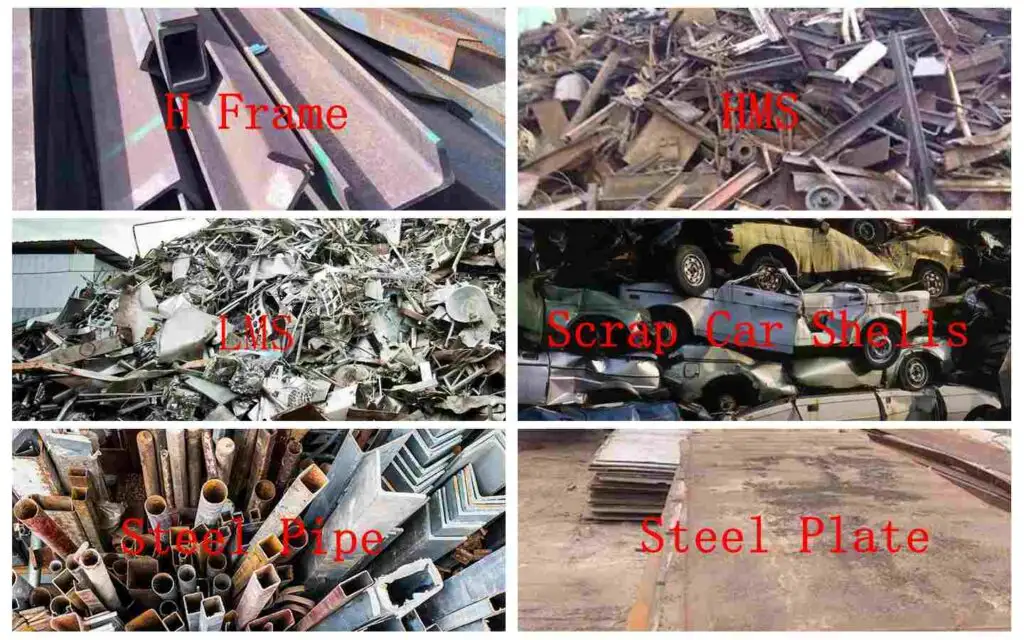
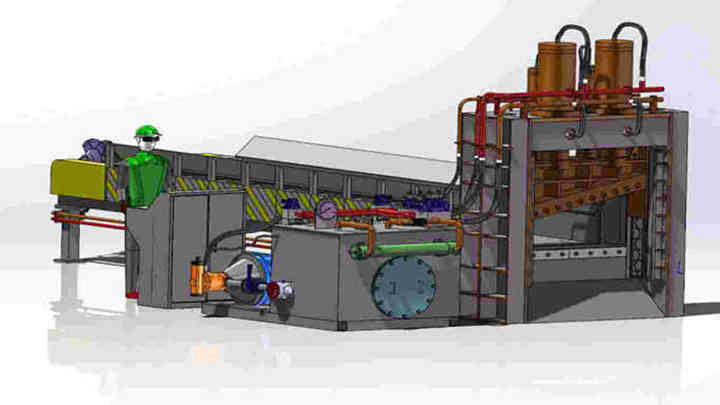
What is a scrap metal shear? A scrap metal shear is a type of mechanical equipment specially designed for cutting scrap steel, scrap iron, and other scrap metal materials. It is mainly used to cut scrap metal into suitable lengths for transportation and for feeding into smelting furnaces. Hydraulic scrap metal shears adopt hydraulic transmission; compared with mechanical-drive shears, they offer advantages such as energy savings, a wider blade opening, low inertia, and smooth operation. The machine’s main working process is: feed → pre-compress → hold down → shear → discharge. The cut length can be adjusted according to requirements.
Short version of the whole page: long material (6–12 m) → inclined shear. Car bodies → side-compression or shear baler. Everything else — mixed HMS, plate, beams — is gantry shear territory.
Huaxin Co., Ltd. (HUAXIN) designs and manufactures stationary hydraulic scrap metal shears (steel scrap guillotines and metal recycling cutters) from 200 to 2,500 metric tons (220–2,750 US short tons) for HMS 1&2, structural I/H-beams, ship plate, ELV car bodies, and rebar. Compare our six specialized machine architectures below—spanning approximately 1.5 to 45 TPH on standard lines and up to 110 t/h on gravity-fed inclined shears—or send us your scrap photos for a tailored 48h quote and layout configuration.
✓ CE & ISO 9001 Certified (3 Wholly Owned Factories)✓ 150% Pressure & 72h Continuous FAT Tested✓ 3–5 Year Frame Warranty & Siemens/Rexroth Components
How a Hydraulic Scrap Metal Shear Works
The following five steps describe the operating process of a gantry shear; other shears follow the same pattern. The differences between machine architectures lie in how they feed and compress, not in how they cut.
Feed: A grapple or magnetic crane loads scrap metal into the feeding box.
Pre-compress: The feeding box, together with the lid and rear pusher, compresses loose scrap into a dense log. Due to different designs of scrap metal shears, the degree and method of compaction also vary.
Hold down: The hydraulic hold-down device clamps the log longitudinally. This step is precisely to keep the scrap metal fixed during shearing.
Shear: The main cylinder drives the blade through the log in a single stroke, with a blade gap of 0.5–1.5 mm (adjustable according to the actual scrap), set during the factory acceptance test (FAT).
Discharge: The cut pieces fall at the set length (normally 300–600 mm) into the scrap pit or onto a conveyor, and then the cycle repeats.
The factors determining actual throughput are mainly affected by loading time, the load quantity of the feeding box, the length of each cut, and the density of the scrap.
Where the cycle differs: the alligator shear has no pre-compression box and no pusher — the operator places the bar in the open jaw and clears the cut piece by hand, so steps 2 and 5 do not apply. The inclined shear has no rear pusher either: gravity does the feeding, and the chute replaces the box. On the shear baler, baling mode swaps steps 2–4 for a compression cycle that forms a bale instead of a cut.
1. Six Hydraulic Scrap Metal Shear Series (200T–2,500T)
Select your machine series below by feedstock geometry and daily yard volume. Each category links to full model tables, chamber dimensions, and motor configurations (Note: HUAXIN manufactures stationary and skid-mounted yard equipment; mobile excavator boom attachments are outside this product range):
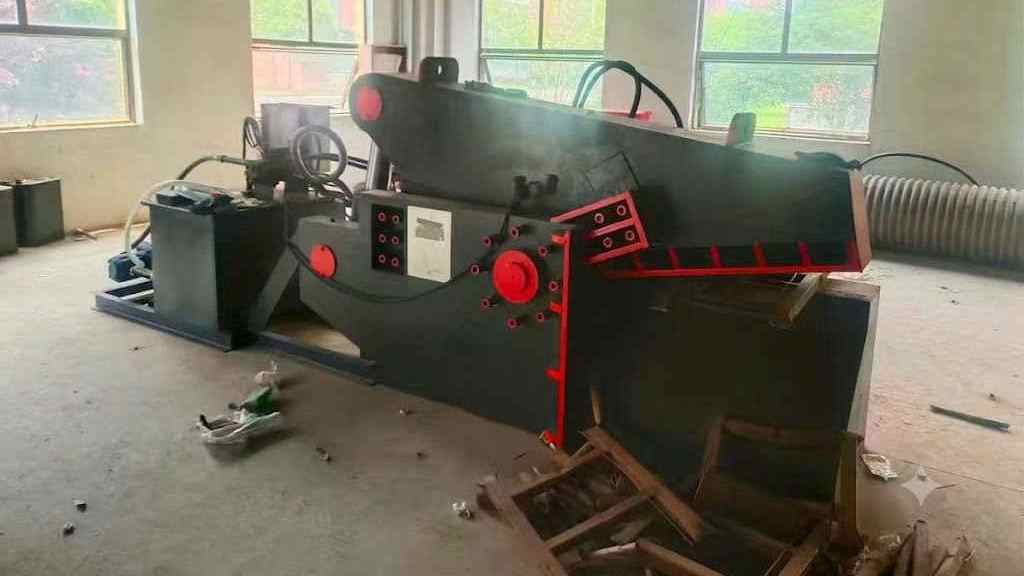
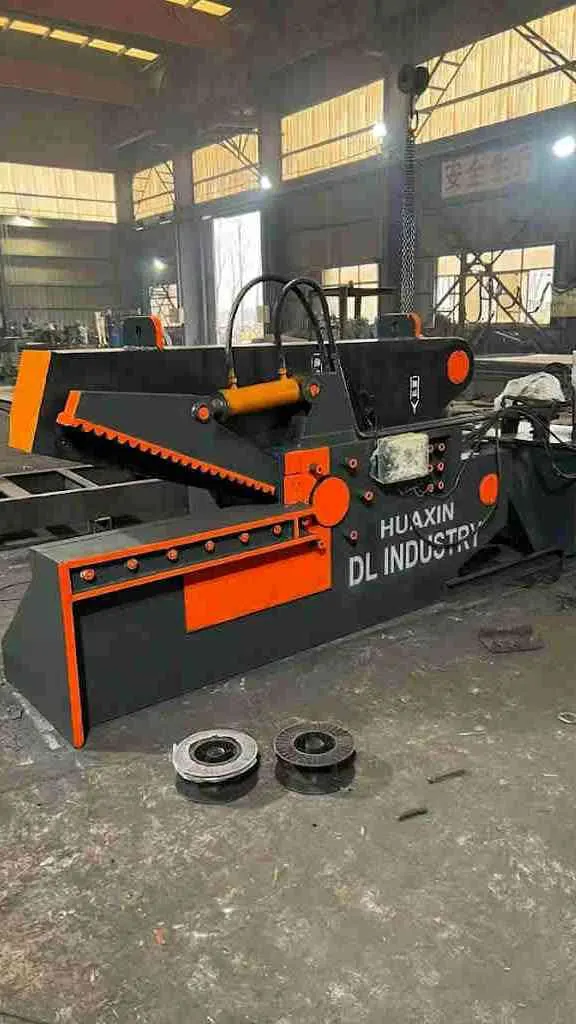
1.1 Q43 Alligator Shear (200 Ton & 250 Ton)
Compact, skid-mounted open-jaw crocodile cutters (800–1,200 mm / 31.5″–47.2″ blades) requiring zero concrete foundation pit. Built for feeder yards and workshops processing 1.5 to 3.5 tons per hour (15–40 metric tons/day) of rebar, steel pipe, angle iron, and copper busbars. Advantages: Low price, no foundation treatment required.
Max Cut Stock: Ø55 mm round bar / 50×50 mm square billet • Stroke Rate: 6–10 cuts/min • Clamp: Hydraulic hold-down • Drive: 22 kW • Zero foundation pit
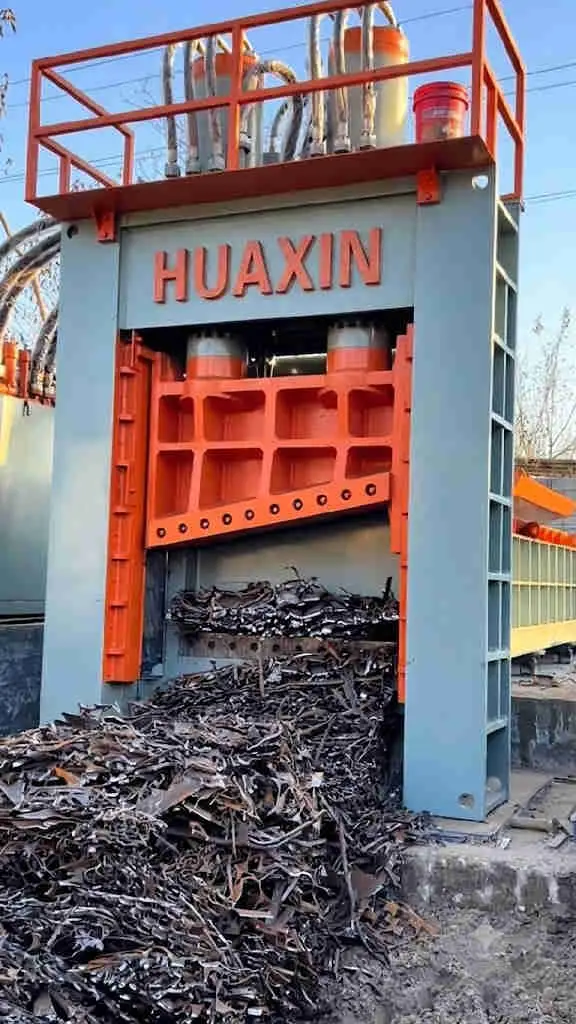
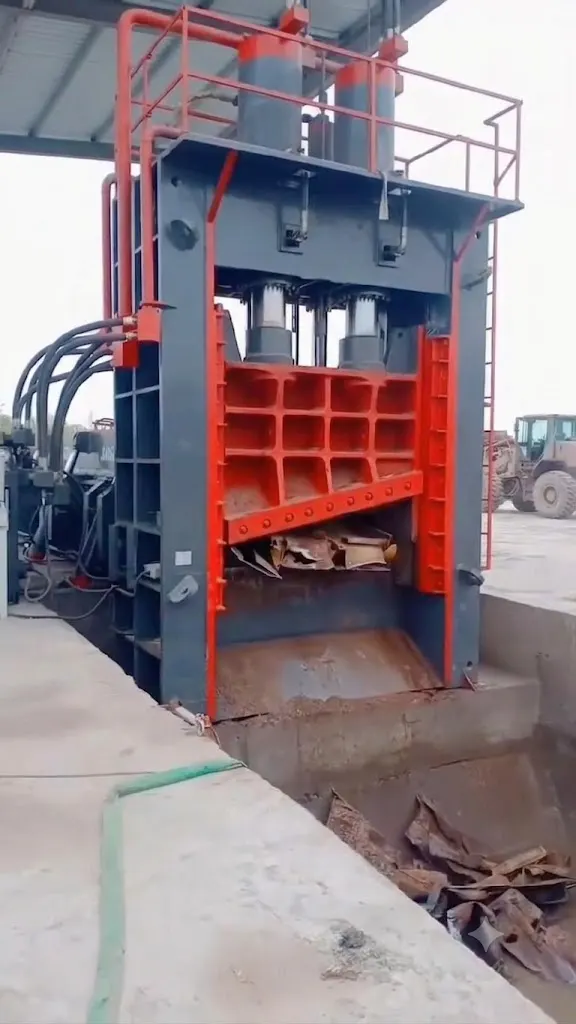
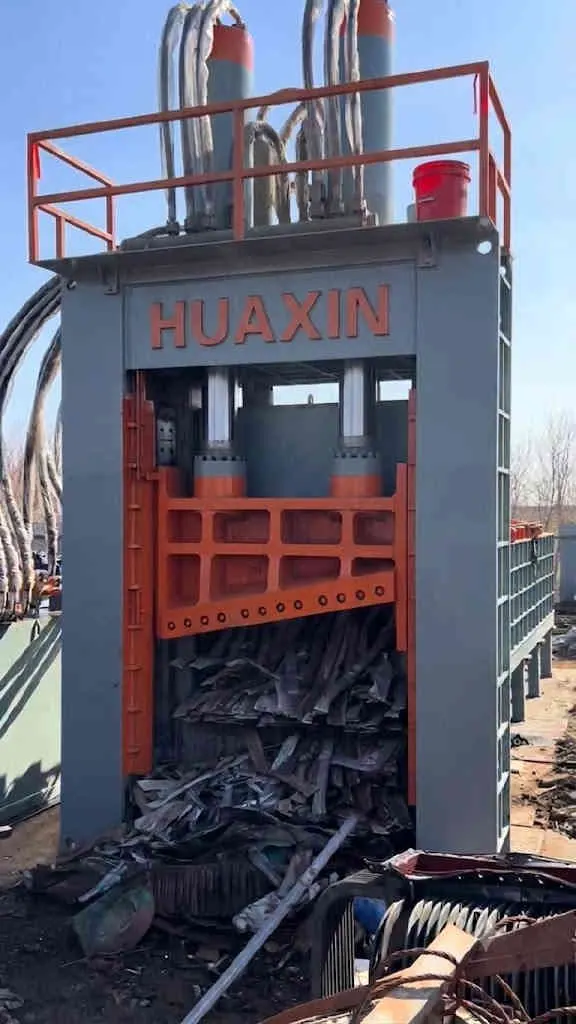
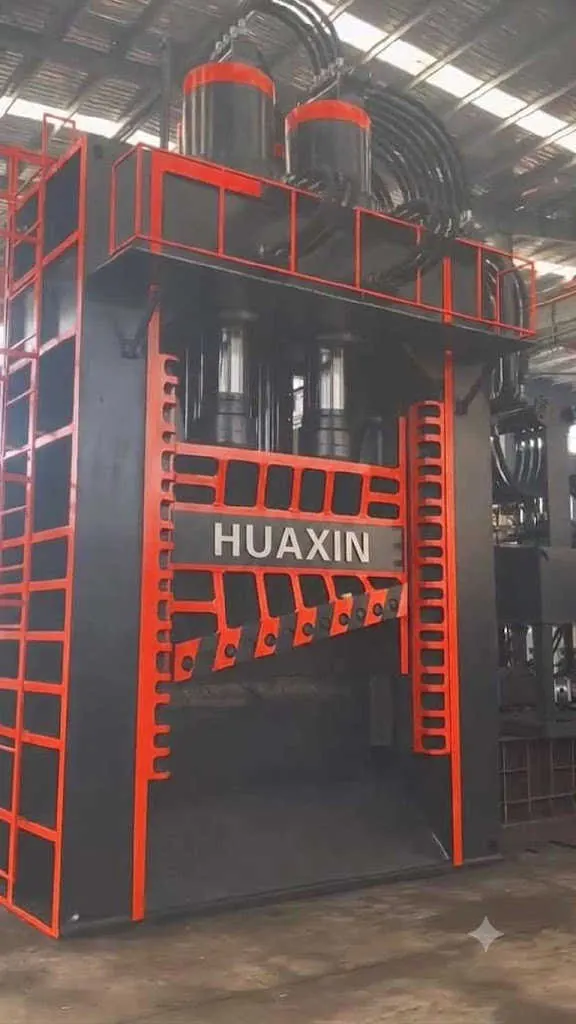
Heavy-duty stationary portal guillotine shears (800–2,600 mm / 31.5″–102.4″ blades) with enclosed horizontal pre-compression boxes and rear pusher cylinders. Engineered for commercial scrap yards and EAF steelworks processing 2.5 to 45 TPH (30–350+ metric tons/day) of HMS 1&2, structural H-beams, railway rails, and ship plate. Advantage: Can handle any scrap.
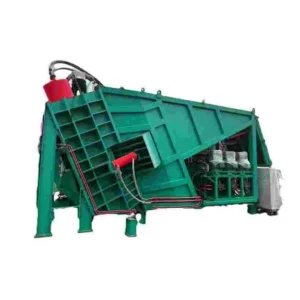
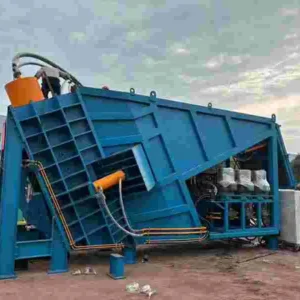
Continuous gravity-chute guillotine shears (1,200–1,400 mm / 47.2″–55.1″ blades) that eliminate the rear horizontal pusher cylinder—allowing overhead crane loading and shearing to run in parallel at 10 to 110 t/h on 6 to 12 m long rebar bundles, steel pipe, H-beams, and UIC60 rails. Advantages: Small footprint. Disadvantages: Heavy overall weight, not convenient for transportation.
Gravity Chute: 8.0×2.4×3.5 m • Motor Power: 135×1 kW • Continuous angled chute feed with no rear pusher cylinder
Press-then-cut hydraulic shears combining opposing lateral side-squeeze cylinders (2×125T to 3×150T), top compression, and super-servo drive options to fold 2,000–2,400 mm wide ELV car bodies, white goods, and bulky structural steel into a dense block before cutting at up to 10–65 t/h. Advantages: The density of the scrap metal after shearing is higher. Disadvantages: Heavy overall weight, inconvenient for transportation, complex structure, and a higher probability of problems.
1.5 HC Horizontal Box Container Shear (350T–1,250T)
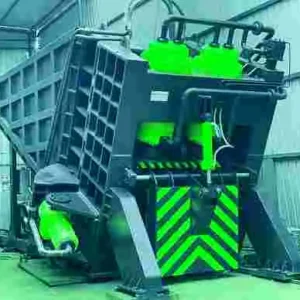
Unitized horizontal compression box shears featuring wide 1,000 to 2,000 mm (39.4″–78.7″) feeding tanks and matched guillotine blades. Installed on a flat concrete pad with minimal civil foundation work to process ISO shipping containers, tank shells, and demolition steel (40–180 metric tons/day). Advantages: Small footprint. Disadvantages: Difficult to maintain; the cut length is fixed and not adjustable.
Two-in-one combination machines that either compress light sheet metal, white goods, and depolluted ELV car bodies into dense rectangular bales for direct ejection (Baling Mode, up to 1,400 kg/m³) or shear compacted logs into furnace-ready lengths (Shearing Mode, 50–180 metric tons/day). Advantages: The baler and shear functions can be used separately. Disadvantages: Small blade size.
500–1,300 Metric Tons (550–1,430 US Tons • 4,903–12,749 kN)
800–1,400 mm (31.5″–55.1″)
2×125T to 3×150T side/top compression; whole ELV car bodies, white goods & structural steel
Up to 10–65 t/h (60–400+ t/day • 110–365 kW Servo)
4-Edge Blades & Box Liners
Reversible tool steel blades: M6V, H13, X45, and D2 (vacuum heat-treated to 58–62 HRC). Compression chambers lined with bolted Hardox 450/500 or NM500 wear plates.
Hydraulics, PLC & -40°C Arctic
Built with Rexroth / Yuken hydraulic valves, Siemens / Mitsubishi PLC, and NOK / Parker seals. Configured for 380V–480V (50/60Hz), 6kV/10kV HV, Cummins Diesel, or -40°C Arctic duty.
Indicative Export HS Codes
Complete Hydraulic Shears: HS 8462.3990 • Replacement Alloy Blades: HS 8208.1000 • Hydraulic Cylinders: HS 8412.2100(Confirm with your local customs broker).
48h Quote, CAD & Spares Dispatch
48-Hour Factory Quote Response • 2D/3D Foundation CAD Within 3 Days • 12-Month Full Warranty (3–5 Year Frame) • 48h Stock Blade / 5-Day Wear Kit Dispatch.
3. How to Choose a Scrap Metal Shear: Architecture, 5 Yard Profiles & Blade Selection
Interactive 3-Step Scrap Metal Shear Model Finder
Select your primary feedstock, daily shift volume, and foundation preference to highlight the matching HUAXIN shear series:
Recommended Configuration:Q91-630 or Q91-1000 Heavy Gantry Shear (630T–1,000T, 7.5–25 TPH) with enclosed pre-compression box and M6V/H13 blades.
Why does HUAXIN build six distinct structural architectures instead of forcing a single frame onto every yard? Because scrap geometry dictates how metal feeds, compresses, and clears the guillotine throat:
3.1 Matching the 6 Machine Architectures to Your Feedstock Geometry
Over-length straight profiles, pipes & rails (6–12 m): Gravity-fed NS Inclined Shears slide long bundles directly into the throat without waiting for a rear horizontal pusher ram to retract, achieving the highest continuous cycle rates (10–110 t/h) on free-flowing long stock.
Thick solid plate, heavy girders & tangled HMS 1&2: Stationary Q91 Gantry Shears (500T–2,500T) provide positive rear hydraulic pushing force and high-tonnage vertical hold-down clamping to cold-shear 20–110 mm plate without bridging.
Wide hollow ELV car shells, truck cabs & light structural scrap:PS Side-Compression Shears use multi-cylinder lateral squeeze rams to fold 2,000–2,400 mm wide hollow scrap into a dense 700–950 mm cross-section before the blade descends.
Yards selling both rectangular export bales and sheared furnace steel: Dual-mode Y83Q Shear Balers switch via PLC between uncut Bale Ejection Mode and Compressed Length-Shearing Mode on a single footprint.
Wide demolition panels & shipping containers on temporary pads: Self-contained HC Container Box Shears accept 1,000–2,000 mm wide scrap on a flat slab without deep rear pusher pit excavation, while Q43 Alligator Shears handle manual workshop bar and non-ferrous pipe cleaning.
3.2 Five Scrap Yard Profiles & Recommended Tonnage Matrix
Shear blade alloy grade is selected according to feedstock thickness, shock load, and thermal duty—M6V, H13, X45, and D2 options are engineered for specific cutting applications rather than used interchangeably across every machine, and the exact blade specification is confirmed in your technical quotation and drawing.
4. Industrial Scrap Metal Shear Applications
From regional scrap collection yards to steel mill charging bays, HUAXIN hydraulic shears are configured to match target furnace box lengths and container loading weights:
Scrap Recycling Yards & Export Terminals
Oversized scrap consumes yard space and container freight budgets. Regional processors pair Q43 alligator shears for non-ferrous bar cleaning with Q91 gantry shears or HC container shears to densify mixed HMS 1&2 into high-density export container loads.
EAF Steel Mills & Foundries
Electric arc furnaces (EAF) and induction cupolas require uniform charge lengths to prevent electrode breakage and bridging. Mill-duty 1,000T–2,500T Q91 gantry and NS inclined shears section heavy bloom crops, girders, and plate into 400–600 mm (16″–24″) furnace charges.
Automotive ELV Dismantling
Once fluids, batteries, and catalytic converters are removed from end-of-life vehicles (ELVs), shells and truck frames must be compacted efficiently. PS side-compression shears and Y83Q shear balers fold roof pillars and floor pans into dense logs before cutting, protecting downstream dual-shaft shredders from shock overload.
Demolition, Railway & Shipbreaking
Cutting 12-meter teardown beams, UIC60 rails, and 50–110 mm marine hull plate demands extreme hold-down force. HUAXIN engineers 1,000T–2,500T Q91 gantry(longer feeding tank), NS inclined, and HC wide-throat box shears with reinforced hydraulic clamps to prevent rail and plate kickback during cold shearing.
5. In-House Manufacturing, 150% Overload + 72h FAT Testing & Global Support
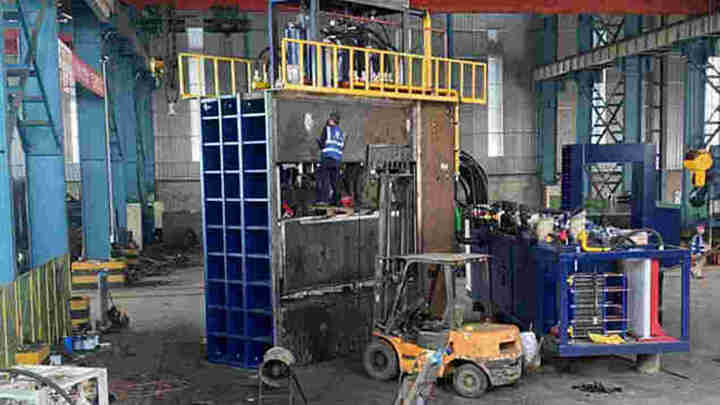
Founded in 1989 (35+ years of specialized engineering experience), Huaxin Co., Ltd. (HUAXIN) wholly owns and operates three ISO 9001 and CE-certified manufacturing facilities in China, including our Tangshan heavy structural fabrication base and Maanshan blade plant. Every hydraulic shear is built, heat-treated, and load-tested entirely in-house:
01. 3D CAD & FEA Stress Simulation
Engineers model the shear frame, feeding box, and blade seat in 3D CAD, running finite element analysis (FEA) to match your scrap density, target throughput, and 200T–2,500T cutting force.
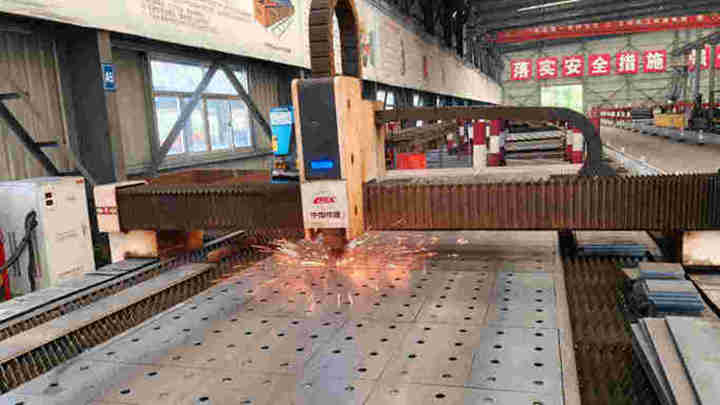
02. CNC Plate Cutting & Edge Beveling
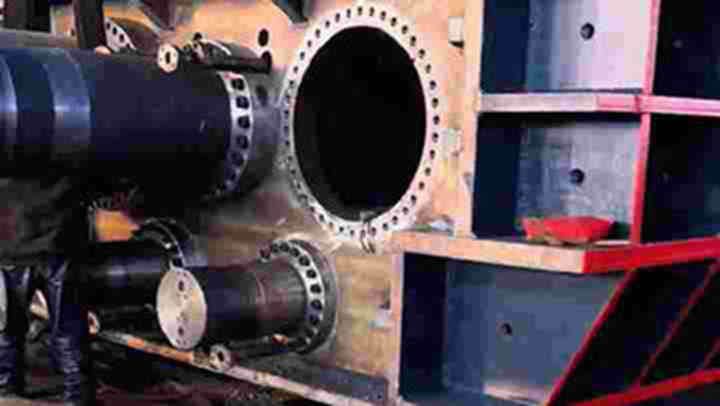
Ultrasonic flaw-tested Q345B/Q355B structural steel plates and Hardox 450/500 or NM500 wear liners are cut on CNC gantry plasma and laser tables with precision weld beveling.
03. Robotic Welding & Stress Annealing
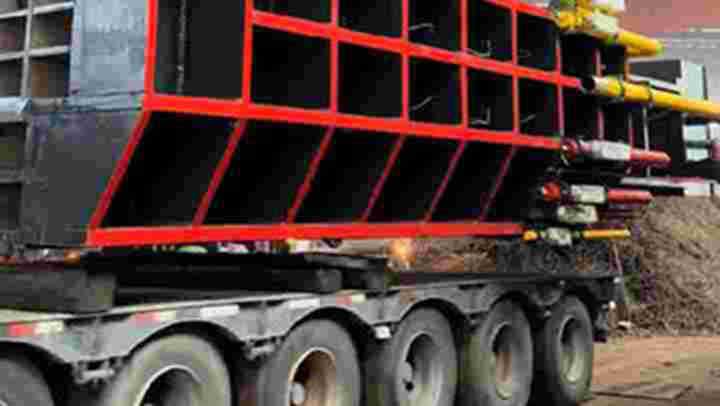
Automated welding cells fuse the ribbed compression box and guillotine portal with full-penetration seams, followed by furnace stress-relief annealing to prevent frame distortion.
04. Forged 42CrMo Cylinders & NOK/Parker Seals
Precision-honed forged 42CrMo alloy cylinders—main shear, hold-down clamp, and side-compression rams—are fitted with Japanese NOK and Parker high-pressure seal kits.
05. 150% Pressure Test & 72-Hour Continuous FAT
Every unit undergoes a 150% rated-load hydraulic pressure test and a filmed 72-hour continuous Factory Acceptance Test (FAT), calibrating 0.5–1.5 mm blade gap clearance before balance payment.
06. Global Shipping, Commissioning & 48h Spares
Backed by a 12-month full-machine warranty, a 3–5 year structural frame warranty, on-site engineer installation across 30+ countries (including our South Korea service subsidiary), and 48h stock blade / 5-day wear kit dispatch.
6. Verified Customer Installations & Field Case Studies
Case 1: Q91-630 Gantry Shear in South Korea (2024)
Feedstock & Duty: Thick marine hull plate (60–90 mm), shipbreaking structural sections, and heavy mill returns
Observed Output: 200–250 metric tons/day across two shifts with forged H13/M6V reversible blades
7. Scrap Metal Shear Engineering & Purchasing FAQ
Q1: What is the difference between the six HUAXIN hydraulic scrap metal shear types?
Q43 alligator shears (200T–250T) are open hinged-jaw cutters for manual bar and pipe cutting with no pit required. Q91 gantry shears (200T–2,500T) use a horizontal pre-compression box and rear pusher for heavy HMS and thick plate. NS inclined shears (630T–1,600T) use an angled gravity chute for continuous cutting of 6–12 m long profiles without a rear pusher. PS side-compression shears (500T–1,300T) squeeze wide ELV car bodies laterally before cutting. HC container shears (350T–1,250T) feature wide 1,000–2,000 mm horizontal tanks on a flat slab, while Y83Q shear balers (500T–1,300T) operate in both Baling Mode and Shearing Mode.
Q2: What hourly throughput (TPH) can I expect from a HUAXIN scrap metal shear?
Standard stationary shear series (Q43, Q91, HC, Y83Q, and PS) process approximately 1.5 to 45 TPH (with super-servo PS 1300T models reaching up to 65 t/h on pre-compressed light scrap), while NS gravity-fed inclined shears reach 10 to 110 t/h on free-flowing long profiles. Because actual hourly output depends on scrap bulk density, piece length, loading method, and target cut length, our engineers confirm the rated output for your exact material mix in the quotation.
Q3: How are blade materials (M6V, H13, X45, D2) selected and how often are blades rotated?
Blade alloy grade (M6V, H13, X45, or D2, vacuum heat-treated to 58–62 HRC) is matched to your scrap thickness and impact load and confirmed in the technical quotation. Each four-edge reversible blade features four 90-degree cutting edges, processing 8,000–10,000+ metric tons across four rotations before re-grinding. Stock blades ship within 48 hours and standard wear kits within 5 business days.
Q4: How do I determine the required cutting force and what affects the machine price?
Required shearing force depends on material yield strength (e.g., Q235 mild steel vs. high-tensile alloy), maximum plate thickness or bar diameter, and whether bulky hollow scrap requires lateral side compression. Total system investment depends on nominal cylinder tonnage, hydraulic drive configuration (standard piston pumps vs. super-servo motors), and feeding accessories (such as a stationary electric fixed grapple crane).
Q5: Can the feeding chamber, blade width, and electrical voltage be customized?
Yes. As a direct manufacturer, Huaxin Co., Ltd. customizes feeding box dimensions, blade width, three-phase industrial voltage (380V/400V/415V/440V/480V at 50/60Hz, or 6kV/10kV high voltage), standalone Cummins diesel drives, high-ambient oil coolers, and -40°C Arctic cold-climate packages.
Q6: What is the quotation turnaround, manufacturing lead time, and FAT testing process?
We provide a detailed 48-hour quotation and preliminary layout response upon receiving your scrap specifications. Certified 2D/3D civil foundation drawings are issued within 3 days of order confirmation. Standard models ship in 25–40 days (custom heavy lines in 40–65 days) after passing a 150% rated-load pressure test and a filmed 72-hour continuous Factory Acceptance Test (FAT).
Q7: What warranty, installation, and preventive maintenance support do you provide?
Every HUAXIN shear is backed by a 12-month full-machine warranty, a 3–5 year structural frame warranty, and lifetime remote PLC diagnostics. We dispatch field engineers worldwide for on-site commissioning and operator training (including blade gap calibration between 0.3–1.5 mm and ISO VG46/68 hydraulic fluid maintenance).
Request a Factory Model Selection & Configuration Quote
Not sure which shear architecture or tonnage fits your yard? Send our engineering desk any of the following details for a tailored model recommendation and 2D layout:
1. Scrap Material Photos: Longest & thickest pieces in your mix
2. Target Throughput: Required metric tons/hour (TPH) or tons/day