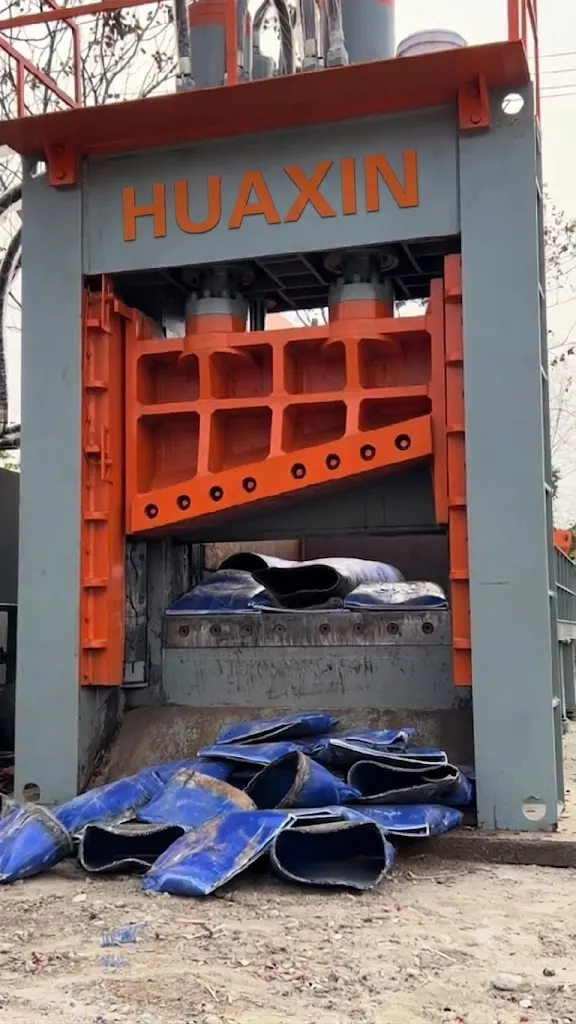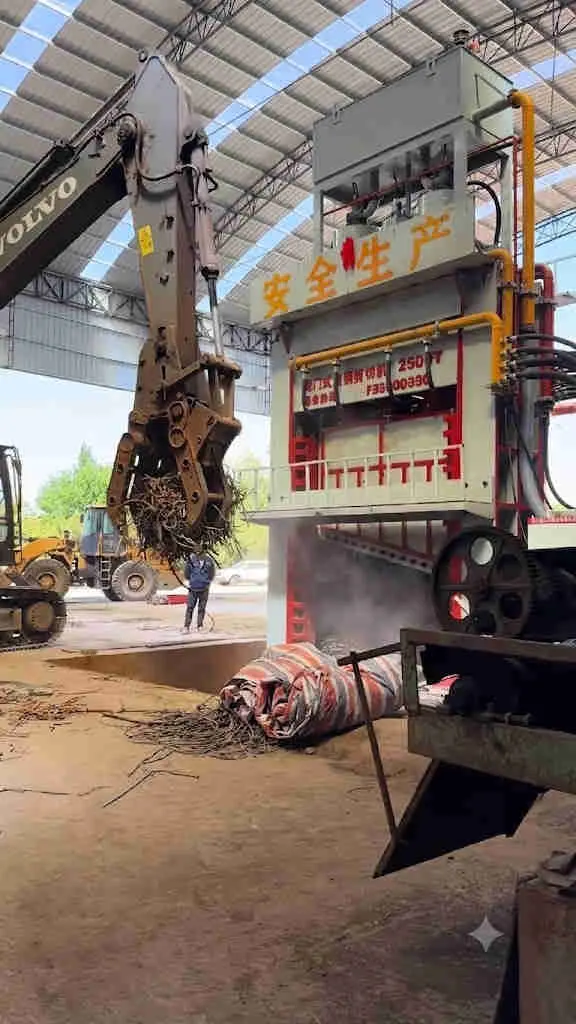
Rail is the material that separates the classes at the top of the range. It is dense, hard and shaped to resist load, which is exactly the combination a shear has to overcome in a single cut. The 630 ton gantry shear is the class where regular rail cutting becomes realistic. This article covers what the material demands from the force, the blade, the feed and the discharge. For a wider view of heavy-duty scrap shear options, see the full range.
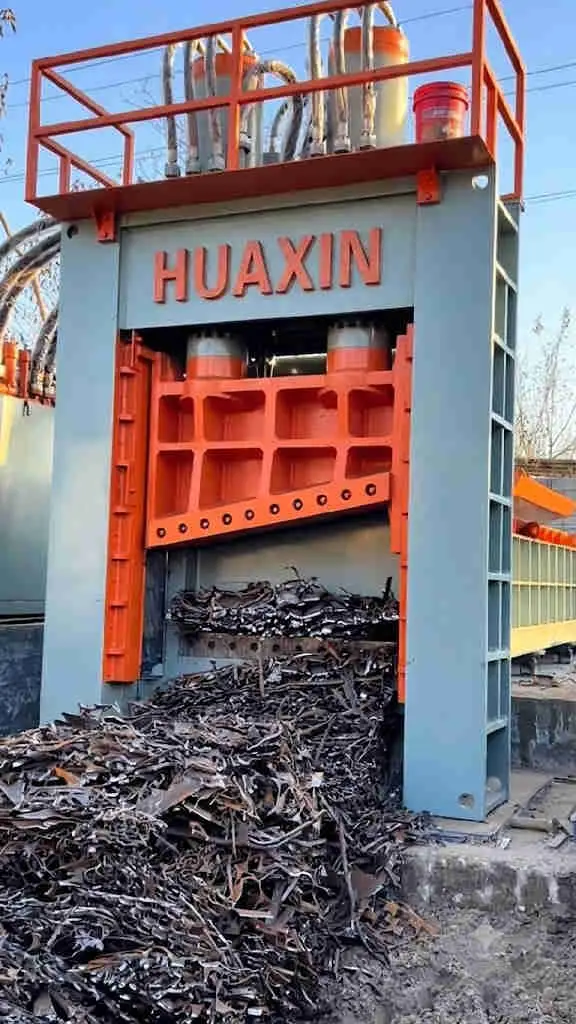
The 630 ton scrap metal shear at a glance
These are the standard figures for the model, with output quoted on a 10-hour day.
| Item | Q91-630 |
|---|---|
| Shearing force | 630 t (6,300 kN) |
| Blade length | 1,500 or 1,600 mm |
| Motor | 2×45 kW or 3×45 kW |
| Output | 6–8 t/h, 60–80 t/day |
| Max plate (continuous, mild steel) | 60 mm |
| Feed box | 6 / 6.5 / 7 m |
| Cycle time | 20–35 s |
Rail is harder than mild steel. The 60 mm plate figure is a reference point, not a rail rating. The rail you can cut follows the section and its weight, which is why we size against your own rail.
For lighter or heavier rail, every class from 200 to 2,000 tons is in our hydraulic gantry shear range.
Why rail is a different material
Rail is not thick plate and it is not a structural section. It is a deep, narrow profile made from high-carbon steel, with a head thicker than the web that supports it. The blade works through the hard head first, then the web, then the base, and the section is deep enough that it wants to twist as the load builds. That combination of hard steel in a deep section is what pushes rail up the range.
In practice the force class follows the rail weight, measured. Light rail and used sections sit inside the 630’s range. Heavy mainline rail in long lengths pushes toward the classes above. The force rule covers the headroom check. Rail is one of the materials where that check matters most, because a machine working at its limit on rail wears blades faster than on any lighter feed.
What the blade needs on rail
Rail cuts hard, and the blade choice follows the hardness of the material. Our blades come in M6V, H13, X45 or D2 tool steel with four reversible edges. A blade suited to structural steel will cut rail, but it will need rotating sooner, because the high-carbon head dulls the edge faster than mild steel does. Blade steel and edge geometry are quoted against the rail you actually cut, not a generic figure.
The blade steel guide covers what the specification should say, and the maintenance guide covers rotation. On rail the rotation log matters more than on lighter material. Wear arrives faster, and a missed rotation costs a chipped edge rather than a dull one.
Feed and discharge: what rail changes
Rail arrives in long lengths, and length is the geometry problem it brings. A section longer than the feed box has to be repositioned between cuts, and the 630’s box comes in 6, 6.5 or 7 m. The blade opening of 1,500 or 1,600 mm sets how many rails fit side by side. Check both against the longest rail in a normal month. The arithmetic is simple: count the long pieces, multiply by the extra handling minutes, and the annual total is the cost of a box that is too short.
On the discharge side, rail is heavy for its size. Cut sections land hard. The discharge has to take a heavy piece every 20 to 35 seconds rather than a stream of light scrap, and the discharge planning guide covers the flow arithmetic behind that. On rail, discharge is often what decides whether a yard reaches 6–8 t/h or falls short of it.
When rail points at the class above
The 630 handles light and used rail as routine work. The real test is how often heavy rail arrives. Heavy mainline rail every week is a conversation about the 1000 ton scrap metal shear, rated at 1,000 t (10,000 kN) with 100 mm continuous plate. The same rail once a month can still be planned on a 630, provided we have checked the section with you at quotation.
The heavy-end comparison guide covers the ladder above, and the HMS watershed guide explains where the production classes separate from the yard classes. Frequency is the whole test, and it takes an afternoon at the gate with a logbook.
How the rail’s condition changes the cut
Used rail is rarely clean. Head wear, rust in the web, and the bolts or clips that held it down all arrive with the section, and each changes the cut. A worn head has less steel left in it and cuts more easily. A rusted web can jam the blade if the section is fed flat. The bolts and clips are the real problem, because they hit the blade before the steel does and dull the edge for no cutting return.
The sorting gate is the answer, the same one that serves every dirty material. Clips and bolts come off before the rail reaches the box, or the rail is set aside until they do. It takes one operator’s attention at intake. On rail it is the cheapest wear insurance in the yard, because clips are harder on the edge than the rail itself. Our HMS 1 and HMS 2 guide covers how sorted heavy scrap is graded.
What the section does under the blade
Rail’s deep profile wants to twist. Laid on its base, the rail cuts through head and web in a stable plane. Fed on edge, the taller, thinner section twists under load. The blade then loads one corner of the edge before the rest does any work. The right orientation depends on the section, and the crew learns it in the first week or it never sticks.
The hold-down is the other half. A rail clamped flat cuts clean, while a rail that shifts mid-cut strays off square and wears one corner of the blade far faster than the rest of the edge. Confirm the hold-down against your rail section at quotation, because a stronger hold-down costs less than a year of chipped edges. The feeding guide covers the habits.
The rotation log on rail, run properly
Rail shortens the rotation interval, and the log keeps that interval accurate. Write three lines per rotation: the date, the tonnage since the last one, and the main material. Three months of entries show the interval your rail really needs, which is rarely the number a brochure would guess. The log also catches silent changes before they reach the wear bill.
A new supplier with harder rail shortens the interval and shows up in the log weeks before it shows up in a blade order. A seasonal shift from used rail to new shortens it again. The yard that keeps the log adjusts the interval. The yard that does not finds the change at the worst moment, usually in the middle of a heavy week. The maintenance guide covers the mechanics.
Railway Rail Cutting FAQ
What rail can a 630 ton shear cut?
Light and used rail sections as routine work. Heavy mainline rail in long lengths pushes toward the 1000 ton class. Frequency decides: heavy rail every week points to the 1000, while an occasional delivery can be planned on the 630 once we have checked the section.
Why does rail wear blades faster than structural steel?
The high-carbon head is harder than mild steel, and hard material dulls the edge faster. Blade steel is chosen for the rail you cut, and the rotation log keeps the interval accurate instead of revealing the wear at the worst moment.
How do I check the fit against my rail?
Measure the heaviest rail that arrives each week and the longest section in a normal month. Check the first against the force and the second against the 6 to 7 m feed box. Getting either wrong shows up in the blade log or the torch bill.
What do you need to recommend the right class?
The rail weight and section, how often heavy rail arrives, and your daily tonnage. A written recommendation and quotation come back within 48 hours, including when the answer is a smaller class than the one you asked about.
Planning a rail-cutting line or a yard upgrade? Compare full machine data on our 630 ton model page and browse our hydraulic scrap shear lineup. You can also contact HUAXIN’s Tangshan engineering team with rail photos, sections and target daily tonnage.