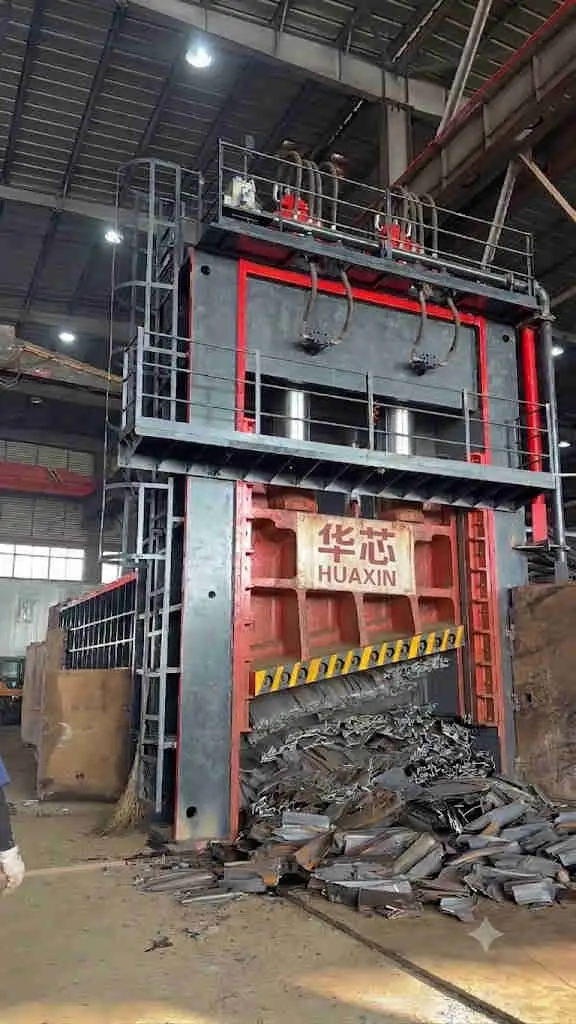
Force gets most of the attention on a gantry shear, and geometry quietly decides the throughput. A machine with enough force for your beams but a box that cannot admit them whole is a machine that waits while the torch does the work. This article is about the geometry side: how box opening, blade length and the feed shape decide whether section steel cuts in one pass or in several. In day-to-day scrap cutting equipment production, our 400 Ton Scrap Metal Shear (Q91-400) demonstrates why matching machine capacity to scrap thickness keeps wear costs predictable.
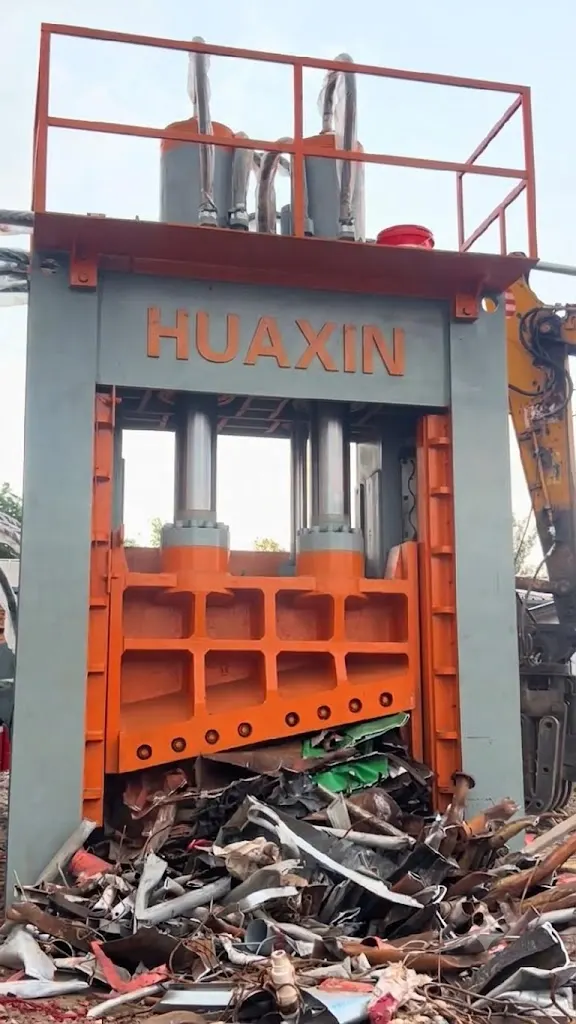
What the box opening decides
The box opening is the throat the material has to pass through, and it sets the largest piece the machine can take without repositioning. On structural feed the box is sized against the widest beam in a normal month, not against the average. A beam that fits through the opening cuts in one pass; a beam that catches the edge of the opening gets repositioned, and the reposition is where the tonnage leaks.
The Q91-400 publishes its chamber dimensions, and the fit check is simple: measure your widest routine beam against them. The box guide walks the three questions that measurement answers, and the answer you want is the beam fitting whole.
Blade length and the one-pass cut
Blade length is the other half of geometry. The blade has to span the piece to cut it clean, and a beam longer than the blade forces a reposition even when the box would admit it. On long sections the blade length option is the difference between one cycle per beam and two, and two cycles per beam is a thirty or forty percent throughput loss that no force rating can recover.
The arithmetic is the same as the box check: count the long pieces in a normal week, multiply by the minutes per reposition, and the annual figure is the cost of a too-short blade. The blade length guide covers the calculation, and it is the kind of number that ends a brochure argument because it comes from your yard.
Feed shape: whole sections versus pre-cut stubs
Section steel arrives in two shapes, and they cut differently. Whole lengths feed clean but test the blade span. Pre-cut stubs feed quickly but arrive at odd angles, and the angle is what wears the edge unevenly. A yard that receives mostly stubs needs a different feed discipline than one that receives whole lengths, even when the beam size is identical.
The hold-down earns its specification here. A stub that is clamped flat cuts clean; a stub that shifts under load wears one corner of the edge and strays off square. On mixed stub feed, a stronger hold-down is one of the rows worth checking in the quotation. The feeding guide covers the habits that keep the cut square.
Reading the geometry against your buyer’s spec
The geometry has a buyer on the other end of it. The charge length your buyer accepts sets the cut length preset, and the cut length preset sets how often the machine repositions. A buyer with a tight length tolerance turns every cut into a specification check, and the geometry that holds that tolerance is a crew habit plus a configuration, not one or the other.
The consistency guide covers what downstream buyers actually pay for, and the sheet reading guide covers how the geometry rows relate to each other on a specification.
What the set-aside pile tells you about geometry
Every structural yard keeps a pile of pieces that would not feed: beams too wide for the box, too long for the blade, or too awkward to place. The pile is a measurement, and its growth rate answers the geometry question better than any brochure does. Monthly set-asides are a configuration note. Weekly set-asides are a geometry miss, and the box or the blade was sized for a beam you do not actually receive.
Photograph the pile at the start of a month and at the end. Two photographs are the specification conversation, and they are the one document in the yard that cannot argue back. If the pile grows from weekly to daily, the geometry is wrong regardless of what the force rating says, and the fix is a configuration change rather than a class change. The locating guide covers the set-aside count as a sizing signal.
Why geometry gets decided at quotation, not on the floor
The box opening, blade length and hold-down are quotation-time decisions, and they are harder to change than the force class. A machine with the right force but the wrong geometry needs new blades, a re-machined box or a different hold-down, and none of those is a field adjustment. The geometry is why the widest and longest routine pieces belong in the first exchange with a factory rather than in the second.
This is the practical reason to describe your beams precisely at quotation. A factory that asks for the widest and longest piece is specifying a machine; a factory that asks only for the tonnage is quoting a default, and the default geometry is where the throughput loss hides. The line-by-line guide covers what a complete quotation should carry.
How the hold-down and the gap work together
The hold-down and the blade gap are one system, and buyers sometimes read them as two. The hold-down clamps the beam so it cannot shift; the gap is the clearance the blade works through; and a beam that shifts under load changes the gap mid-cut. When that happens, the cut strays and the edge wears on one corner, and the cause is read as a gap problem when it was a hold-down problem all along.
The fix is to check both when the cut quality drifts. The maintenance guide covers the gap mechanics, and the orientation guide covers the shifting that causes the drift. On structural feed the hold-down specification is worth confirming against the widest beam at quotation, because a stronger hold-down is cheaper than a year of uneven edges.
What a clean one-pass cut is worth
The difference between a one-pass cut and a two-pass cut is a number worth having. One pass means the beam goes in, cuts, and comes out sized. Two passes means the beam goes in, cuts partway, repositions, and cuts again, and the second cycle is pure loss. On a structural yard the repositioning is the most common self-inflicted throughput cost, and it is invisible unless you count it.
Count the repositioned pieces in a normal week and multiply by the cycle time. The annual figure is what the geometry decision is actually worth, and it usually dwarfs the price difference between blade and box options. The computation guide covers the arithmetic, and the number you get is the argument for getting the geometry right the first time.
Engineering & Field FAQ: Section Steel and Box Geometry: The Fit That Decides Throughput
How do I know if my box is big enough?
Measure the widest beam in a normal month against the published chamber dimensions. If it fits through the opening whole, the box is right. If it catches the edge, the machine repositions and the tonnage leaks, whatever the force rating says.
Does blade length matter more than box opening?
They work together, and the one that binds is the smaller. A box that admits the beam but a blade that cannot span it still forces a reposition. Check both against the same widest and longest routine pieces.
Why do pre-cut stubs wear the blade faster?
They arrive at odd angles, and an angled charge loads one corner of the edge before the rest does any work. A stronger hold-down reduces the shifting, and a sorting pass reduces the angles, and both are cheaper than a class step.
What do you need to check my geometry?
The widest and longest routine beams, the share that arrives as stubs, and your buyer’s charge specification if you have one. The written recommendation comes back within two business days with the configuration your material needs.
Does geometry matter if I only cut to furnace charge?
It matters more, not less. Furnace charge buyers hold a tighter length tolerance than most, and the tolerance is what sets the cut length preset and the repositioning discipline. The geometry that holds a tight tolerance is a configuration plus a crew habit, and both get decided at quotation rather than discovered on the first rejected load.
Summary Checklist: Section Steel and Box Geometry
Geometry is the quiet half of a structural purchase, and it decides the throughput the force rating only promises. Check the box against the widest beam, the blade against the longest, and the hold-down against the feed shape, and the three measurements turn a catalog choice into a specification. Count the repositioned pieces and the set-aside pile for a normal month, and the geometry answer writes itself from your own yard. Send the measurements, and the recommendation comes back within two business days with the box, blade and hold-down your material needs.
Looking for a custom layout or spare-parts package tailored to your yard? Compare full machine parameters on our 400 Ton Scrap Metal Shear (Q91-400) page, review our industrial scrap cutting machines engineering hub, or contact HUAXIN’s Tangshan engineering team with your feedstock photos and target daily tonnage.