
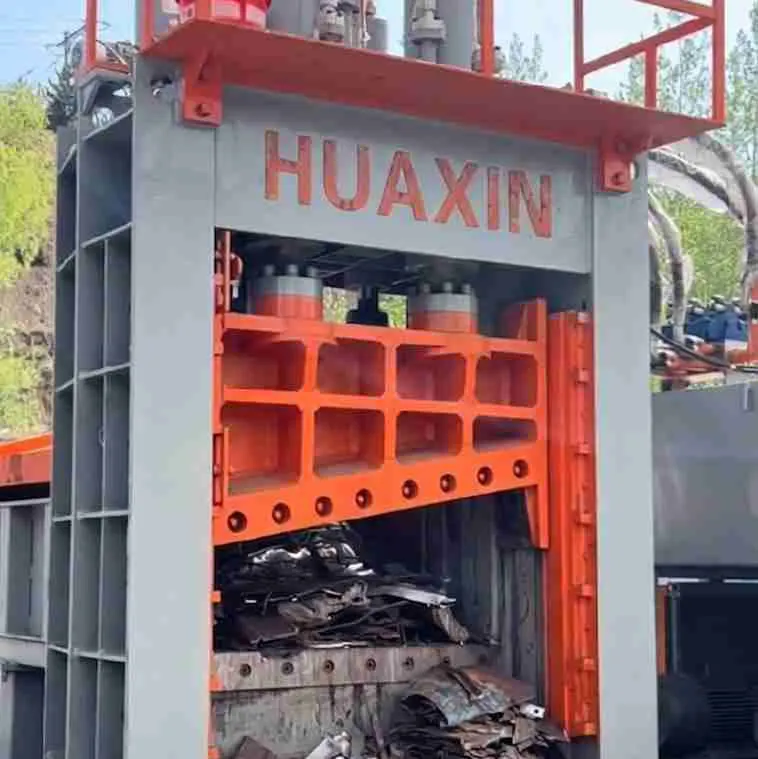
Two yards can own the same 200 Ton Scrap Metal Shear Machine (Q91-200) and sit at opposite ends of its published band. One turns out 20 tons a day and wonders whether the machine is undersized. The other turns out 40 and starts shopping the next class. The difference is rarely the machine. If you are comparing gantry and alligator shear configurations, production runs on the 200 Ton Scrap Metal Shear (Q91-200) illustrate how cutting force and operator discipline impact hourly output.
This article is a locating exercise: three counts that place your yard inside the band, what each position predicts, and the one measurement that most buyers skip. Figures come from published specifications; the rest is field experience.
Count one: tons per shift from a normal week
Not the best week and not the week the loader was in the shop. The median week describes the operation, and it is the number the band should be read against. Write it beside the dominant material of that week, because the same tonnage means different things on light mixed scrap and on dense sections.
A yard consistently at the low end with light feed is correctly sized and should watch for the opposite drift. A yard at the high end with disciplined feed is a 315 Ton Scrap Metal Shear Machine (Q91-315) candidate the next time the material list changes. The computation guide converts cycle rate into this number with your own figures in it.
Count two: empty-tank minutes per shift
Watch the tank, not the machine. If it spends real time empty while the loader works elsewhere, the band is being set by the loading arrangement rather than by the shear. This is the most common cause of a yard sitting at the bottom of a band it should be topping, and it is fixable at quotation with the tank length or in the field with the loader’s schedule.
High empty-tank minutes with a correct tonnage is the best possible reading: it means the machine has headroom the operation is not yet using, and the next purchase can wait. Low empty-tank minutes with a low tonnage points somewhere else entirely, which is count three.
Count three: tons since the last blade rotation
Compare the actual figure against the interval the configuration was quoted for. If it is double, the cycle stretch has a maintenance cause rather than a machine cause, and the fix is a logbook line rather than a purchase order. A rounded edge cuts slower, needs more force per cut, and pushes the crew into charging harder, which degrades the discharge and the whole loop together.
The maintenance guide covers the rotation mechanics, and the cycle signatures guide covers what a stretching cycle is telling you.
The measurement most buyers skip
The heaviest routine piece, measured rather than estimated. Not the record piece, not the average. The piece that arrives weekly and sets the machine’s real boundary. If it creeps past 30 mm, the Q91-200 is living at its edge and the 315 at 30 mm continuous is the honest next class, regardless of what the tonnage says.
Most class mistakes are tonnage mistakes. The yard bought for the day it had rather than the material it receives, and the material decided anyway. The force rule covers the headroom check, and it takes an afternoon with a tape measure.
What the position predicts
A yard at the top of the band with sorted feed and a heavy tail under 30 mm is stable, and the next conversation is about a second stage rather than a bigger shear. A yard at the top with a heavy tail past 30 mm is one contract away from the 315. A yard at the bottom with high empty-tank minutes has a configuration problem that no class change will fix. And a yard at the bottom with clean counts and material past the boundary is simply undersized, which is the one case where the counts say buy.
Send the three counts with your material list. The written recommendation names which situation you are in, and it occasionally says the machine you have is the right one.
The set-aside pile as a fourth count
Three counts locate the operation. A fourth locates the boundary, and it is the one nobody measures: the set-aside pile. It is the physical record of the crew sorting around the machine’s limits, the pieces leaned against the wall because they were too heavy, too thick or too awkward. Its growth rate is a measurement, and it is the most honest signal in the yard.
Monthly set-asides are a blade configuration note. Weekly set-asides are a class decision. Most crews know the growth rate without being told, and most owners have never asked. Photograph the pile at the start of a month and at the end, and the two photographs are the specification conversation. If the pile has grown from a weekly event to a daily one, the material has voted, and the class above is the machine that takes what the pile contains.
What each reading tells you to do next
The four readings resolve into four actions, and none of them is a purchase by default. Low tonnage with high empty-tank minutes means fix the loading arrangement first. Low tonnage with clean counts and material inside the boundary means the machine is right and the day is simply what your intake produces. Low tonnage with clean counts and material past the boundary means the class is wrong. And a growing set-aside pile means the boundary is arriving regardless of what the tonnage says.
Only the last two point at a machine, and both are settled by the counts rather than by a feeling. The force rule covers the boundary check, and the step-up guide covers the signals in arrival order.
How often to re-run the counts
The counts are not a one-time diagnostic. Re-run them when something changes, and three changes matter. A new supply contract moves the material mix and with it the tons per bite. A seasonal shift moves the dominant material and with it the rotation interval. And a crew or loader change moves the empty-tank minutes, which is the count most sensitive to people rather than to material.
Outside those triggers, a monthly pass is enough: one shift of watching, one line in the log. The point of the cadence is that the class decision stays current without becoming a project. A yard that counts only when it shops buys on a memory of how the operation used to run, and that memory is the most expensive input in the purchase.
What each count cannot tell you
Each of the four counts has a blind spot, and knowing them keeps the reading honest. The tonnage count cannot distinguish a feed problem from a material problem; it only reports the total. The empty-tank count misleads when the loader is shared across jobs that vary week to week. The rotation count assumes the log was kept, and a log started last week describes a week rather than a trend. And the set-aside pile changes with the crew, because a crew that stops setting pieces aside has not changed the material.
Read the four together and the blind spots cancel. That is the reason for four counts rather than one, and the reason a single number on an inquiry form is the least reliable input to a class decision. The computation guide shows how the shift tonnage gets built from your own cycle rate, bite weight and waiting time.
Buyer FAQ
How long should I count before drawing conclusions?
One normal week is enough for the tonnage, one shift is enough for the empty-tank minutes, and one rotation cycle is enough for the blade figure. The point is the median week, because the heavy week flatters the operation and the light week damns it.
What if my counts are all healthy but the tonnage is low?
Then the material is the question, not the operation. Check the heaviest routine piece against the class boundary, and if it sits past 30 mm the honest answer is the class above. If it sits inside, the machine is correct and the day is simply what your intake produces.
Does sitting at the bottom of the band waste money?
It costs power and floor space for tonnage you are not moving, but a right-sized smaller machine beats a stretched bigger one. The waste worth avoiding is the reverse: buying the class above for a projected volume that never arrived, and running below the band for a decade.
Can you read my counts for me?
Send them with your material list and the heaviest routine piece. We read them against the class boundaries and tell you which of the four situations you are in, including when the answer is that the machine you own is already the right one. The counts take an afternoon and they cost nothing, which makes them the cheapest specification work available to a yard about to spend real money. The photograph is the specification, and it is the one document in the yard that cannot argue back. The counts are free, and the answer they produce is the only reliable one the question has ever had.
Evaluating equipment specifications or FOB/CIF delivery schedules for your plant? Compare full machine parameters on our 200 Ton Scrap Metal Shear (Q91-200) page, review our scrap metal shear engineering hub engineering hub, or contact HUAXIN’s Tangshan engineering team with your feedstock photos and target daily tonnage.
2 Comments