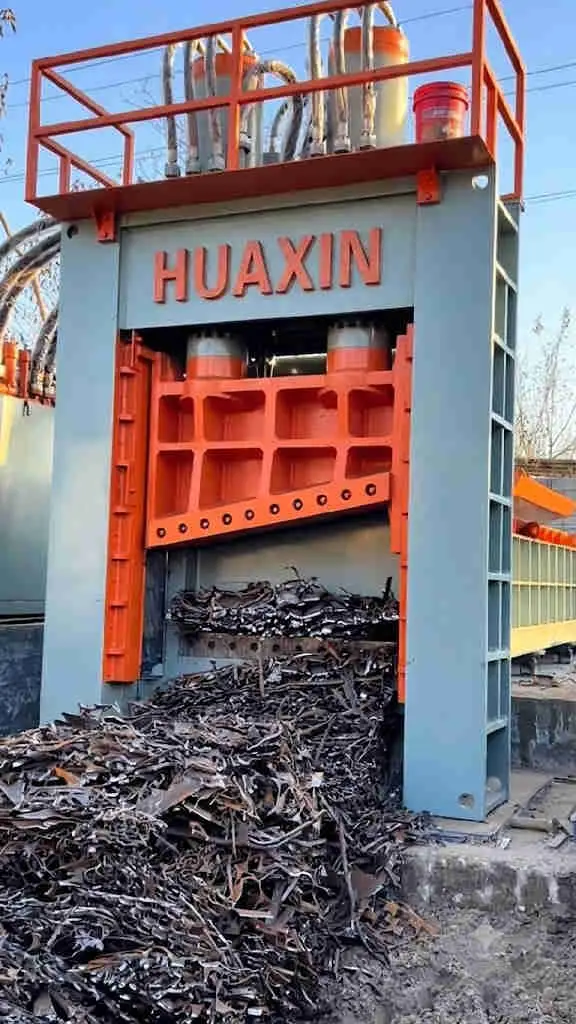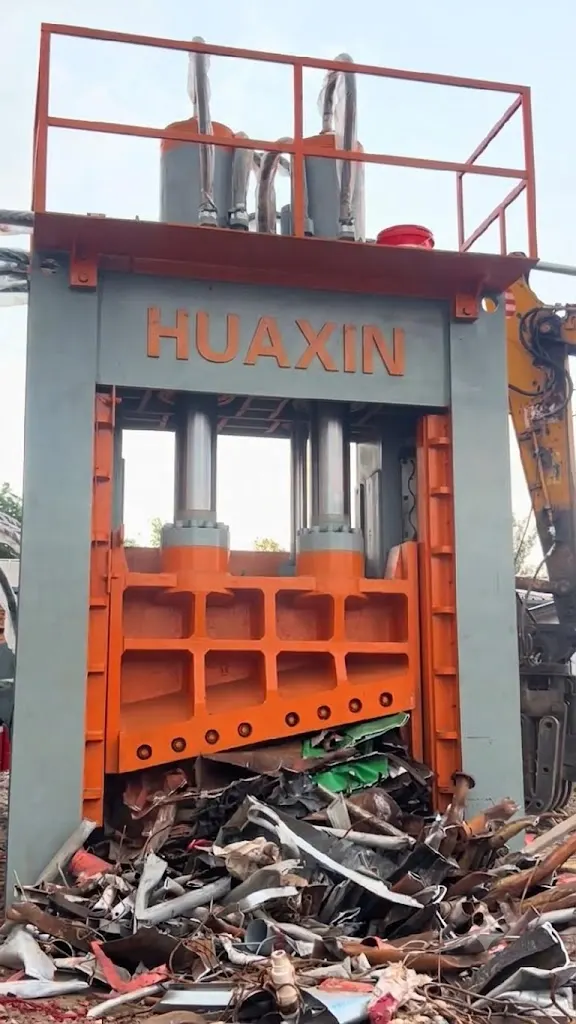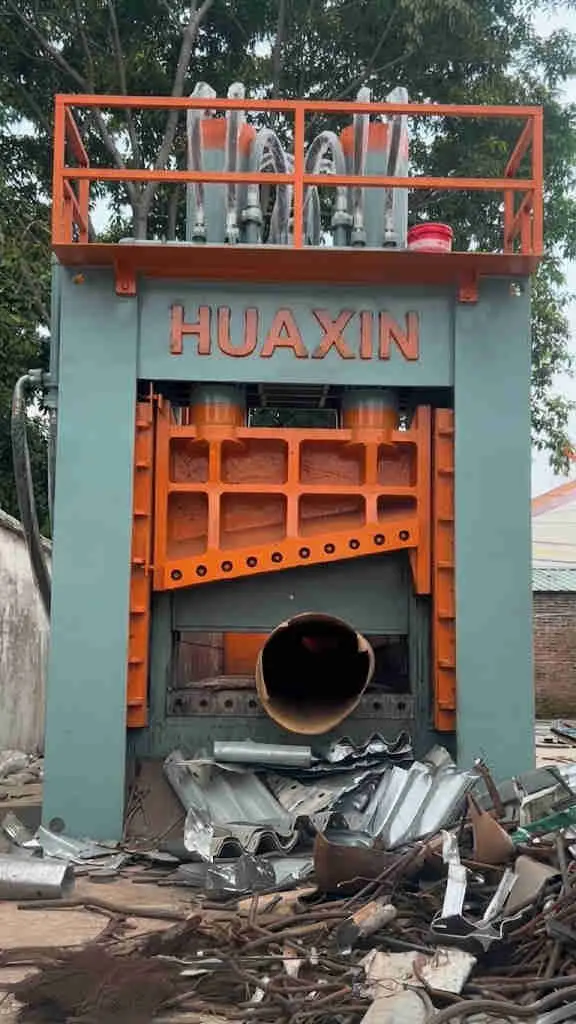
Car bodies look light and cut heavy. A flattened shell is dense, layered sheet that a gantry feeds cleanly, as long as the machine has the force to take the whole stack in one bite. A whole frame is a tangle of sheet, section and non-ferrous that belongs in a shredder first. For flattened shells, our 400 ton gantry shear is the entry point, and nothing lighter should be on the shortlist. This article explains what the material demands, why 400 tons is the floor, and where the 500 and 630 ton classes take over. If you are still comparing gantry and alligator shear configurations, the same rule holds: vehicle scrap is sized by force and box length, not by how light a car feels.
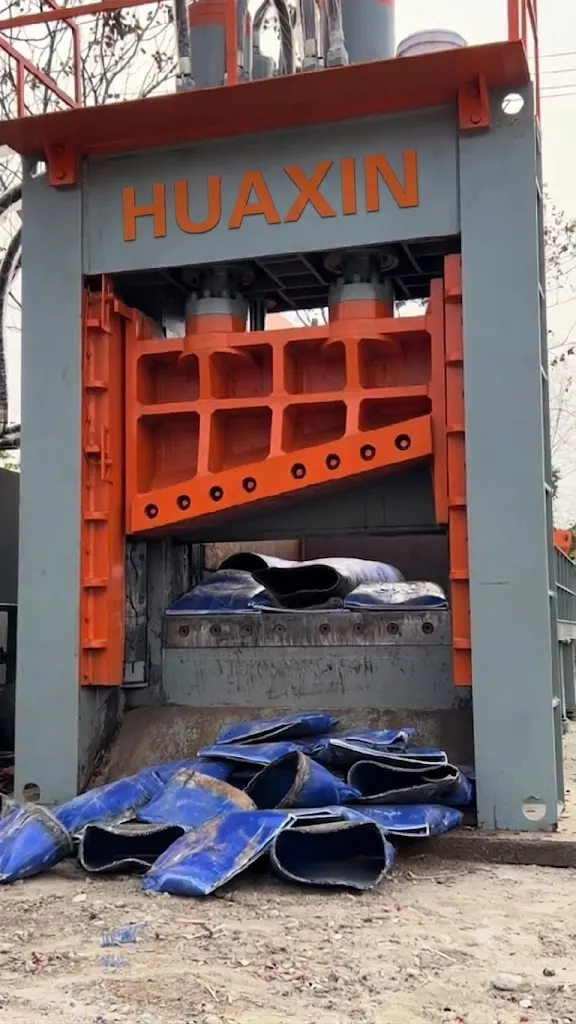
Two bodies, two materials
A car body arrives in one of two states, and the two states are different materials. A flattened shell has been through a press or a baler that compressed it into a dense, roughly uniform block. A whole frame still carries the drivetrain, suspension, wiring and trim.
The difference decides the machine. Flattened shells suit a gantry shear of 400 tons or more. Whole frames want the shredder first, because a shredder tears the object apart so the streams can separate. Feeding a whole frame into a gantry turns a clean cutting machine into a slow, blade-eating one.
Why 400 tons is the floor for car bodies
A flattened shell is not thin sheet. It is several layers of sheet, pillars, sills and reinforcements pressed together, and the blade meets all of them at once. The force needed depends on the full width of that stack, not on the gauge of one panel.
That is where lighter shears struggle. A 200 or 315 ton machine is rated for 25 to 30 mm of continuous plate, and its blade and box were sized for rebar, profile and light structural scrap. On a compressed shell it tends to stall mid-stroke, re-bite, or leave a ragged cut. Each of those adds cycle time and loads the blade unevenly, so blade life drops while output falls. We do not quote those classes for vehicle work.
The 400 ton class is the first with enough margin. It delivers 4,000 kN, cuts 40 mm mild steel plate continuously, and runs a 1,300 or 1,400 mm blade over a 5, 5.5 or 6 m feed box. The longer box lets a flattened shell sit in the box in one piece instead of being folded or pre-cut by the excavator.
400 ton gantry shear figures for auto scrap
| Item | 400 ton class |
|---|---|
| Shearing force | 400 t (4,000 kN) |
| Blade length | 1,300 or 1,400 mm |
| Feed box length | 5 / 5.5 / 6 m |
| Motor | 45 kW, 2×37 kW or 2×45 kW |
| Output | 3.5 to 5.5 t/h, 35 to 55 t/day (10-hour day). |
| Max plate (continuous) | 40 mm |
| Cycle time | 20 to 35 seconds |
Flattened shells usually sit in the upper half of that output band because they are dense and uniform. Contaminated or loosely flattened shells pull it down.
When to step up to 500, 630 tons and beyond
The 400 is the floor, not the ceiling. Yards whose auto stream grows, or who mix shells with heavier demolition steel, move up for volume and margin.
| Class | Max plate (continuous) | Output (10-hour day) | Feed box |
|---|---|---|---|
| 400 ton | 40 mm | 35 to 55 t/day | 5 / 5.5 / 6 m |
| 500 ton | 50 mm | 45 to 60 t/day | 5 / 5.5 / 6 m |
| 630 ton | 60 mm | 60 to 80 t/day | 6 / 6.5 / 7 m |
| 1,000 ton | 100 mm | 100 to 120 t/day, with bales | 6 / 6.5 / 7 m |
A yard flattening a few dozen bodies a week fits the 400. An auto recycler running shells all day, or adding HMS alongside them, should look at the 500 or 630. Above that, the 1,000 ton class and larger take baled car bodies at high volume.
Why flattening is the step that matters
Flattening turns a mixed object into a cutting feed. The press or baler compresses the body and binds the loose parts into the mass, so the sheet stops flapping and the weight packs together. A dense shell moves more tons per bite than a loose one, and the output band follows that density.
The baler range covers the machines that do the flattening, and the pairing guide covers how the two stages are sized against each other. Flatten first, shear second. Specify the handoff between them at quotation rather than discovering it on the yard floor.
What the whole frame carries
A whole frame carries everything flattening and stripping would remove, and each part is a different problem under the blade. Thin sheet cuts, but it flaps and shifts. Axles and subframes cut fine, but the sheet around them does not. Wiring and trim hit the edge and dull it. Copper and aluminium are worth far more separated than mixed into a gantry cut.
That is why a whole frame is a shredder feed. The shear versus shredder guide covers the split in detail. A gantry sizes material, and a shredder liberates it.
What the non-ferrous is worth
The non-ferrous in a whole vehicle is margin, not waste. Copper wiring, aluminium wheels and engine parts carry a price far above the ferrous they ride with. A gantry that cuts the whole frame buries that value in the cut.
A yard that feeds whole vehicles to a gantry wears blades and leaves money behind with each load. For any yard with a meaningful share of whole vehicles in its intake, the economics of separation point to a shredder stage ahead of the shear.
What fluids and trim do to the edge
Even a flattened shell is never pure steel. Fluids, rubber, trim and stray wiring survive the press and get bound into the mass. Each one reaches the blade before the steel around it does. Oil and coolant smear the blade face, and fuel is a fire risk on top of the blade cost. The edge dulls unevenly and the rotation interval shortens with no change in tonnage.
The fix is a draining station and a sorting pass upstream of the shear. It is not glamorous, and it is the cheapest safety and blade-life insurance in an auto yard. The maintenance guide covers what contamination does to the edge.
Handling the two output streams
Auto feed produces two streams that must be handled separately. Sized steel leaves the shear for the furnace or the export buyer. Non-ferrous goes to a higher-value buyer. A discharge plan that lets the two share a pile gives away the margin the separation was meant to capture.
The 20 tons per hour guide covers discharge flow at higher volumes, and the line design guide covers how the two streams get routed.
What the first month tells you
The first month on auto feed is diagnostic. By week four, three things should be true. Tons per shift land inside the 35 to 55 t/day band. The blade rotation interval holds against the tonnage. Non-ferrous is being separated, not buried.
If tonnage sits low while the shells arrive clean, upstream flattening is the bottleneck. If the rotation interval collapses without a material change, contamination is the cause and the draining station needs attention. If the non-ferrous keeps disappearing into the cut, the shredder stage is the missing piece. The cycle guide covers what each pattern looks like at the control station.
Car Body Shearing FAQ
Can a 315 ton shear cut car bodies?
We do not recommend it. A compressed shell is a multi-layer stack, and a 315 ton machine rated for 30 mm plate tends to stall, re-bite and wear its blade unevenly on it. Car body work starts at 400 tons.
Which shear size do I need for flattened car bodies?
The 400 ton class is the minimum, at 35 to 55 t/day. For a full-time auto stream, the 500 ton (45 to 60 t/day) or 630 ton (60 to 80 t/day) classes give more volume and margin.
Do I need a shredder before the shear?
Only if whole vehicles or bulky mixed scrap are a meaningful share of intake. If your bodies arrive already flattened, a 400 ton or larger gantry handles them directly.
What do you need to recommend the setup?
The share of intake that is flattened shells versus whole frames, your daily tonnage, and what happens to the non-ferrous. Send those and you get a written quotation within 48 hours, with the stage order your material needs.
Planning a car body line? Compare full machine parameters on our 400 ton scrap metal shear page, review the hydraulic gantry shear series, or contact HUAXIN’s Tangshan engineering team with photos of your shells and your target daily tonnage.