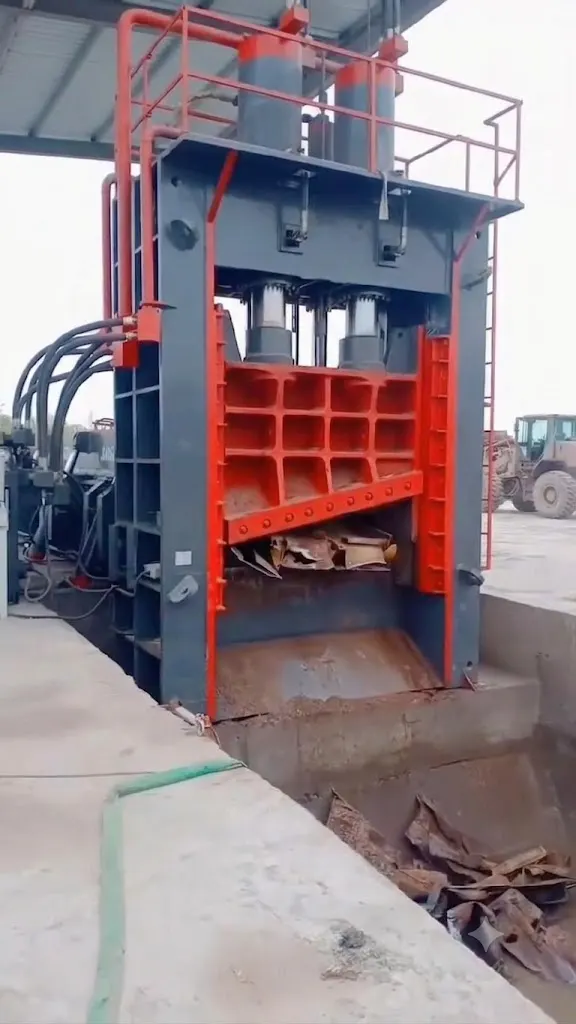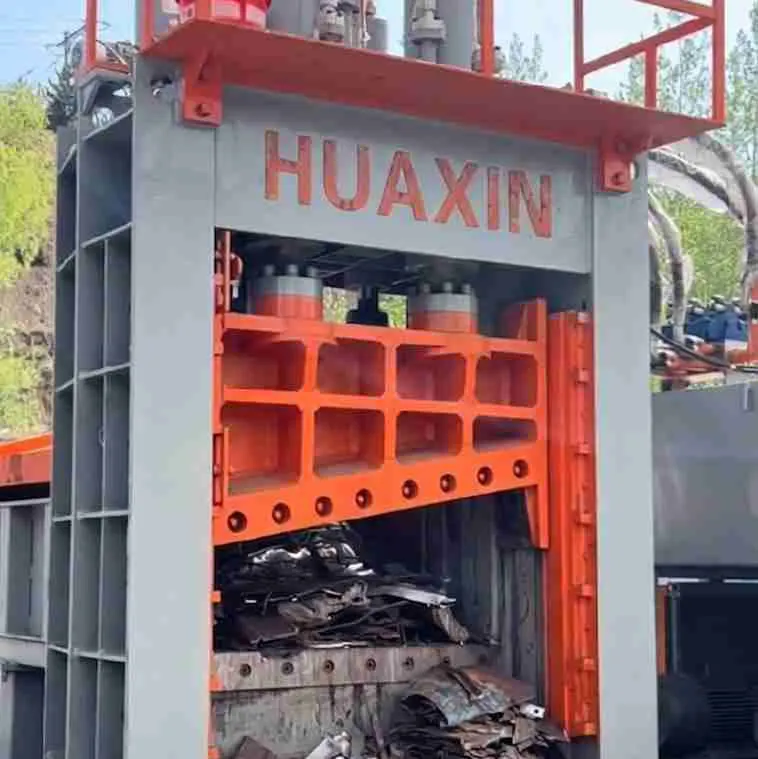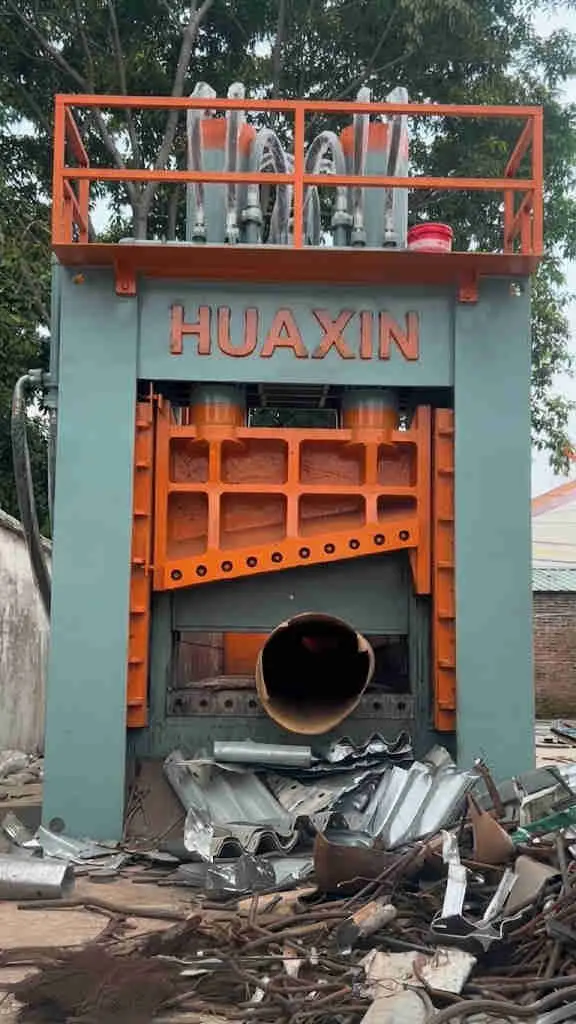
When people compare balers, they talk about tonnage, bale size and motor power. Few talk about the direction the bale comes out. Yet on a cramped site, that one detail can decide whether a machine fits at all. In day-to-day scrap metal baler production, our 125 Ton Scrap Metal Baler (Y81-125) demonstrates why matching machine capacity to scrap thickness keeps wear costs predictable.
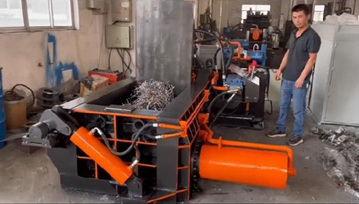
If you have ever stood in a narrow yard or a crowded workshop and tried to imagine where a bale would go, you already know the problem. This article looks at our Y81Q-135 135 Ton Front-Out Scrap Metal Baler, which is built around exactly that issue. All figures come from its product page.
The problem it solves
The page opens with a simple statement: for sites where side clearance does not allow a turn-out discharge, the Y81Q-135 closes the gap between collecting scrap and shipping a product.
A turn-out baler tilts its chamber sideways to release the bale. That needs space beside the machine. A front-out baler pushes the bale forward, out of the chamber, in line with the machine. If your site is narrow, long, or hemmed in by walls and other equipment, forward discharge may be the only workable choice.
The page names its typical settings as tight urban sites, in-plant baling and compact yards.
Key Machine Specifications: Y81Q-135 Front-Out Baler
| Item | Y81Q-135 |
|---|---|
| Main cylinder force | 135 ton |
| Chamber size | 1300×600×600 mm (front-out) |
| Bale size | 600×240 mm |
| Bale weight | 55 to 80 kg, material-dependent |
| Motor | 22 kW |
| Duty rating | Single shift |
| Control | Manual, semi-automatic or PLC |
| Power | Electric, 380 V, 400 V or 415 V at 50 Hz, or 60 Hz to order; diesel optional |
| Certification | CE |
The page lists a bale weight of 80 kg in the summary and a range of 55 to 80 kg in the configuration table, and says the figure varies with material. We use the range.
What it is meant to bale
The page lists light steel, aluminum, UBC cans and thin scrap. The suitability table is short and clear.
- Light steel: bales well when the feed is steady.
- Aluminum: acceptable duty, with density moving with bulk density.
- UBC cans: suited to the front-out chamber.
- Thin scrap: handled without pre-sorting when unmixed.
Notice that two of those four entries depend on the feed being steady or unmixed. That is typical of balers in general. A consistent feed gives consistent bales. If your intake is a jumble, expect more variation.
Thinking about the floor plan
Here is a practical way to use this information. Take a sheet of paper and draw your floor, with walls, doors, columns and other machines. Then place the baler in the position you would like.
Mark four things.
- Where scrap enters the chamber. From the floor, a hopper, a conveyor or a grab.
- Where the bale leaves. For this machine, straight out of the front.
- Where bales will be stacked. They are 55 to 80 kg each, which most sites will want to move with a forklift or pallet truck.
- Where the operator stands. With a clear view of the feed and discharge zones.
The page notes that for plants running more than one machine, a shared bale-staging and wire-tying bay is recommended, so that this baler and a next-tier machine use one downstream layout. That is a good habit if you think you will grow.
Our article on recycling line design guide explains how to check these paths more formally.
Wire tying: the overlooked step
The page makes a point many buyers miss. Wire tying is usually the last operational gap. Have your wire stock, spool size and tying tool ready at installation, because a bale that cannot be tied cannot be shipped.
It is a simple point, but it shows up often. People spend months planning the machine and a week before delivery realize nobody has ordered wire.
Feed preparation: an economics issue
The page says pre-sorting before the baler is not a purity requirement but an economics one. Oversized pieces and loose wire left in the feed waste chamber volume, and the tonnage you lose that way is tonnage you paid freight for.
That reasoning is worth remembering. Every cycle that compresses air or awkward fragments is a cycle that makes a lighter bale. A few minutes spent sorting and trimming at the intake can improve bale weight across the shift.
Control options
Manual, semi-automatic and PLC automatic control are all available. The page advises choosing the level your crew will actually use, since an unused PLC option is money spent on a feature nobody operates.
For a small team, semi-automatic is often a sensible middle choice. For a plant that runs the baler in a semi-automated line, PLC makes more sense. Ask us to price each option separately.
Power and site supply: Y81Q-135 Front-Out Baler
The machine uses a 22 kW power pack at 380 V, 400 V or 415 V at 50 Hz, with 60 Hz supply to order. A diesel-driven pack is quoted for sites without a reliable mains connection. Your order fixes voltage and frequency, with starting method and voltage confirmed against your site before build.
Confirm your supply in writing. Electrical mismatches are one of the most common reasons for delays at installation.
Where it sits in the range: Y81Q-135 Front-Out Baler
The page places the Y81Q-135 between the Y81F-125 and the Y81F-160. Buyers upgrading from this class usually move to the 160 Ton Hydraulic Scrap Metal Baler (Y81F-160), while buyers consolidating duty look at the Y81-125.
Our article on the Y81-125 starter baler covers that smaller machine, including its turn-out and push-out options. If you have enough side clearance, compare them before choosing.
Safety and housekeeping
The page raises something simple that is easy to neglect. Loose wire offcuts and bale fragments accumulate around the discharge. Housekeeping is a safety task, not a cosmetic one, because it prevents the slips that cause many injuries on baler floors.
The page also leaves noise protection to the site’s decision, based on measured floor levels rather than generic advice. That seems right. Measure your own levels and decide.
Installation and commissioning
The page says a commissioning engineer attends for leveling, electrical connection, no-load and load runs and operator training, with remote commissioning available for repeat configurations. The quotation includes a drawing package with the dimensions your contractor needs.
The page’s statements about lead time and warranty are general. It mentions typical lead times and a typical warranty period, but both are confirmed in the contract. Rely on your written quotation, not a general statement.
Spare parts worth holding
According to the page, the seal kits for the main and side cylinders are the highest-frequency spare. Keeping a set on the shelf converts a long wait into a short job. The maintenance schedule shipped with your build lists the checks.
When to look elsewhere
The Y81Q-135 is a single-shift, compact machine. If you need much larger bales, higher output or a heavier duty rating, look higher in the range. Our baler page lists the options, and the buying guide explains how to compare them. If your scrap needs cutting first, see our shears.
Required Yard Parameters for Y81Q-135 Front-Out Baler
The page asks for bulk density, particle size and target bale weight so we can confirm the configuration in writing before the order. Add your site dimensions and a photo of your floor space if you can.
Send everything through our contact page. We would rather confirm the layout before you buy than discover a problem on delivery day.
Looking for a custom layout or spare-parts package tailored to your yard? Compare full machine parameters on our 125 Ton Scrap Metal Baler (Y81-125) page, review our scrap metal baler engineering hub, or contact HUAXIN’s Tangshan engineering team with your feedstock photos and target daily tonnage.