
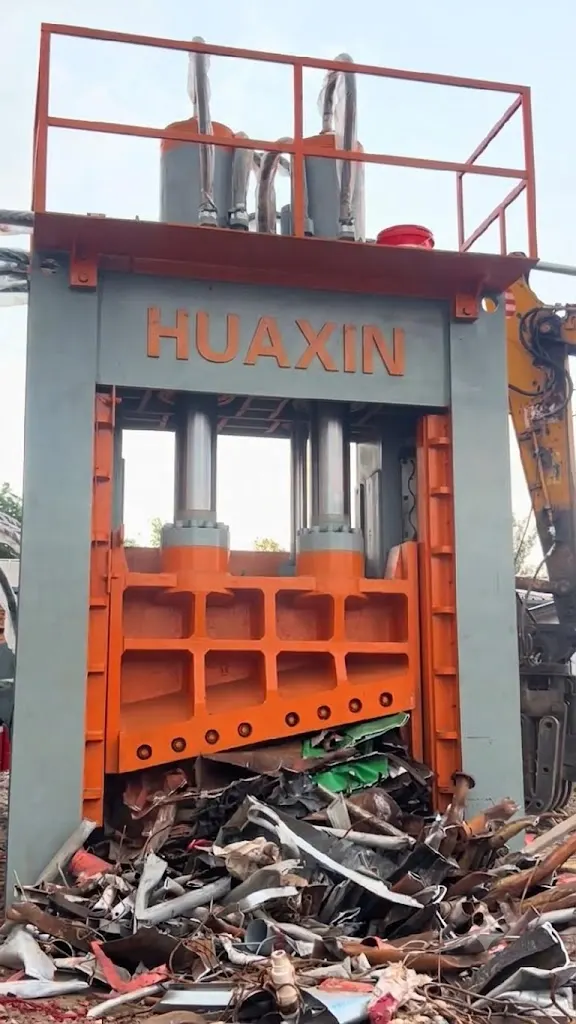
A yard planning one shift and a yard planning two are buying different machines, even when both write “5 tons per hour” on the inquiry form. The hourly rate is the same. What changes is the accumulated day, the wear budget, the maintenance window and the duty rating the build has to carry. If you are comparing gantry and alligator shear configurations, production runs on the 500 Ton Scrap Metal Shear (Q91-500) illustrate how cutting force and operator discipline impact hourly output.
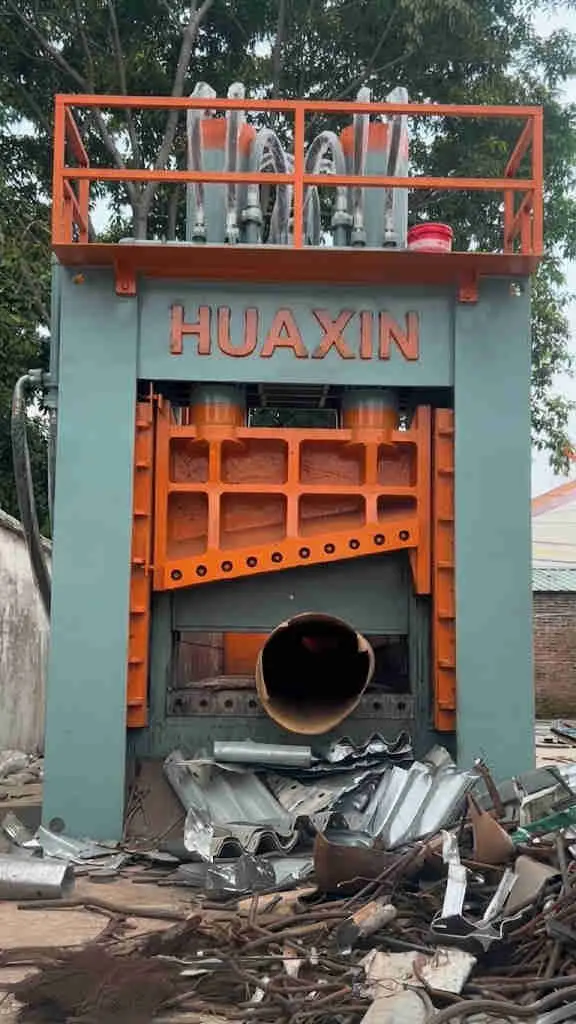
This article is the two-shift version of the sizing question: what doubles, what does not, and where the honest class line sits. The boundary figures come from published product specifications. Anything that depends on your operation is flagged as such rather than filled with a made-up number.
What two shifts actually double
Two shifts at 5 t/h is roughly 80 tons a day. That is the number that changes the conversation, because 80 tons of continuous feed is a different animal from 40. The machine spends its life charged rather than cycling empty, and every weakness in the feed arrangement gets exercised twice as often.
The wear budget doubles too. Blade rotation intervals are tonnage-based, so a two-shift yard hits its rotation twice as often, and the seal kit, filter stock and hose replacements follow the same curve. None of that is a reason against two shifts. It is a reason to buy the duty rating rather than stretch a single-shift build.
Why the duty declaration belongs in writing
Two shifts and three shifts are different builds in our quotation, and the difference is structural: frame specification, hydraulic package, cooling capacity and the wear-liner strategy all follow the declared duty. A machine quoted for the shift pattern you wish you had fights the operation in year two. A machine quoted for the duty you run disappears into the production plan.
The Q91-500 is rated to carry the rate in a two-shift pattern on material within its published boundaries: 50 mm plate continuous, 65 mm occasionally. If your heaviest routine material pushes past that, the 630 Ton Scrap Metal Shear Machine (Q91-630) at 60 mm continuous is the class the material is asking for.
The maintenance window becomes a scheduling problem
At one shift, maintenance happens when the machine stops. At two, it has to be planned inside the production schedule, and three habits make that cheap:
- Log every blade rotation with tonnage and dominant material. Three months of log tells you more about your wear than any supplier average, because it is your material producing the number.
- Check hydraulic temperature at start-up and watch it through the shift. A climbing temperature on routine material is the earliest signature of edge or gap drift.
- Keep one spare blade set on the shelf. At two-shift duty the machine does not wait for a shipment, and the 48-hour spare channel exists for the set you did not plan to need.
The blade maintenance guide covers the rotation mechanics.
What the second shift changes about the site
Two things usually surface on the second shift, and both are cheaper to solve at quotation than after installation. The first is the discharge zone: output that cleared fine at 40 tons a day banks up at 80, and the fix is a flow plan rather than a machine change. The second is the loading equipment: a shared excavator covers one shift and starves two, which is why the tank length gets sized against the loader that will actually be on site.
Our box and tank guide covers both dimensions.
The honest class check
Run the check in this order: heaviest routine piece, then honest daily tonnage across both shifts, then the duty rating you need. If the heaviest piece sits under 50 mm and the day sits near 80 tons, the 500 in a two-shift build is the answer. If either number is higher, the 630 conversation starts. If the day is under 30 tons, you are a one-shift operation and the 400 class deserves a quotation.
Send the three numbers and the written recommendation names the class, in writing, within two business days.
What the blade log looks like at two shifts
A two-shift yard that logs rotations properly ends up with a document worth more than the manual. Each entry is three things: the date, the tonnage since the last rotation, and the dominant material of that period. Three months of entries tells you the interval your material actually needs, which is rarely the number a brochure would have guessed.
The log also catches the silent changes before they reach the wear bill. A new supplier with dirtier intake shortens the interval and shows up in the log weeks before it shows up in the blade purchase. A seasonal shift from demolition feed to plate offcuts does the same. The yard that keeps the log adjusts the interval; the yard that does not discovers the change at the worst moment, which is usually the middle of a heavy week.
One more habit belongs beside the log: inspect the edge at every rotation rather than assuming the interval. A chipped edge found early is a rotation, and a chipped edge found late is a scrapped blade with the seat to recondition after it. The maintenance guide covers the mechanics, and the discipline is one line per event.
The consumables budget, run annually
Two-shift operation turns wear parts from incidents into a line item, and the budget has four components. Blade sets, which follow the rotation interval times the tonnage. The regrind cycles between sets, which are a service rather than a purchase. The production hours lost to each rotation, which at this duty is the largest hidden number. And the shelf set, which exists so that a rotation never waits on a shipment.
Run those four annually rather than per incident and the number stops being a surprise. The downtime accounting guide covers how the hours get priced, and the three-shift economics guide covers what the second and third shift add to the same arithmetic.
The handover between shifts
At two shifts the handover is where the day’s knowledge survives or dies. The outgoing crew knows what the material did to the edges, what the cycle felt like at hour six, and anything the machine said during the shift. The incoming crew either inherits that knowledge or repeats the experiment.
A formal handover costs nothing and catches wear trends in weeks rather than months. A board at the control station, a two-minute conversation, a line in the log. The boundary gets reinforced there too: the crew that knows 50 mm is the daily diet charges to it confidently, while the crew that inherits a machine without the boundary either under-feeds it or pushes it into the occasional rating every shift. Post the boundary at the control station and repeat it at every handover until it stops being an instruction and starts being culture.
How to read a two-shift quotation
When the quotation arrives, three rows tell you whether the factory heard the duty declaration. The frame and hydraulic rows should reference the shift pattern you gave, not a generic rating. The cooling and wear rows should scale with the declared duty rather than with the tonnage alone. And the spares rows should be sized to your shift count, because a one-shift kit on a two-shift machine is a stop waiting for a quiet week.
If any of the three rows is missing, ask for it in writing before the deposit. The line-by-line guide maps what each section should carry, and the red-flag guide lists what their absence looks like.
Buyer FAQ
Does running two shifts require a bigger shear?
Not necessarily a bigger one, but a different build. The force class follows your heaviest material. The duty rating, cooling capacity and wear specification follow your shift pattern, and that is what the two-shift quotation changes.
How much does the wear budget actually double?
Blade consumption roughly doubles with the tonnage, since rotation is tonnage-based. Seal kits, filters and hoses follow a similar curve. Budgeting the wear line annually rather than per incident is what keeps it visible.
Can a single-shift machine be run on two shifts later?
It can be run, and many yards do. What it cannot do is perform like a two-shift build: cycle times stretch, blade intervals shorten and hydraulic temperatures run warmer. The declaration at quotation is the last cheap moment to get that right.
What should I send to get the duty question answered properly?
Your material list, the three heaviest pieces from a normal month, your honest tonnage and the shift pattern as actually run, not the one on the business plan. The written quotation restates the duty declaration as the build’s basis, and that restatement is what you check before the deposit. If a factory quotes a two-shift machine without restating your declaration, the specification conversation has not happened yet.
What maintenance window does a two-shift build need?
Plan it inside the production schedule rather than against it. Daily checks and a weekly gap measurement take minutes; a blade rotation takes an hour or two depending on access. The point of the declaration at quotation is that the build comes with the maintenance window planned in, rather than the window being whatever time is left over after production.
Evaluating equipment specifications or FOB/CIF delivery schedules for your plant? Compare full machine parameters on our 500 Ton Scrap Metal Shear (Q91-500) page, review our scrap metal shear engineering hub engineering hub, or contact HUAXIN’s Tangshan engineering team with your feedstock photos and target daily tonnage.
One Comment