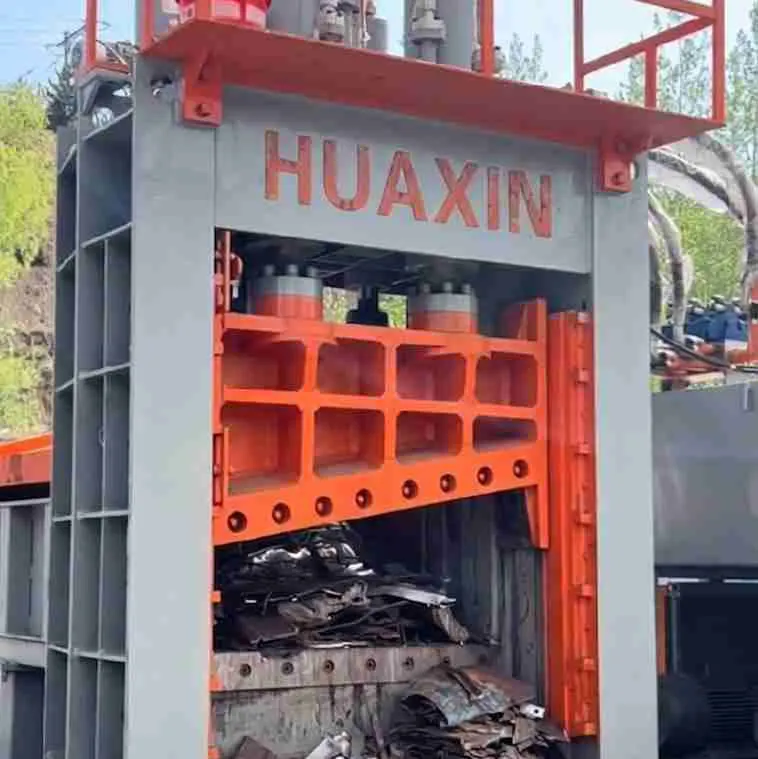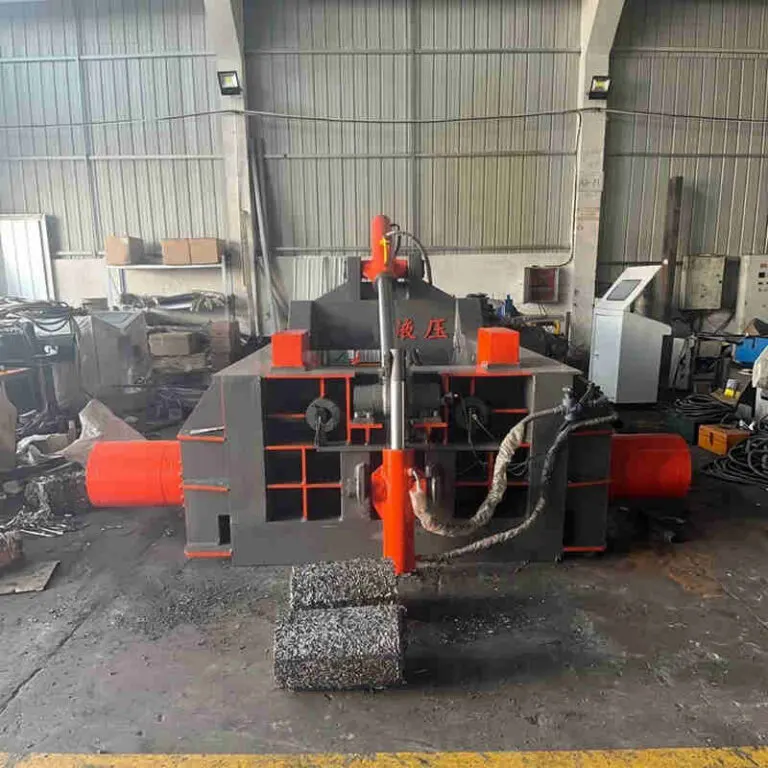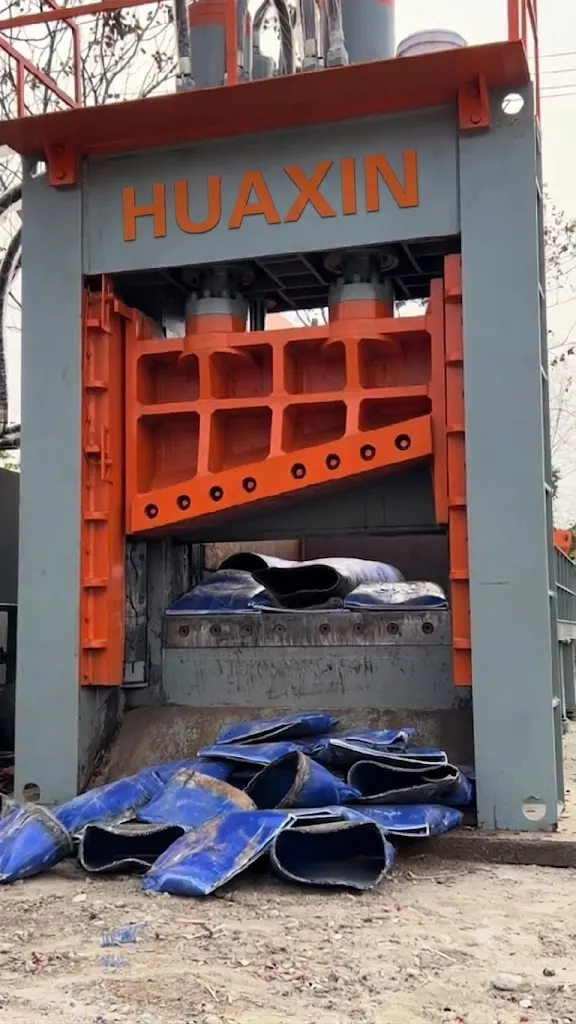
Twenty-five tons an hour is flagship territory, and the conversation stops being about whether a machine can do it. The 2000 Ton Scrap Metal Shear Machine (Q91-2000) is rated for 250 to 300 tons per day with 170 mm plate as continuous duty, and a single shift at 25 t/h lands at roughly 200 tons. The question at this rate is not capability. It is whether the yard around the machine can feed it, clear it and maintain it for a decade. When sizing hydraulic scrap shear equipment for continuous duty, field data on the 2000 Ton Scrap Metal Shear (Q91-2000) highlights the link between frame rigidity, cycle speed, and operating cost.
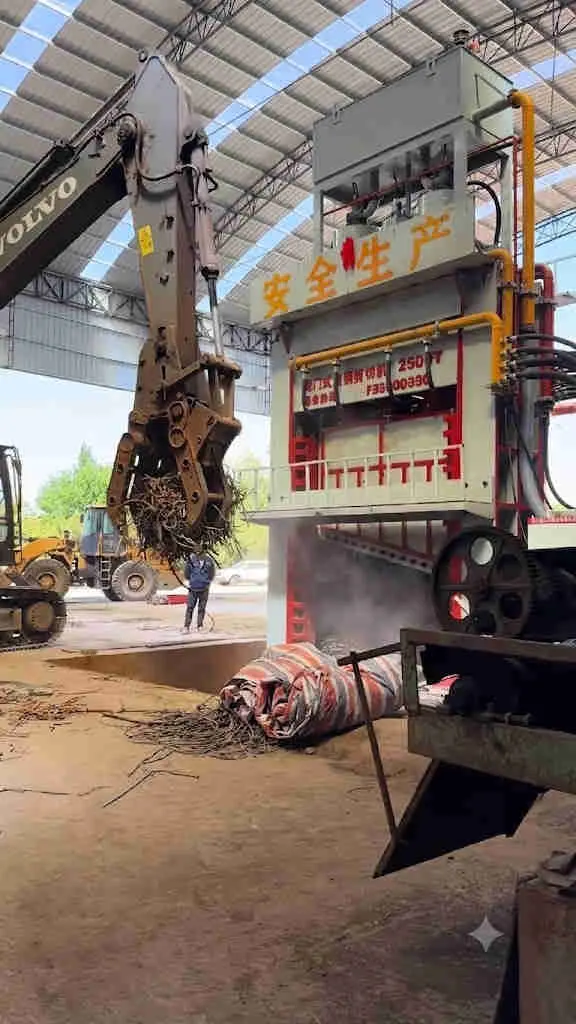
This article covers what 25 t/h demands from the whole operation, why the duty declaration matters more than the tonnage badge, and what has to be true on site before the machine earns its band. Boundary figures are from published specifications; the rest is field experience, flagged as such.
What 25 tons per hour adds up to
Twenty-five tons an hour across eight hours is roughly 200 tons. Two shifts approaches 400, which is beyond the published band of any single machine in our range and points at a line rather than a machine. The honest framing at this rate is a production system: the shear is stage one, and what sits behind it decides whether the tonnage is real.
The Q91-2000 carries 170 mm continuous plate, and that boundary is what makes the rate sustainable rather than theoretical. A machine working at its edge every shift stretches cycle time and shortens blade intervals; a machine with headroom holds the published figures across the shift. The flagship’s specification exists precisely so that the heavy tail of a mill’s intake never reaches the boundary.
Why the duty declaration decides the build
At this scale the build details are the purchase. Frame and hydraulics get quoted against the declared duty: two shifts and three shifts are different builds, and the difference is structural rather than optional. The blade configuration follows the three heaviest pieces from a normal month. The cooling package gets sized for sustained heavy duty, which makes oil temperature a specification item rather than a maintenance note.
The power package and starting method are agreed with your electrician before the build, because motor ratings at this class do not tolerate discovery on delivery day. And the spares depth is specified against the downtime arithmetic rather than against a standard kit. The specification reading guide covers how those rows appear in a quotation.
What the site has to carry
Three site items stop being details at this rate. The foundation carries the reaction force of every cut, and the anchorage follows the declared duty rather than a generic figure. The electrical scope is confirmed in writing before the build, with the starting method matched to your transformer. And the route in is confirmed with crate dimensions in hand, because a machine this size does not tolerate a discovered constraint at the port.
In practice the site track sets the installation date more often than the factory does, which is why both schedules start at the order. The import sequence guide walks the two tracks, and the 2000-ton high-volume shear planning guide covers the payment structure at flagship scale.
The line behind the shear
A flagship shear is rarely alone. What sits behind it decides whether 200 tons a day is a plan or an aspiration. A baler takes the light fraction that never needed cutting. A shredder takes the mixed bulky stream. And the discharge arrangement carries sized material away at the box’s rate, which at this tonnage is a logistics project with its own buffer and its own haulage schedule.
The line design guide covers how the stages get sized against each other, and the discharge planning guide covers the flow arithmetic at production rates.
What a week at this rate looks like
A week at 25 t/h is a rhythm rather than a sprint. The tank stays charged because a dedicated grapple works the shear, not because the crew hurries. The cut pieces leave at the box’s rate because someone planned where they land. The blade rotation happens when the log says it is due, not when the cut starts to feel slow. None of those three is dramatic, and together they are the difference between the published band and the number a yard actually reports.
The crews that hold the rhythm treat the machine like a production line with a maintenance window, not like a tool that runs until something stops. That habit forms in the first month or it does not form at all, which is why the commissioning schedule walks each wear-part replacement with the crew that will perform it. A procedure performed once is a planned change. A procedure only read about is a stop, and at this tonnage a stop is measured in furnace terms rather than in hours.
The comparison the flagship has to win
Buyers at this rate are usually comparing the flagship against the class below, and the comparison is arithmetic rather than pride. The 1600 Ton Scrap Metal Shear Machine (Q91-1600) carries 150 mm continuous plate and a 200 to 240 ton per day band. If your heaviest routine material stays under 150 mm and the day sits nearer 200 than 250, the 1600 does the job for less purchase price, less installed power and a smaller installation, and the decade of running costs follows the same direction.
Send both measurements, the heaviest routine piece and the honest daily tonnage, and the written recommendation names the class the numbers support. Including when it is the class below the one you asked about. That sentence is the whole reason buyers come back for the second machine.
The configuration decisions at this rate
Four configuration rows matter more than the rest at flagship duty, and each is a decision made at quotation rather than an option chosen later. The blade length covers the weekly material whole, because a blade that forces repositioning costs minutes every shift and minutes at this rate are tons. The tank length keeps the box charged against your loader’s cycle time. The cooling package is sized for sustained heavy duty rather than for the brochure’s average hour.
None of the four is visible on a price sheet. All four show up in year three, which is why the specification conversation at quotation is the purchase. The specification guide covers how those rows appear in a quotation, and the red-flag guide lists what their absence looks like.
The questions your engineers should ask
The best flagship specifications start with the people who will maintain the machine rather than with purchasing. Five questions from them shape the quotation more than any brochure row: what the wear-part replacement procedure takes in hours and crane time; what seal specification the declared duty calls for; how the blade gap is calibrated and how often; what the cooling package needs in ambient temperature at your site; and what the load test record actually shows. A factory that welcomes those questions is describing a build process. A factory that routes them to a sales script is describing a catalog.
Treat the wear budget at this rate as a logistics line rather than a maintenance note. Rotation is tonnage-based, so a 200-ton day reaches the interval quickly, and the shelf blade set, seal kits and filter stock should be sized to the shift pattern so a rotation never waits on a shipment. The same logic applies when the fleet grows: the next purchase is usually a machine for a different fraction rather than a second flagship, because duplication buys the same bottleneck twice. The verification guide covers the document checks behind the answers, and the visit checklist covers what to look at on the floor.
What delivery and testing look like at this scale
A flagship machine does not ship on a promise. It ships on a test record. Before it leaves the works it runs a no-load and load test on its own hydraulics, and the record of that test travels with the machine in the documentation box. For a buyer commissioning quickly, that record matters more than a type certificate, because it describes this serial number rather than a design.
The documentation pack is the other half: schematics, foundation drawings, the load test record, material certificates for frame and blades, and the wear-part schedule with expected life at your declared duty. It should be specific enough that a maintenance technician who has never seen the machine can plan a blade change from it. If the pack cannot answer that, the specification conversation is not finished, and the quotation is where it gets resolved rather than the loading dock.
Buyer FAQ
What daily tonnage does 25 tons per hour mean?
Roughly 200 tons on one eight-hour shift. Two shifts approaches 400, which is beyond any single machine’s published band and points at a staged line rather than a bigger shear.
Is the Q91-2000 the right class for this rate?
It covers a single shift at 25 t/h inside its published band of 250 to 300 tons per day, with 170 mm continuous plate as the material boundary. If your heaviest routine material stays under 150 mm and the day sits nearer 200, the Q91-1600 does the job for less purchase price and less installed power.
What decides whether we reach the rate?
The operation, not the machine. The loading arrangement keeps the tank charged, the discharge clears at the box’s rate, and the blade rotation happens on schedule. All three are visible from the control station, and all three show up in the tonnage figure first. A week of counting empty-tank minutes, banked-discharge minutes and tons since the last rotation settles which one needs work before any money gets spent.
What do you need to quote a flagship machine?
Material list with the three heaviest pieces, honest daily tonnage, shift pattern, the stages planned behind the shear, and site facts: power, foundation and route. The written quotation comes back within two business days with the class and configuration your numbers support, restated against the duty declaration you gave us. Ask for the load test procedure in the same exchange; a factory that can describe how it tests a flagship is a factory that builds them. Ask also for the documentation pack list with the quotation, because the pack is the reference your maintenance program gets built from and it should exist before the deposit rather than after it.
Want cycle-time calculations or container loading details for your scrap mix? Compare full machine parameters on our 2000 Ton Scrap Metal Shear (Q91-2000) page, review our heavy-duty scrap metal shear series engineering hub, or contact HUAXIN’s Tangshan engineering team with your feedstock photos and target daily tonnage.