
Most yards that cannot reach their rated throughput blame the machine. In our experience the machine is usually fine and the feed is the problem. A shear cuts at the speed material arrives, and at 10 tons an hour every minute the tank spends empty is a minute the cycle is not running. For yards evaluating heavy-duty scrap shear setups, operating benchmarks from our 630 Ton Scrap Metal Shear (Q91-630) show how hydraulic pressure stability and feeding habits directly shape cost per ton.
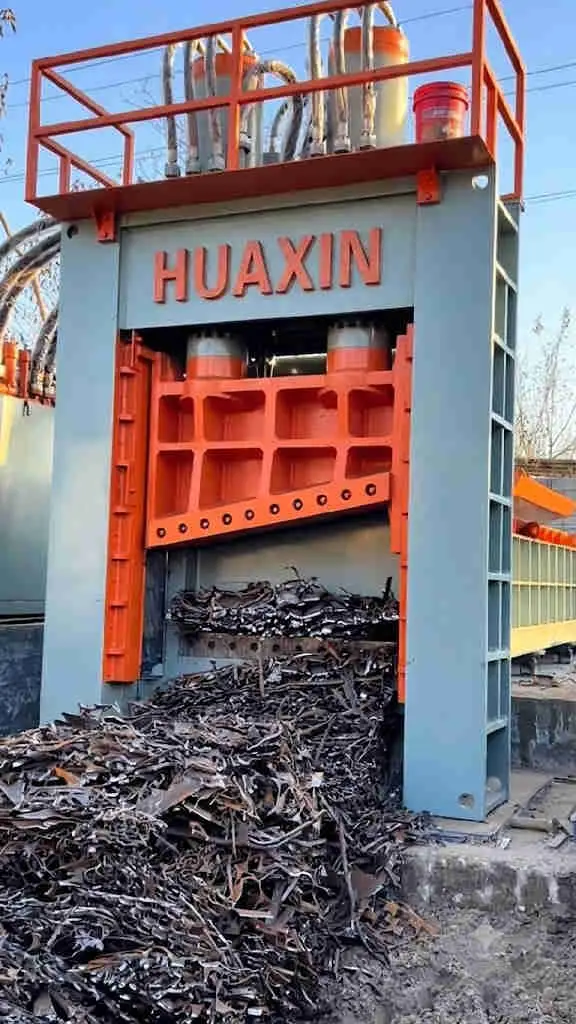
This article is a diagnostic: how to tell whether your yard is feed-limited, what the three usual causes look like from the control station, and what to fix before you conclude that you need a bigger class. The figures referenced are from published product specifications; the rest is field experience, flagged as such.
The tell: cycle time on routine material
The machine reports its own health, and the first place a feed problem shows up is cycle time on material you know. If the cycle stretches on routine feed while the hydraulic temperature stays normal, the machine is waiting. Hydraulic temperature climbing with the cycle means the opposite: the system is working harder for the same cut, and that is an edge or gap question.
Both signatures are visible from the control station without an instrument. The cycle time guide covers all three signatures in detail.
Cause one: the loader cannot keep up
This is the most common and the most misdiagnosed. The symptom is a rhythm problem rather than a steady shortfall: the tank empties, the crew waits, the excavator arrives, the box charges, and the surge of a full box pushes the discharge harder than the handling can clear.
The fix is not a bigger shear. It is a tank sized against the loader’s actual cycle time, or a loader dedicated to the shear for the shifts that matter. Our tank sizing guide covers the arithmetic, and the configuration rows on the Q91-630 page show the options.
Cause two: the discharge clears slower than the box delivers
The second cause hides downstream. Cut pieces accumulate under the box, and once the pile reaches the discharge the machine waits for clearance rather than for material. The crew usually reads this as a machine problem because the machine is what stopped.
The fix is a flow plan: buffer, handling and destination sized against the box’s delivery rate. Where a second stage exists, the pairing matters too, and the line pairing guide covers how the handoff gets specified.
Cause three: the blade rotation slipped
The third cause is a maintenance habit rather than a design one. A rounded edge cuts slower, needs more force per cut and stretches the cycle in a way that feels like a feed problem. The crew compensates by charging harder, which makes the discharge worse, and the whole loop degrades together.
The fix is the tonnage-based rotation schedule and the blade log. The maintenance guide covers the mechanics; the discipline is one line in a logbook per rotation.
What to measure before you buy anything
One week of three counts settles the question, and none of them needs an instrument:
- Empty-tank minutes per shift. Watch the tank, not the machine. If the loader is the reason it is empty, the machine is not your constraint.
- Discharge wait minutes per shift. The minutes material spends banked up before it leaves. That number is your flow plan’s specification.
- Tons since the last blade rotation. Compare against the interval the configuration was quoted for. If it is double, you have found the cycle stretch.
Bring the three counts to the quotation conversation. They convert “the machine is slow” into a specification, and the specification is what a factory can actually answer.
When the feed really does point at a bigger class
Sometimes it does. If the counts are healthy and the material genuinely exceeds the class boundary, the 500 Ton Scrap Metal Shear Machine (Q91-500) or 1000 Ton Scrap Metal Shear Machine (Q91-1000) is the honest answer. The difference between that case and a feed-limited yard is exactly the week of counts, and the written recommendation we send back names which situation you are in.
The force and material rule covers how the class boundary gets checked against your heaviest routine piece.
What the counts look like when they come back
The week of counts usually resolves into one of three readings, and each points somewhere different. If the empty-tank minutes are high and the discharge minutes are low, the loader is the constraint and the fix is a tank length matched to the loader you have or a dedicated grapple for the shifts that matter. If the discharge minutes are high and the tank stays charged, the flow plan is the specification and the buffer or the destination needs sizing.
The third reading is the one buyers least expect: both counts low and the cycle still stretching. That is the blade rotation, and the fix costs a logbook line rather than a purchase order. A yard that runs the counts and finds nothing wrong has learned something valuable too, because then the material itself is the question and the force rule is the next check.
Training the crew that feeds the box
Every discipline in this article lives with the people who feed the machine, and none of it is obvious to an operator who has run a smaller class. Three training points cover most of the gap between a rated band and an actual one. Charge in rhythm rather than in surges, because the surge overloads the discharge and the rhythm holds the presets. Orient the piece so the cut lands clean, because the orientation that cuts best also wears the edge least. And watch the discharge zone rather than only the box, because the pile is what stops the machine.
None of this takes long. A week of deliberate training at commissioning, with our engineer on site or on the line, buys the tonnage the machine was rated for. The yards that train it explicitly are the ones whose maintenance logs stay boring, and a boring log is the best report a machine can give.
A note on used machines at this rate
Buyers who have run the counts and found a feed-limited yard sometimes ask whether a used machine at a bigger class solves it. Usually it does not, because the constraint was never the force rating. A used machine can be a legitimate purchase on other grounds: a clean inspection, a duty history that matches yours, and a live spares path are worth a real discount. What a used machine rarely comes with is the configuration conversation, and at a feed-limited rate the configuration is exactly what was wrong.
If you are comparing a used machine against a new build at this rate, run the same counts first and let them tell you which question you are actually answering. The inspection guide lists what to check, and the total cost guide covers how the lines convert into a decision.
Buyer FAQ
How do I know if my yard is feed-limited or machine-limited?
Count the empty-tank minutes. If the tank spends real time empty while the loader works elsewhere, you are feed-limited and a bigger machine will not help. If the tank stays charged and the cycle still stretches, look at the blades and the gap.
What is the cheapest fix for a feed-limited yard?
Usually the loading arrangement: a dedicated grapple for the shifts that matter, or a tank length matched to the loader you actually have. Both cost less than a class step up, and both are decided at quotation.
Does surge feeding damage the machine?
It overloads the discharge and the handling rather than the shear itself, but it costs throughput every shift and it wears blades faster because the crew charges harder to compensate. The rhythm is worth training for in week one.
Can you review my counts and tell me what they mean?
Send them with your material list and tonnage. We read them against the class boundaries and tell you honestly whether the answer is a configuration change or a class change, including when it is neither and the machine is simply being under-fed. That answer costs you nothing and it is the one that saves the class step up you did not need.
Is surge feeding really that costly?
It costs throughput every shift and blades every month. The discharge gets overloaded, the crew compensates by charging harder, and the harder charging wears edges faster than the schedule expects. The rhythm feels slower on any given hour and faster on every tonnage report, which is why it is worth training in week one rather than correcting in year two. One last point for the owner rather than the operator: the counts work because they are honest. Run them on a normal week, not the heaviest one and not the one where the loader was in the shop. The heavy week flatters the feed and the light week damns it, and neither describes the operation. The median week is the specification, and it is the document to bring to the quotation conversation, because it is the one number in the purchase that no factory can argue with.
Planning a yard upgrade or need site-specific foundation drawings? Compare full machine parameters on our 630 Ton Scrap Metal Shear (Q91-630) page, review our hydraulic scrap shear lineup engineering hub, or contact HUAXIN’s Tangshan engineering team with your feedstock photos and target daily tonnage.

2 Comments