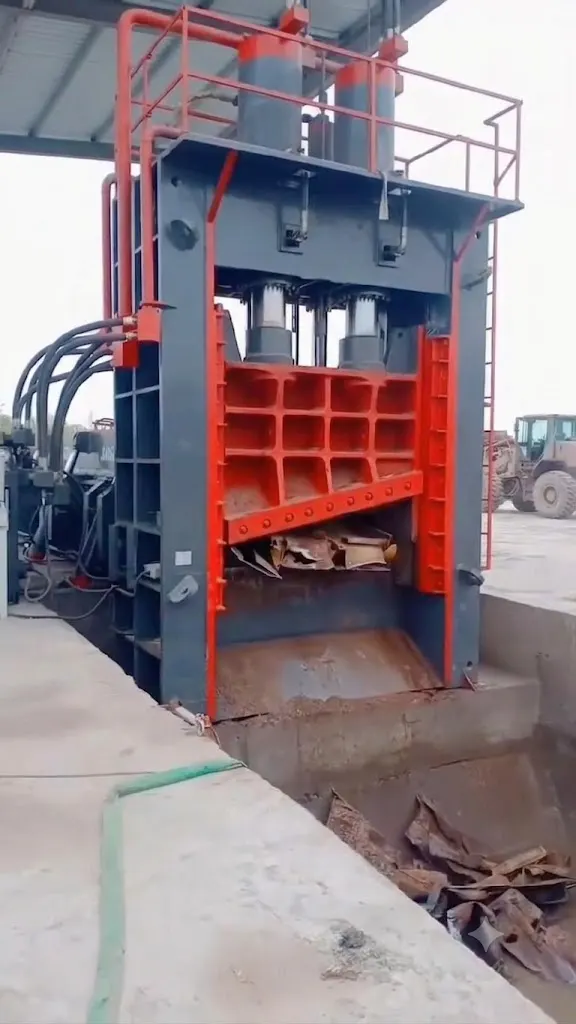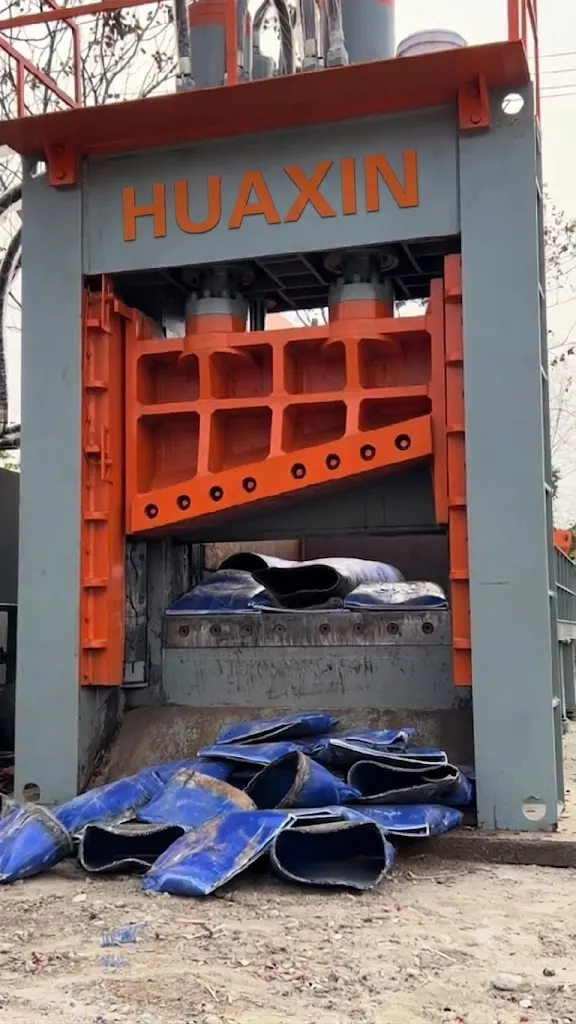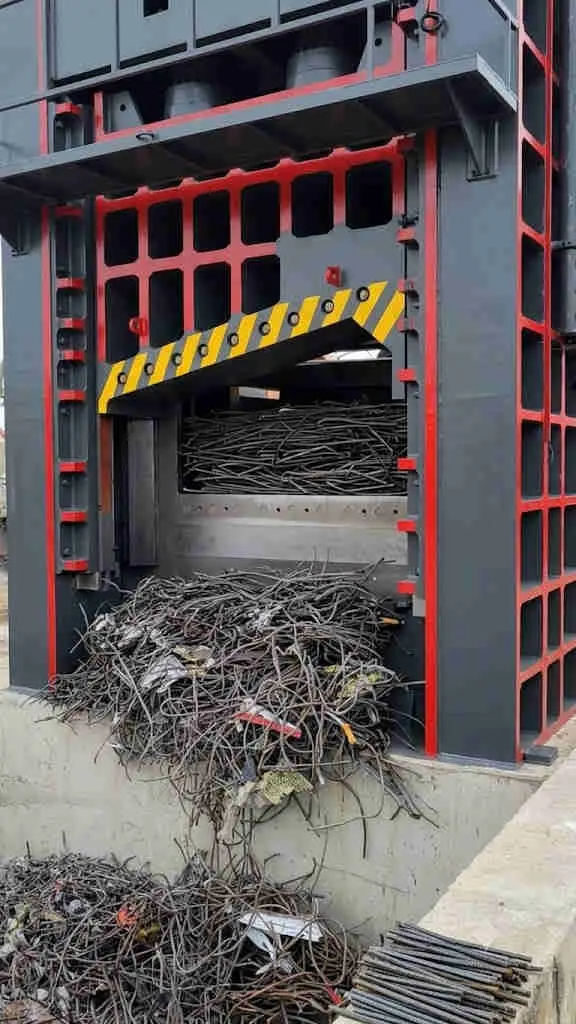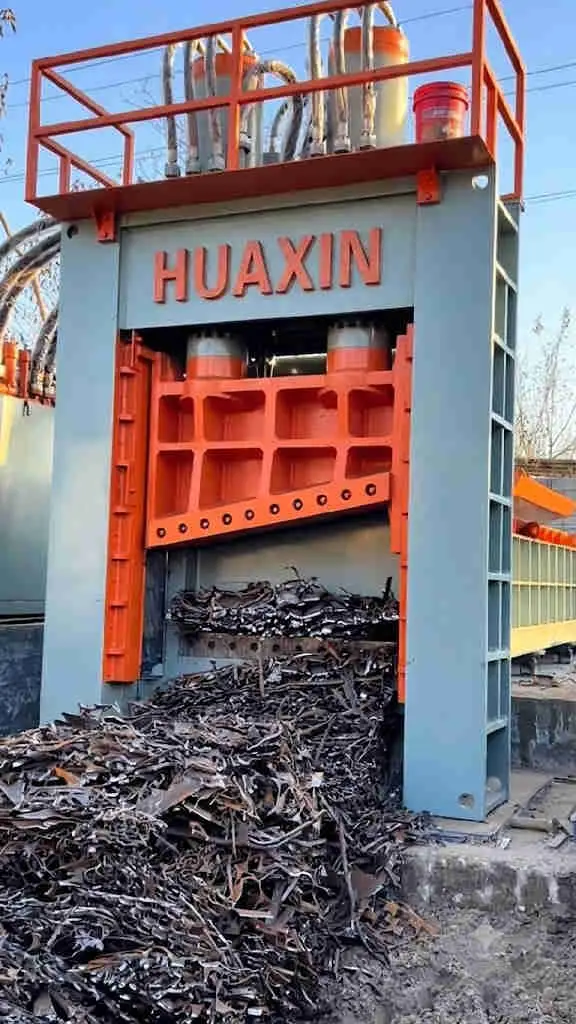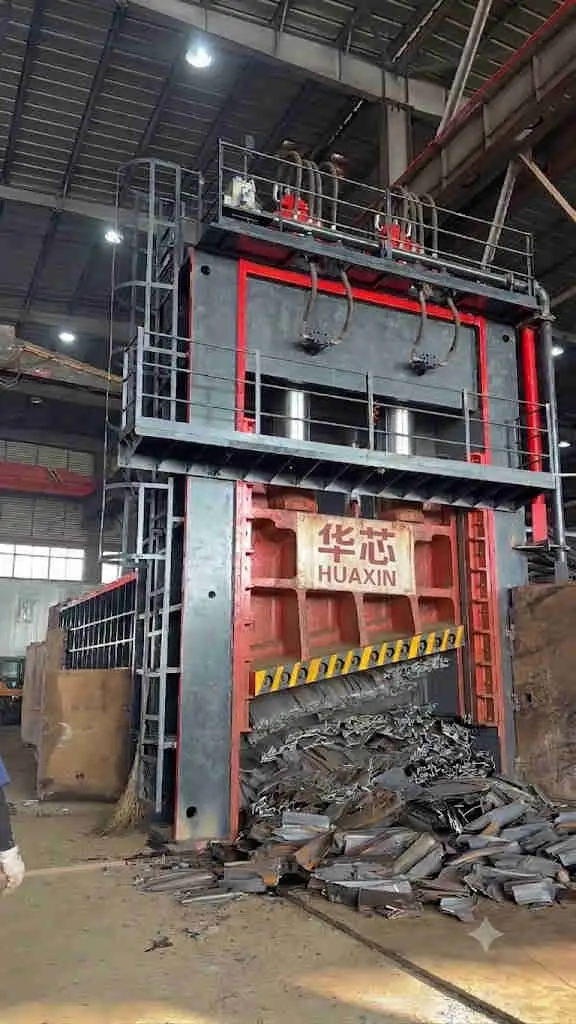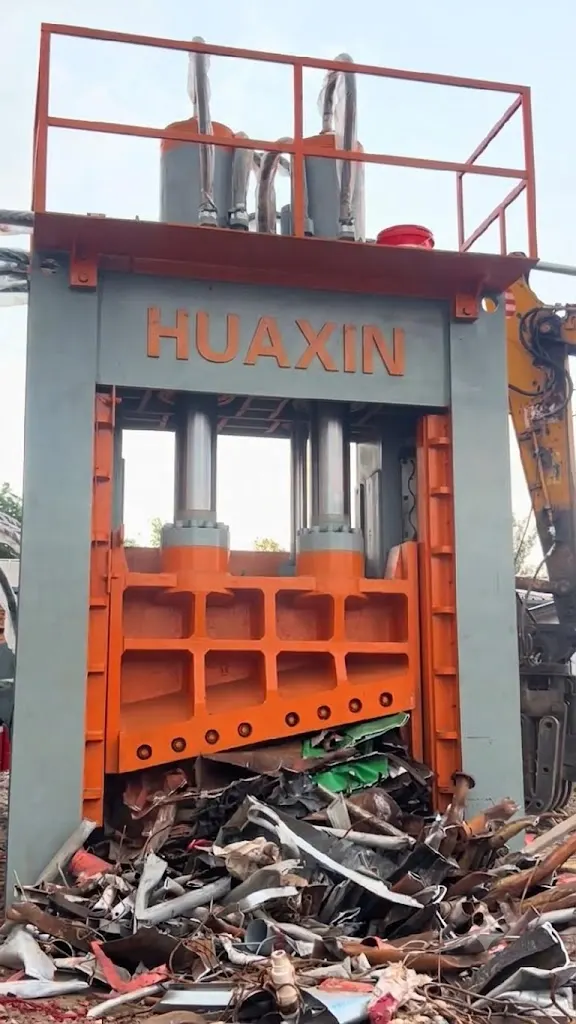
Most hydraulic failures on a scrap shear start as something small an operator could have seen: a weeping fitting, oil running hotter than last week, a filter indicator in the red. This gantry shear maintenance checklist groups those checks by interval, daily, weekly and annual, so the crew working a hydraulic gantry shear can run them without a manual open on the bench. Where a check needs a figure, such as oil grade, torque or a service interval, use the HUAXIN manual for your model.
The checklist below is the routine our field engineers teach during commissioning on machines from 200 t to 2,000 t. It covers the hydraulic gantry shear as a whole. Blade edges get their own detailed guide, linked further down.
The Gantry Shear Maintenance Checklist on One Page
| Interval | Check | Action if out of line |
|---|---|---|
| Daily, before start | Oil level in sight glass | Top up with the oil specified for your model; find the loss. |
| Daily, before start | Visible leaks at pumps, valve block, cylinders | Tag, tighten or replace the seal before running |
| Daily, before start | Emergency stop, remote, guards | Do not run until each one works |
| Daily, running | Oil temperature | Stop and check the cooler if above the manual limit. |
| Daily, running | Main pressure on gauge | Compare with the commissioning record |
| Weekly | Filter indicators | Change elements when indicated |
| Weekly | Hose condition and clamps | Replace any hose with exposed braid |
| Weekly | Blade gap and blade bolts | Shim and torque per the manual |
| Weekly | Cooler fins, cabinet dust | Clean with dry air |
| Annually | Oil condition, seals, frame welds, electrical terminals | Planned service, machine cold |
Before the First Cut of the Day
Walk the machine with the power isolated. Start at the power unit. Check the oil level in the sight glass with the cylinders retracted, since that is the reference position.
Then look for oil, starting at the pump group and working outward along every hose and pipe to each cylinder, because a leak is easier to trace from its source. Fresh drips under the pump group, at the valve block or below the main, hold-down, side compression and pusher cylinders all mean a seal or fitting is going. A dry rag wiped over each joint shows weeping that the eye misses.
Inspect the feed box. Clear out fines, wire and stray pieces from under the pusher head. Debris there forces the pusher cylinder off line and scores its rod.
Finally, test the safety chain. Press the emergency stop, check that the remote controls every motion, and confirm the guards are closed. A machine with a failed e-stop does not run.
While the Machine Is Cutting
Oil temperature is the best single early warning on a hydraulic scrap shear. Note the reading after the first hour and again mid-afternoon. A slow climb over several days usually points to a dirty cooler, a worn pump or a relief valve passing oil.
Watch the main pressure gauge during a typical cut and compare it with the figure recorded at commissioning. Listen as well. A pump that whines or rattles, or a cylinder that hesitates at the change of direction, is telling you something.
On larger classes, the multi-pump group helps here. On the 1600 ton gantry shear one 55 kW motor-pump branch can be isolated by its valve, so the machine keeps working at reduced speed while that branch is serviced.
Weekly: Filters, Hoses and Fasteners
Filters
Read the clogging indicators on the pressure and return filters. Change the element when the indicator asks, not when it suits the production plan, even if that means stopping the shear in the middle of a busy afternoon. Running past the indicator lets bypassed dirt into pumps and valves.
Hoses and clamps
Trace each high-pressure hose from end to end. Replace any hose with cracked cover, exposed braid or a bulge near the fitting. Check that clamps still hold the hose clear of the frame, because rubbing against steel wears through faster than pressure ever will.
Bolts
Check blade seat bolts, cylinder mounting bolts and power unit mounts. Use the torque values in the HUAXIN manual for your model. Re-torque after the first week of service, then on the schedule the manual gives.
Cooler and electrics
Blow dust out of air-cooler fins and the electrical cabinet filters. In dusty yards with 12-hour running, this is the cheapest way to keep oil temperature down. Yards in hot climates moving to 12–16 hours a day should ask for upgraded oil cooling at order, a point the 315 ton gantry shear page makes for that class.
Blade Gap and Four-Edge Rotation
Every HUAXIN blade, in M6V, H13, X45 or D2 tool steel, has four cutting edges. When one edge dulls, the blade is turned to the next. After all four are used, the blade is replaced or reground. Rotate upper and lower blades as a set so the gap stays even along the full blade length.
Measure the gap weekly with feeler gauges at several points along the blade. A wide gap shows in the scrap first: rolled edges, burrs and bar that bends before it separates. Shim to the figure in your manual.
Two things we ask every customer to avoid. Do not keep cutting on a chipped edge, and do not weld-repair a blade. Our engineers explain the metallurgy in why we do not recommend welded blade repairs, and the full edge routine is in how to maintain scrap metal shear blades.
Electrical and Control Checks
Hydraulics get most of the attention. Yet a loose terminal or a burnt contactor stops a shear just as surely as a burst hose, and it is harder to spot.
Once a week, with the cabinet isolated, look for discoloured wires, burnt smells and dust on contactors. On multi-motor machines, such as 4×45 kW or 8×55 kW packages, confirm each motor starts in its turn and none trips on overload. Check the remote’s battery and the PLC’s fault history.
Seals and Cylinders
A gantry machine carries at least four cylinder groups: main, hold-down, side compression or lid, and pusher. Each has rod seals that wear with grit. Wipe exposed rods clean daily on dusty sites.
When a rod shows scoring, plan the reseal before the leak grows. A cylinder that drifts under load, or a hold-down that lets thin plate lift, often has a worn piston seal. Seal kits for your model should be on the shelf, not on a ship.
Once a Year, With the Machine Cold
Book a planned stop. Run this list with a qualified hydraulic technician.
- Oil condition: take a sample for analysis, and change the oil and breathers per the HUAXIN manual for your model.
- Tank: drain, clean out sludge and inspect the suction strainer.
- Pumps and valves: check case drain flow and relief valve settings against the commissioning record.
- Cylinders: check rods, mountings and pins for wear and play.
- Frame: inspect main welds, the blade seat and slide guides for cracks or wear.
- Electrical: re-torque terminals, check motor insulation, contactors and starters, and test every PLC interlock.
- Feed box: check wear liners and the pusher head.
The heavy classes from 1,000 t upward use pre-decompression valves, and the 1,600 t model adds heat exchangers with offline filtration. Add those to the annual list.
Keep a Log Sheet at the Machine
A one-page sheet per week is enough. Record oil temperature at two fixed times, main pressure on a reference cut, filter changes, top-ups in litres, bolts re-torqued and blade edge in use. Patterns become obvious within a month. A sheet kept this way turns gantry shear maintenance from reacting to breakdowns into planning stops around the yard’s quiet days, when the excavator or grapple crane is needed elsewhere anyway.
The log also speeds up support. When you contact HUAXIN, a photo of the last four weeks’ sheets often tells our engineers more than a description. Spare blades, seals and filters for every model in the scrap metal gantry shear range can be quoted with the machine.
Gantry Shear Maintenance FAQ
Which hydraulic oil should I use?
Use the grade in the HUAXIN manual for your model and climate. Cold-climate and tropical builds can specify different oil, so do not copy a neighbour’s choice.
How often should the oil be changed?
Per the manual for your model, adjusted by oil analysis. Hot, dusty, long-hour running shortens the interval.
Who trains our crew on this routine?
Our field engineers cover daily, weekly and annual checks during installation and commissioning, on your machine and with your operators.
What spares should we keep on the shelf?
At minimum a spare blade set, filter elements, and seal kits for the main and hold-down cylinders. Spares for a remote site deserve a longer list, agreed with us before shipment.
For seal kits, filters, spare blades or a service visit, write to us through the HUAXIN contact page. New machine inquiries receive a written quotation within 48 hours.