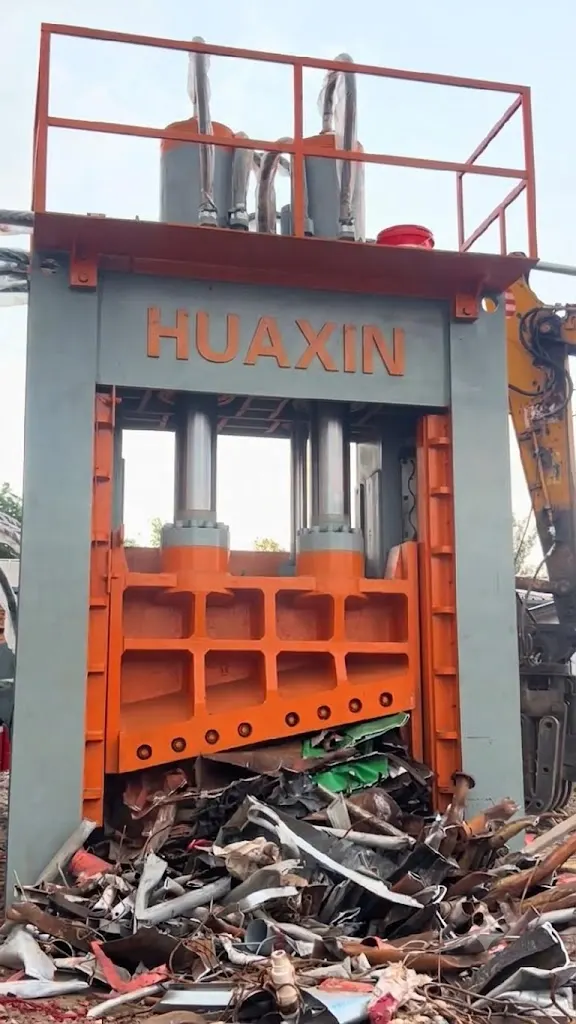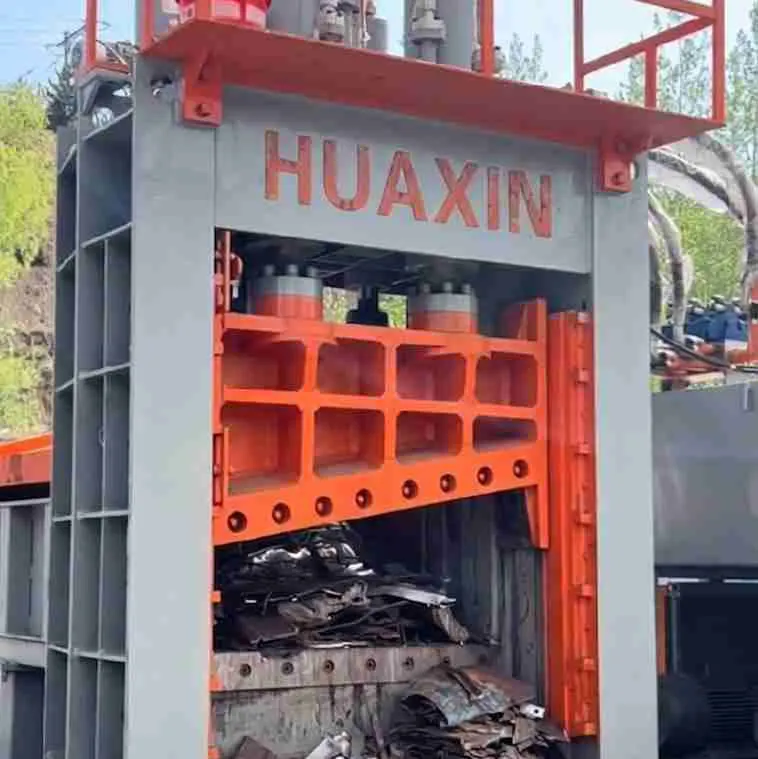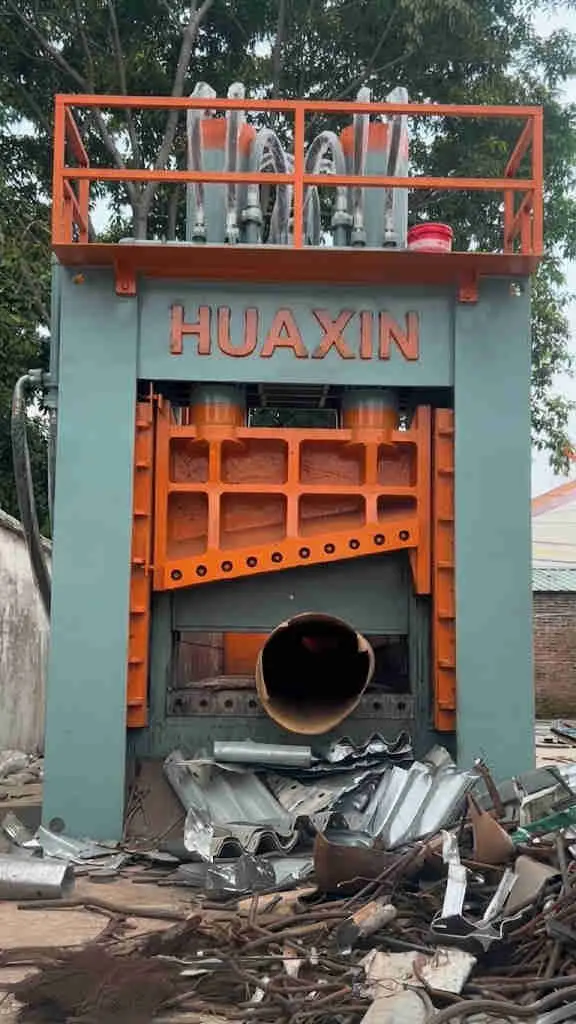
In heavy industrial metal reclamation and furnace feedstock preparation, deploying a high-performance scrap metal shredder machine directly dictates shift throughput, recovery efficiency, and operating safety. For scrap processors operating the HX-DS1200 Industrial Scrap Metal Shredder manufactured by Huaxin Co., Ltd., optimizing rotor mechanics, blade hook clearances, and torque management is essential to eliminating shaft binding and maximizing net tonnage per operating hour.
The Challenge of Aluminum Shredding: Ductility, Smearing & Fines Loss
Aluminum is one of the most commercially rewarding metals in recycling, but its physical behavior inside a shredding chamber differs fundamentally from ferrous steel. Scrap aluminum encompasses vastly different alloy grades: soft, highly ductile 6063 window profiles; ultra-thin Used Beverage Cans (UBC) with sticky beverage syrups; and rigid, heat-treated A356 alloy automotive wheel rims.
When ductile aluminum is processed in poorly calibrated shredders, blades tend to drag and smear the metal rather than cut it cleanly. This creates folded “bird-nests” that bridge feed hoppers, while excessive friction generates microscopic aluminum dust and fine shavings. In secondary aluminum remelting, fine dust burns off instantly in the furnace, resulting in 8% to 15% melt-loss. At Huaxin Co., Ltd., we calibrate cutting kinematics to maximize clean shearing while suppressing fine generation.
Knife Clearance Engineering & Thermal Expansion Control
Maintaining precise blade gaps is the single most important parameter in aluminum shredding:
- Optimal Blade Clearance: For thin-gauge UBC cans and 6063 extrusion profiles, axial clearance between counter-rotating knives must be maintained between 0.5 mm and 1.0 mm (0.02″ to 0.04″). Wider gaps allow soft aluminum sheets to fold between blade faces, causing rotor wedging and severe motor overload.
- Hardened D2 / Cr12MoV Tool Steel: Knives are fabricated from high-carbon, high-chromium AISI D2 (Cr12MoV) alloy vacuum heat-treated to 58–60 HRC, maintaining keen cutting edges that slice cleanly through ductile aluminum without burring.
- Thermal Expansion Compensation: Long production shifts generate internal friction heat. Huaxin rotor assemblies incorporate precision ground ground bronze shims and spring-loaded axial lock rings that absorb thermal expansion without altering knife edge gaps.
Paired Machinery Workflow: Pre-Shearing and High-Density Baling
Throughput Enhancement via Multi-Machine Pairing: When handling bundles of long, 6-meter (20-foot) structural window extrusions, pre-cropping the profiles using a hydraulic scrap metal shear or alligator cutter boosts shredder output by 20% to 30% by eliminating bridging above the rotor chamber.
Following shredding, routing shredded aluminum flakes into a 200 ton scrap metal baler compresses loose shreds into dense furnace-ready cubes (density >1.2 t/m³ / 75 lbs/cu ft), while mixed automotive castings can be polished in a scrap metal crusher to liberate iron fasteners and rubber seals.
Throughput Metrics Across Aluminum Feedstock Profiles
On the Huaxin HX-DS1200 dual-shaft shredder, operators achieve 5 to 15 metric tons per hour depending on feedstock bulk density. Cleanly shredded aluminum drops smoothly onto outfeed conveyors, free of tangled agglomerations and perfectly sized for high-efficiency eddy current sorting and reverberatory furnace charging.
Ready to configure your processing line or request factory-direct FOB/CIF pricing? Review full technical specifications on our HX-DS1200 Industrial Scrap Metal Shredder product page, explore our complete scrap metal shredder machine machinery catalog, or contact our technical sales engineering team with your scrap material sample specifications and daily tonnage targets.