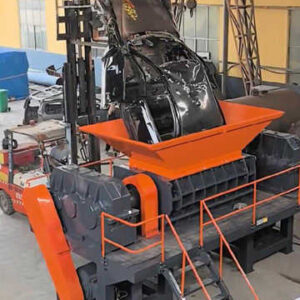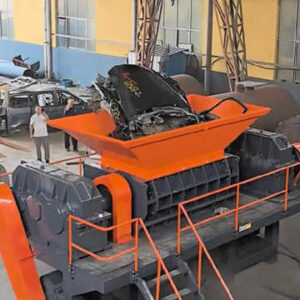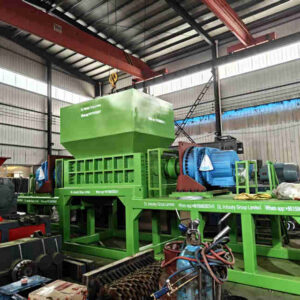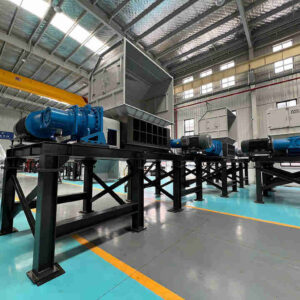
Industrial Scrap Metal Shredder Machine | Dual Shaft 5-15 TPH
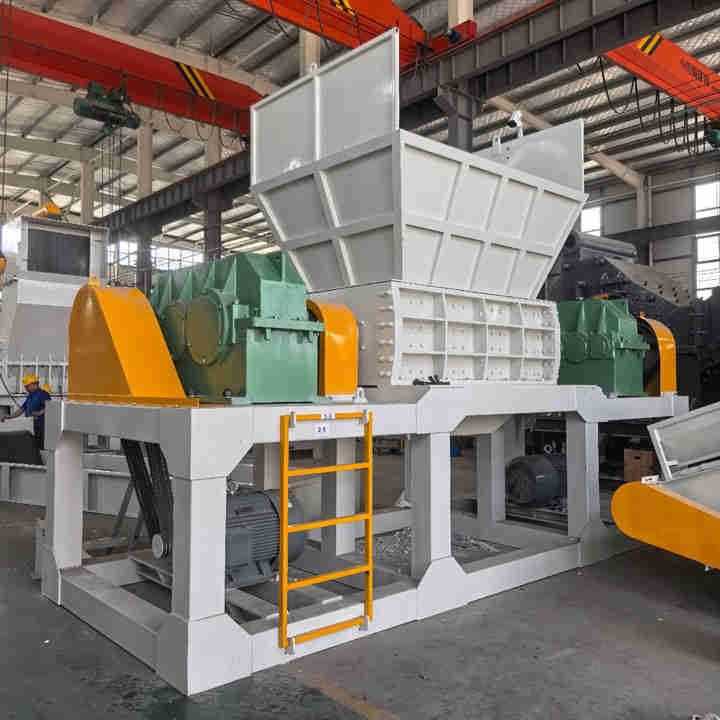
Plant-scale dual shaft scrap metal shredder built to hold a stated output, not a peak figure. 5–15 tons per hour from a 1200 mm chamber — the community-scale commercial plant machine.
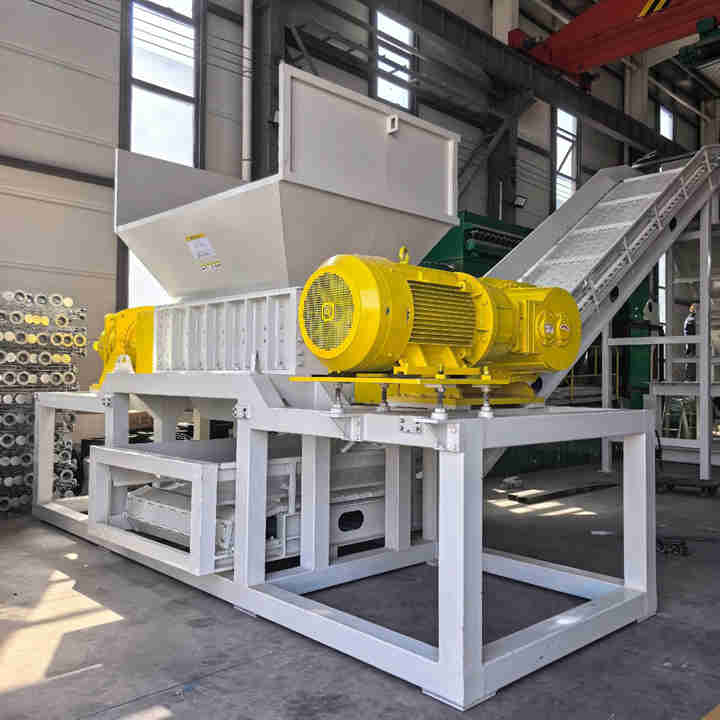
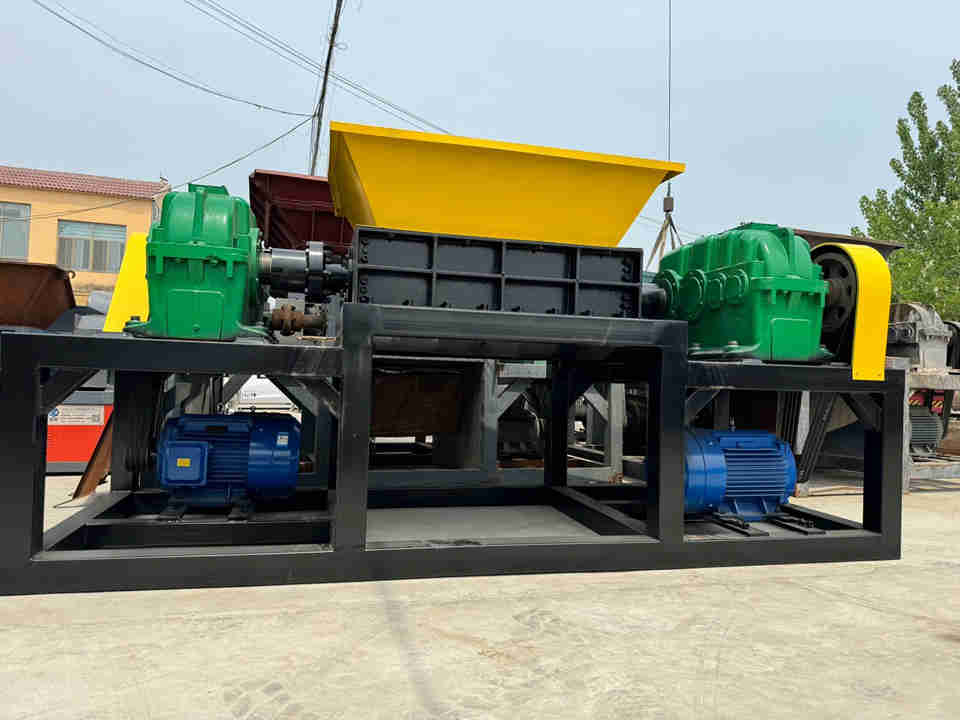
Motor options: 2×90 kW / 2×110 kW / 2×132 kW, dual motor drive, electric supply.
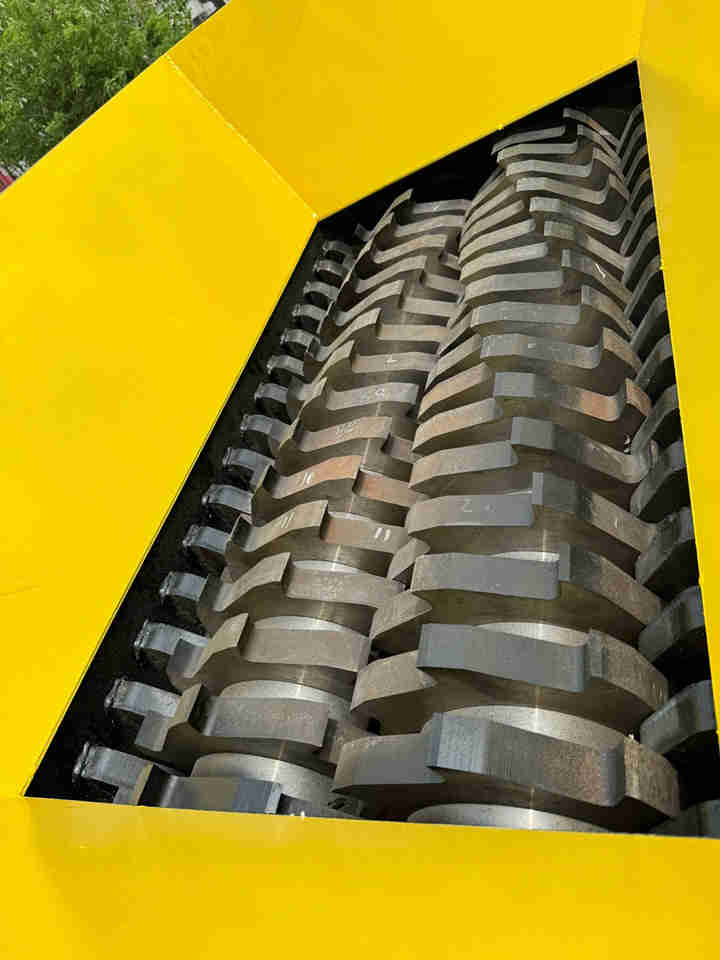
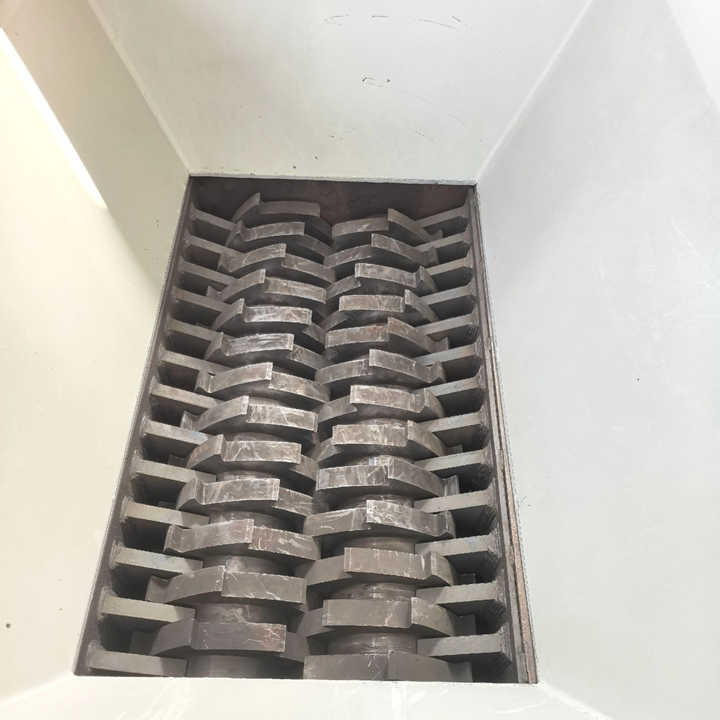
Blade options: M6V, H13 or Hardox 500, 360–550 mm diameter, 50–62 HRC.
Built in-house: in-house blade machining, mortise-and-tenon chamber frame reinforcement, nylon-pin torque safety.
Best for: community and municipal recycling plants, contract shredders, mid-size recyclers, plants feeding a furnace or mill.
Not for: whole car bodies or baled bundles — step up to the 1800 mm class.
Send your material analysis and we answer with a written output figure and a quotation, free, inside 48 hours.
Why Choose Huaxin
- Real Factory, 30+ Years Manufacturing Experience
- 24/7 Technical Support
- Customized Solutions Available
- Installation & Training Support
Description
5-15 Tons Per Hour Scrap Metal Shredder for Sale – The Community-Scale Commercial Plant Machine
The HX-DS1200 is a 5 to 15 tons per hour dual shaft scrap metal shredder with a 1200 mm chamber. This is the model that suits a recycling plant rather than a yard: multiple operators, a defined material stream, and an output target written into a contract. Buyers at this level are not experimenting — they know their tonnage and they need a machine that holds it shift after shift.
The 2×90 to 2×132 kW motor range on this scrap metal shredder is the first in our line where the top option is genuinely a heavy-duty package rather than an extended option. That matters because a plant running a single consistent material needs the machine sized for duty, not for the best case. Dual counter-rotating shafts at 5 to 10 revolutions per minute deliver the torque that makes steady output possible at this throughput.
Who the HX-DS1200 Is Built For
This chamber class is specified by operations with a settled process and a measured material stream:
- Community and municipal recycling plants processing collected light metal under a tonnage commitment.
- Commercial shredding contractors taking in material from smaller yards and selling graded output onward.
- Mid-size metal recycling companies running a consistent light-steel and non-ferrous mix through a defined line.
- Plants feeding a furnace or a mill where the discharge specification is fixed and non-negotiable.
If your material is dominated by whole car bodies or baled bundles, this is not the chamber — say so when you enquire and we will point you at the 1800 mm class and above.
Where the HX-DS1200 Sits in the Shredder Range
Our eight chamber classes run from 800 mm to 2600 mm, covering 2 to 60 tons per hour. The 1200 mm chamber holds the middle of the line’s commercial band — above the workshop and yard machines, below the vehicle and heavy-duty classes. It is also the first size at which we recommend the largest motor option as standard for continuous work rather than as an upgrade.
The rated band overlaps its neighbours on both sides by design, because output is set by material and feeding rather than by the model badge. Consistent light steel fed well will sit near 15 tons per hour; a heavier, less consistent stream sits lower. The value of this class is that it holds a stated figure reliably, which is what a plant with a contract actually needs.
Key Specifications – HX-DS1200
| Item | Specification |
|---|---|
| Model | HX-DS1200 dual shaft scrap metal shredder |
| Throughput | 5–15 tons per hour (material-dependent) |
| Chamber length | 1200 mm |
| Motor quantity | 2 motors |
| Motor power options | 2×90 kW / 2×110 kW / 2×132 kW |
| Rotating speed | 5–10 r/min |
| Blade diameter | 360–550 mm (configured to output size and material) |
| Blade materials | M6V, H13 or Hardox 500 |
| Blade hardness | 50–62 HRC options |
| Shaft material | 45# steel or 40Cr |
| Gearbox | ZQ series, ZSY series or planetary reducer |
| Input voltage | 380V / 400V / 415V, 50 Hz or 60 Hz |
| Power sources | Electric supply (generator set available on request) |
| Certification | CE / ISO 9001 |
| Origin | Tangshan, China |
Capacity note: the band shown assumes a consistent feed of the material described. Plant buyers should note that the top of the range is reached with continuous feeding and a discharge size matched to the downstream line — not with intermittent loading.
Applications – Where the HX-DS1200 Earns Its Keep
A plant-scale scrap metal shredder is judged on consistency rather than peaks. The four settings below are where the 1200 mm chamber class earns its reputation, and in each case the machine’s job is to hold a stated output on a defined material.
Community and municipal recycling plants
Collected light metal arrives mixed, damp and inconsistent, and it has to clear the site on a schedule. Shredding at 5 to 15 tons per hour converts that intake into a uniform fraction that separates cleanly, reduces haulage and moves the plant from storing material to processing it. These operations usually run on a fixed shift pattern, which is exactly what the 2×110 and 2×132 kW packages are built for.
Contract shredding operations serving smaller yards
Buyers in this position take in material from yards that cannot justify their own machine, shred it, and sell the graded output. Their margin depends on uptime and on blade cost per tonne, so blade steel and reducer efficiency matter more to them than purchase price. We configure this class accordingly.
Mid-size metal recycling companies with a defined line
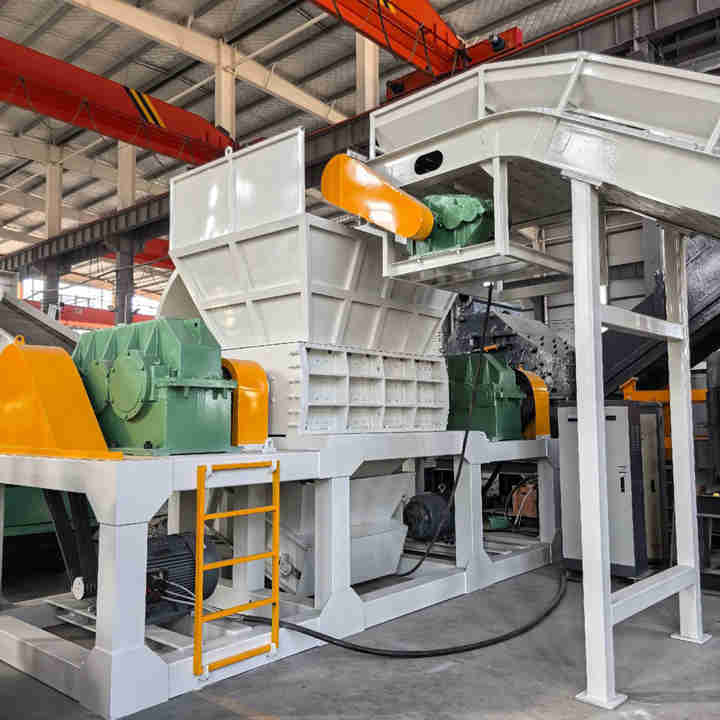
Where the plant already has a magnetic separator and a conveyor, the shredder becomes the first stage of an existing process rather than a standalone unit. The HX-DS1200 is sized to feed that line without starving or flooding it, and the discharge conveyor is matched to the downstream machine’s intake.
Plants supplying furnace or mill feedstock
Mill and foundry specifications are unforgiving on size and contamination. Setting knife diameter and tooth spacing to the specification, and holding it, is what this class does; the plant sells against the specification rather than negotiating a discount for oversized feedstock.
Materials the HX-DS1200 Processes
At plant scale the material mix is known in advance, and configuration follows from it. This scrap metal shredder is set up as follows for the streams that normally arrive at a 1200 mm chamber.
| Material | Suitability | Typical configuration |
|---|---|---|
| Consistent light steel plate and sheet | Core duty of this class | Dense-tooth M6V blades, 2×110 kW |
| Mixed light scrap from collection rounds | Core duty | Dense-tooth blades, 2×110 kW |
| Stamping scrap and production waste | Core duty | M6V blades, 2×90 kW |
| Aluminum profiles and castings | Good | Dense-tooth blades, 2×90 kW |
| Copper, brass and radiator scrap | Good | H13 blades, 2×110 kW |
| Appliance shells and thin-wall assemblies | Good — liberation before separation | Dense-tooth blades, 2×110 kW |
| Cut rebar and small section | Acceptable in cut lengths | 7-tooth Hardox 500, 2×132 kW |
| Whole car bodies and baled bundles | Not recommended | Step up to the 1800 mm chamber class |
Plants with an existing process usually send us a material analysis. We return the knife specification, the motor package and the expected output figure for that analysis in writing.
How the HX-DS1200 Works
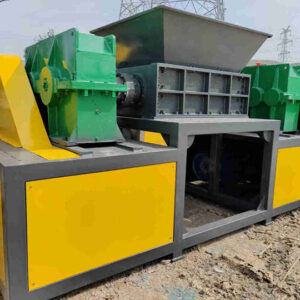
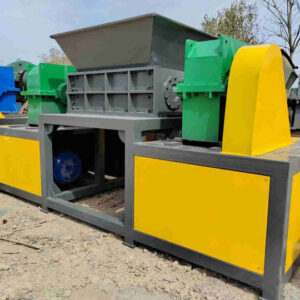
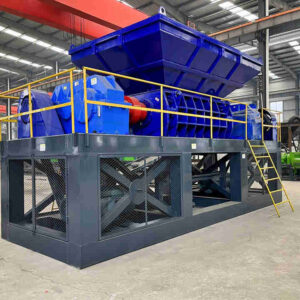
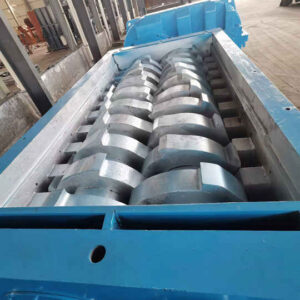
Material enters the hopper of this scrap metal shredder and is drawn between two counter-rotating shafts carrying overlapping knife sets. Shaft speed stays at 5 to 10 revolutions per minute while torque at the knife edge stays high, so material is gripped and torn apart rather than struck. The result is a controlled flake with predictable size, which is why plants specify a shredder rather than a hammer mill for the first stage.
Knife geometry follows the material: dense teeth for soft, thin, high-volume feed; 7-tooth or 9-tooth hooks where heavier pieces must be taken in a single bite. Discharge leaves the chamber onto a conveyor and travels to the next step — a stockpile for sale as graded fraction, a scrap metal crusher for further reduction, a magnetic separator for ferrous recovery or an eddy current separator for non-ferrous.
Protecting output when the feed goes wrong
Plant intake includes the occasional piece of unshreddable material. The nylon pin coupling between gearbox and drive is the designed failure point: torque beyond its limit shears the pin, disengages the drive and gives the operator time to clear the chamber. On a machine running against a production schedule, that five-minute intervention is worth more than any specification on the datasheet.
Choosing the Right Configuration
By material
Light steel and mixed light scrap with a consistent feed suit 2×90 to 2×110 kW. Add copper, radiator material or thicker plate and specify 2×132 kW with Hardox 500 knives. Under-powering this class is a false economy: the machine will run, but blade consumption and motor temperature both rise and the stated throughput will not be held.
By thickness
Material up to 4 mm runs comfortably through the band. Between 4 and 6 mm expect output toward the lower end of 5 to 15 tons per hour. Above that, the 1500 mm chamber is the right choice and we will recommend it before taking the order.
By duty cycle
Two shifts is the design assumption for this class. Continuous operation over eight or more hours should be specified with 2×132 kW, automatic lubrication and planetary reducers; anything less turns maintenance into the limiting factor on the plant’s schedule.
By available power supply
380V, 400V or 415V at 50 Hz or 60 Hz are standard at this power level, and the electrical package is built to the standard of the destination market. Generator drive is possible for the lower motor options, though at 2×132 kW a fixed supply is the practical answer for sustained work.
Why Buy the HX-DS1200 from HUAXIN
Blade supply is in-house, and that is the deciding factor. For a plant, the cost that determines margin per tonne is grinding and replacement. We machine our own knives, so the grade named in the specification is the grade supplied, heat treated into the 50–62 HRC band the material demands.
The frame is specified for cyclic load. The chamber uses a mortise-and-tenon reinforced structure that holds shaft alignment under the side loads a real plant produces. Welded thin-wall chambers crack at the joints under exactly this duty.
Drive train matched to the shift pattern. ZQ, ZSY and planetary reducers are all available; for long hours we recommend planetary units and will tell you when the extra cost is justified and when it is not.
Factory-direct terms on a capital purchase. Plants at this level buy on total cost of ownership, and removing importer margin from both machine and wear parts moves that number materially.
One supplier for the whole line. Conveyors, crusher, magnetic separation and eddy current separation can be engineered against this machine as a single package, with interfaces agreed before shipment rather than solved on site.
Options and Customization
- Knife profile and tooth count — dense tooth, 7-tooth or 9-tooth — set to the plant’s material
- Blade diameter between 360 mm and 550 mm to meet a fixed discharge specification
- Blade steel: M6V, H13 or Hardox 500
- Automatic lubrication system for bearings and shaft seals
- Hopper and feed arrangement sized for grab loading or conveyor charging
- Discharge conveyor matched to the downstream machine’s intake height and speed
- Control panel, PLC interface and safety interlocks to the plant’s standard
- Dust and noise suppression options where the plant is close to occupied premises
- Full recycling line integration including crusher, magnetic and eddy current separation
- Emergency stop and access-interlock package for operator safety compliance
Footprint, Installation and Commissioning
A plant installing this scrap metal shredder provides a reinforced concrete foundation and a power feed sized for the selected motor package. Civil work is ordinary industrial construction; there is no specialised pit, and the machine can be arranged to suit the existing conveyor run rather than forcing a change of layout.
We supply assembly and foundation drawings, electrical schematics, a commissioning manual and an operator training programme, with engineers available on site for start-up. A spares kit — knives, shear pins, seals, bearings and lubricants — is quoted with the machine so plant maintenance is not waiting on freight during the first year of wear.
Honest Limits: When to Buy Something Else
Two situations make this scrap metal shredder the wrong purchase.
The first is vehicle-dominated intake. Whole car bodies, large shells and baled material are beyond a 1200 mm chamber; forced through, they destroy knives and drive components and the plant never reaches its rated band. That work starts at the 1800 mm class. The second is a requirement that has already passed 15 tons per hour — the HX-DS1500 (8–20 tons per hour) exists for exactly that step, and buying it now is cheaper than re-buying later. For lighter or single-shift duty the HX-DS1000 (3–10 tons per hour) remains the more economical machine.
Compare all eight classes in the dual shaft scrap metal shredder range, or send your material analysis and a quotation within 48 hours.
Frequently Asked Questions
What output figure can I commit to commercially?
Commit to the middle of the 5 to 15 tons per hour band on a 1200 mm scrap metal shredder and hold the top end as upside. The figure is achieved with continuous feeding of a consistent material and a discharge size matched to the downstream line; intermittent loading or a coarser target both reduce it.
Is this class suitable for two-shift operation?
Yes — two-shift running is the design duty of this scrap metal shredder. For sustained eight-hour-plus running we specify 2×132 kW, automatic lubrication and planetary reducers. A single-shift plant can take 2×90 kW and save capital without compromising the stated output.
Can it shred car bodies?
Not as a production duty. Whole shells exceed the bite of a 1200 mm chamber, and repeated attempts cost knives, pins and drivetrain life. Vehicle shredding starts at the 1800 mm chamber class, which is what we will quote if car bodies dominate your intake.
How do I match the discharge size to a mill specification?
Blade diameter and tooth spacing on a scrap metal shredder set the output, and both are configurable from 360 mm to 550 mm. Send us the specification and we will specify the knife set that holds it, then confirm the expected size distribution.
What is the difference between the motor options in practice?
2×90 kW for consistent light material on a single shift; 2×110 kW as the standard plant setting; 2×132 kW where the stream carries plate, cut section or abrasive cast material, or where the machine runs long hours. Under-specifying power shows up immediately as blade consumption.
Can the shredder be integrated into an existing line?
That is how most of this class is sold. Give us the layout, the conveyor run and the downstream machine’s intake, and we will match discharge height, conveyor length and control interface. The scrap metal crusher and scrap metal baler can be quoted as part of the same package.
What maintenance schedule should the plant plan for?
Daily knife clearance and bolt torque checks on a scrap metal shredder; weekly lubrication and bearing temperature checks; blade regrinding at intervals set by your material’s abrasiveness. The automatic lubrication option removes the most commonly missed task, and the spares kit quoted with the machine covers the first year of wear parts.
Do you provide installation drawings and training?
Yes. Foundation and assembly drawings, electrical schematics, a commissioning manual and an operator training programme are supplied with every machine, and our engineers can attend start-up on site.
Additional information
| Item | Commercial Scrap Metal Shredder Machine |
|---|---|
| Chamber Length | 1200mm |
| Model | HX-DS1200 |
| Chamber size | Customized according to diameter of the blade |
| Rotating speed | 5-10 r/min |
| Motor Quantity | 2 pcs |
| Motor Power | 2×90 kW / 2×110 kW / 2×132 kW |
| Gear box | ZQ series, ZSY series and Planetary Gear Reducer |
| Blade Quantity | Customized according to different materials |
| Blade Materials | M6V, H13, and Hardox 500 are available as options. |
| Blade Hardness Range | 50-62 HRC as options. |
| Blade Diameter | 360-550mm as options according to different output rate and materials |
| Blade Teeth | For soft materials, a dense-tooth configuration is used. |
| Shaft | 45# or 40Cr |
| Input voltage | 380V, 400V, 415V, 230V with 50HZ or 60HZ. |
| Power sources | Customized: electric, generator or diesel engine |