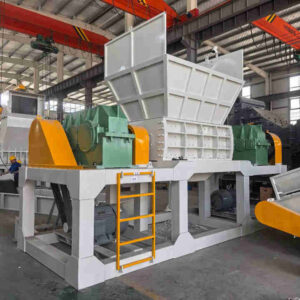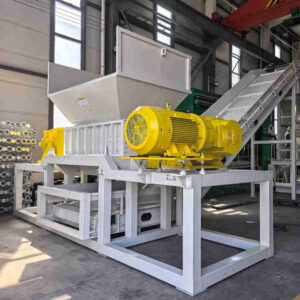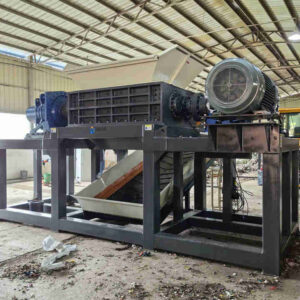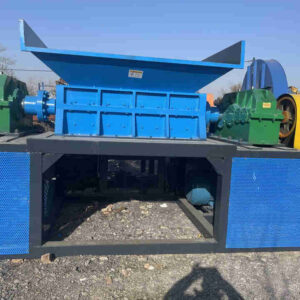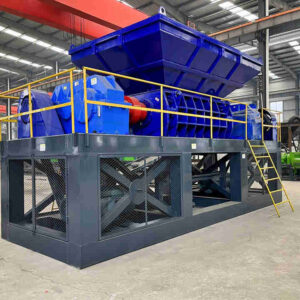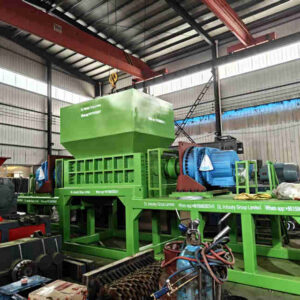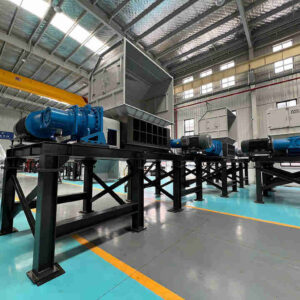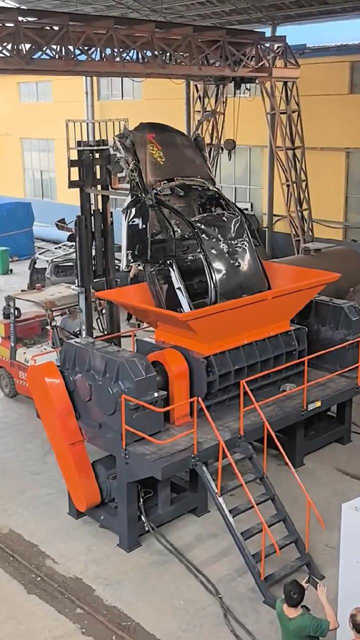
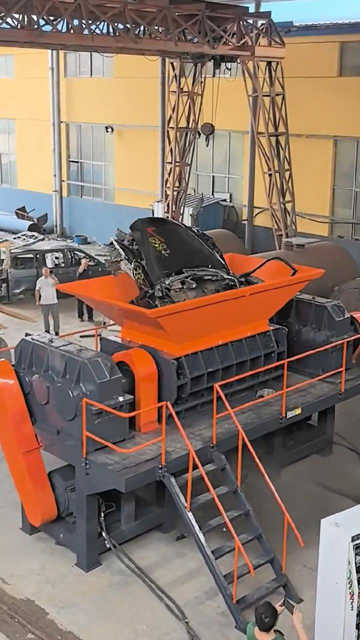
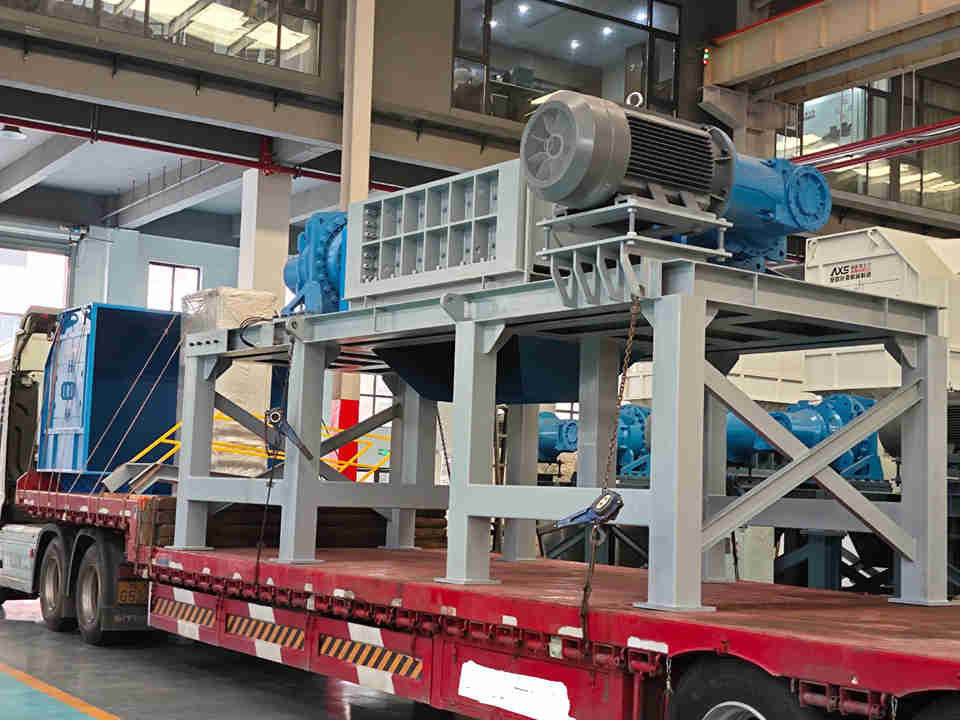
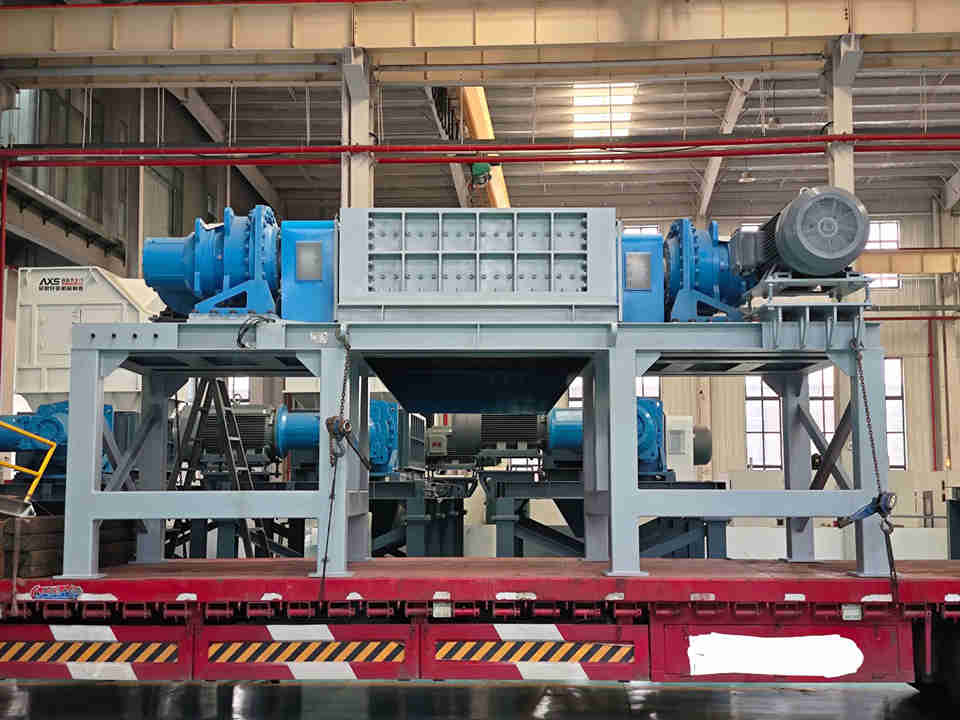
Car Body Industrial Scrap Metal Shredder Machine | 10-36 TPH
Car body scrap metal shredder rated 10–36 tons per hour from a 1800 mm chamber — the entry machine for end-of-life vehicle work and heavy mixed intake.
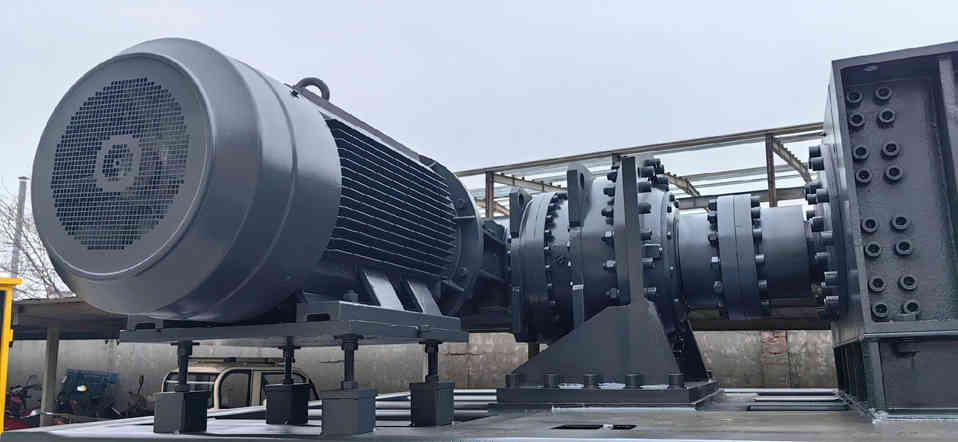
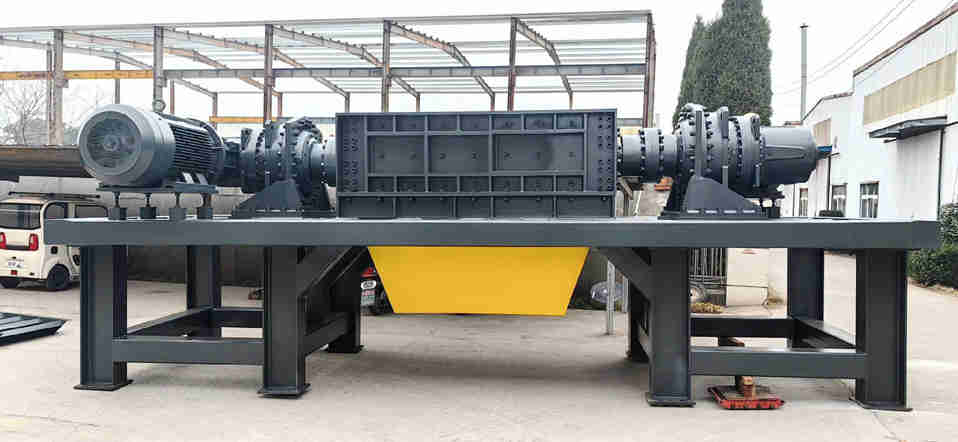
Motor options: 2×132 kW / 2×160 kW / 2×185 kW, dual motor drive.
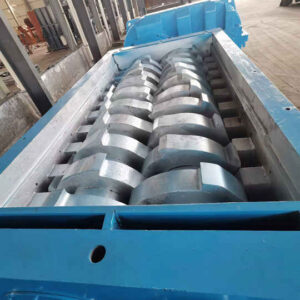
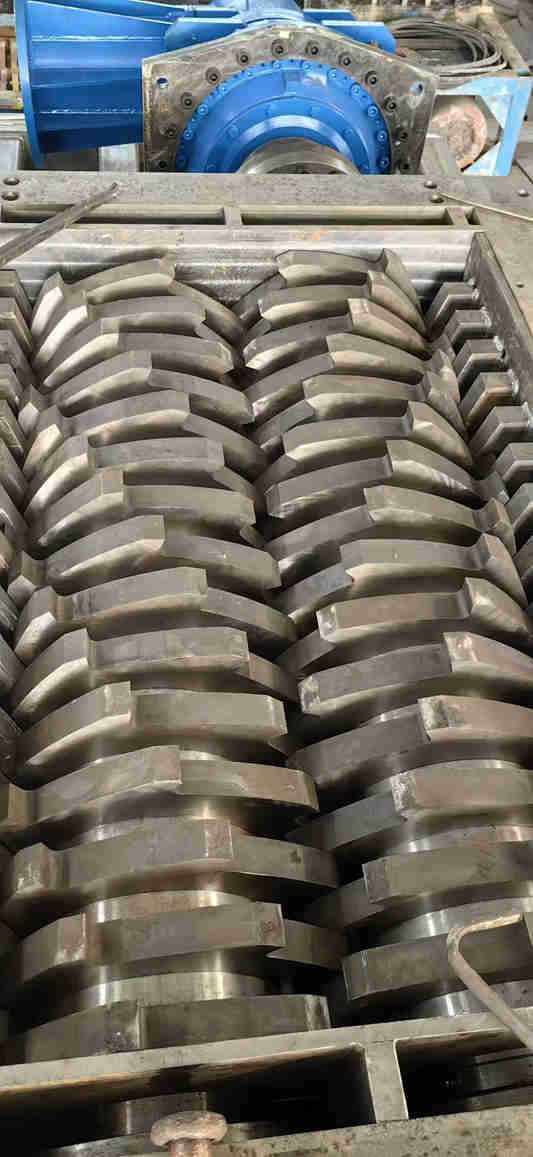
Blade options: M6V, H13 or Hardox 500, 550–680 mm diameter, 7-tooth and 9-tooth profiles for whole shells.
Built in-house: our own blade machining shop, a mortise-and-tenon reinforced chamber frame, and nylon-pin torque protection fitted as standard.
Best for: ELV recycling lines, dismantlers processing their own shells, fleet and insurance disposal, heavy mixed intake yards.
Not for: baled or bundled material — requires the 2200 mm class.
Send your vehicle intake figures and a quotation follows within 48 hours.
Why Choose Huaxin
- Real Factory, 30+ Years Manufacturing Experience
- 24/7 Technical Support
- Customized Solutions Available
- Installation & Training Support
Description
Car Body Scrap Metal Shredder for Sale – 10-36 Tons Per Hour for ELV and Vehicle Recycling Lines
The HX-DS1800 is a 10 to 36 tons per hour dual shaft scrap metal shredder with a 1800 mm chamber, and it is the smallest machine in our range we specify for end-of-life vehicle work. That is the whole point of this class: it is where car bodies and vehicle shells become a production duty rather than an occasional problem. Buyers come to this model when they have stopped treating vehicles as an exception in their intake and started treating them as the material.
A car body scrap metal shredder is a different machine from a light-scrap shredder. A car body is a mix of thin panel, thicker structural member, tyres, glass, plastics and wiring, and it arrives whole. The 1800 mm chamber and the 2×132 to 2×185 kW packages exist to take that bite, open the shell, and liberate the fractions that the rest of an ELV line then separates.
Who the HX-DS1800 Is Built For
This chamber class is bought by operations whose material mix includes whole vehicles or heavy shell material:
- End-of-life vehicle (ELV) recycling facilities running a shredding and separation line for de-polluted vehicles.
- Car dismantlers moving downstream — operations that strip vehicles for parts and need to process the remaining shells themselves rather than sell them loose.
- Insurance and fleet disposal contractors handling written-off vehicles in volume under a throughput commitment.
- Metal recyclers with mixed heavy intake — yards taking in white goods alongside structural scrap and occasional vehicle shells.
If your volume is small or your material is predominantly light sheet, this machine is larger than you need — the 1500 mm class and below will do the work for less money, and we will say so.
Where the HX-DS1800 Sits in the Shredder Range
Our eight chamber classes span 800 mm to 2600 mm and 2 to 60 tons per hour. Everything below the HX-DS1800 is specified for light-to-medium material: sheet, offcuts, profiles, thin containers. The 1800 mm class is the entry point for vehicle work and for the heavy mixed material that comes with it, and the two classes above it — 2000 mm and 2200 mm — are scaled-up versions of the same duty.
The rated band of 10 to 36 tons per hour is wide because the material range is wide. De-polluted shells without engines and transmissions sit at the upper end; shells with residual heavy components, mixed structural scrap and uncut members sit lower. The band also reflects the feed: a loader breaking shells into the hopper continuously produces more per hour than shells tipped in one at a time.
Key Specifications – HX-DS1800
| Item | Specification |
|---|---|
| Model | HX-DS1800 car body scrap metal shredder |
| Throughput | 10–36 tons per hour (material-dependent) |
| Chamber length | 1800 mm |
| Motor quantity | 2 motors |
| Motor power options | 2×132 kW / 2×160 kW / 2×185 kW |
| Rotating speed | 5–10 r/min |
| Blade diameter | 550–680 mm (configured to output size and material) |
| Blade materials | M6V, H13 or Hardox 500 |
| Blade hardness | 50–62 HRC options |
| Shaft material | 45# steel or 40Cr |
| Gearbox | ZQ series, ZSY series or planetary reducer |
| Input voltage | 380V / 400V / 415V, 50 Hz or 60 Hz |
| Power sources | Electric supply |
| Certification | CE / ISO 9001 |
| Origin | Tangshan, China |
Capacity note: the band assumes de-polluted vehicle shells fed continuously. Whole bodies with engines, transmissions or heavy residual components reduce it, and pre-draining fluids and removing those components before the shredder is standard ELV practice anyway.
Applications – Where the HX-DS1800 Earns Its Keep
A car body shredder is bought by an operation with a vehicle problem rather than a light-scrap problem. The four settings below are where the 1800 mm class is the correct specification.
End-of-life vehicle recycling lines
The standard ELV sequence is de-pollution, dismantling for parts, then shredding the shell, then separation. The shredder is the stage that makes the rest of the line profitable, because it liberates the ferrous, aluminum and copper fractions that the magnetic separator and the eddy current separator then recover. At 10 to 36 tons per hour the HX-DS1800 is sized for the first stage of exactly that sequence.
Dismantlers processing their own shells
A dismantler selling whole shells for this car body scrap metal shredder to capture instead sells at the lowest point in the chain. Shredding them captures the value of the separated fractions instead, and the machine pays for itself out of the spread between whole-shell price and separated-metal price. The step is large enough that most dismantlers delay it for years, and the arithmetic usually argues for it earlier than they expect.
Fleet and insurance disposal contractors
Written-off vehicles arrive in batches, on a schedule, with a contract behind them. What matters is clearing the batch within the agreed window, which means the machine’s mid-band figure has to be reliable every shift rather than achievable on a good day. That is the specification we build this class to.
Heavy mixed intake yards
Not every buyer runs a pure ELV line. Many yards take in white goods, structural offcuts and the occasional shell or three. This class handles the whole of that mix in one machine, which is why it is often the first shredder bought by a yard whose intake has simply become too heavy for the smaller chamber classes.
Materials the HX-DS1800 Processes
Vehicle shells are not uniform, and the machine has to cope with what actually arrives. The table reflects how this car body scrap metal shredder is configured for 1800 mm chamber duty.
| Material | Suitability | Typical configuration |
|---|---|---|
| De-polluted car bodies and shells | Core duty of this class | 7-tooth Hardox 500, 2×160 kW |
| Shells with residual heavy components | Good, at reduced output | 9-tooth Hardox 500, 2×185 kW |
| Cut vehicle panels and body parts | Core duty | 7-tooth Hardox 500, 2×160 kW |
| White goods and appliance shells | Good | Dense-tooth M6V blades, 2×132 kW |
| Mixed light steel and sheet | Good — runs at the top of the band | Dense-tooth blades, 2×132 kW |
| Structural offcuts and section | Acceptable in cut lengths | 9-tooth Hardox 500, 2×185 kW |
| Aluminum wheels and castings | Good — high-value fraction | Dense-tooth blades, 2×132 kW |
| Baled or bundled scrap | Not recommended | Requires the 2200 mm chamber class |
For ELV work, tell us how far your de-pollution goes before the shredder — fluids drained, battery and catalytic converter removed, tyres off. That single detail changes the knife specification more than any other variable.
How the HX-DS1800 Works
A whole shell is too large to be bitten in one pass, so the chamber works in stages. The first knives hook and tear the body open, breaking the panels apart; the material then works down the chamber where the shafts reduce it further to the discharge size. Two counter-rotating shafts at 5 to 10 revolutions per minute supply the torque that makes this possible — the tearing action, not an impact blow, is what liberates the fractions without turning them to fines.
Because the material contains non-metal, the machine has to tolerate it. Glass, plastics and rubber pass through rather than being shredded, which is why a well-run ELV line removes tyres, glass and large plastic trim before the hopper. Discharge leaves onto a conveyor and travels to the magnetic separator for ferrous recovery and the eddy current separator for aluminum and copper, with the scrap metal crusher available downstream where a finer size is contracted for.
Protecting a machine running heavy material
Vehicle shells hide engines, subframes, wheels and occasionally something nobody identified. The nylon pin coupling between gearbox and drive is the designed sacrificial element: torque beyond its limit shears the pin and disengages the drive, so the operator clears the chamber and fits a new pin. On a car body shredder running at this duty, that component is the difference between a scheduled stop and an unbudgeted gearbox.
Choosing the Right Configuration
By material
De-polluted shells and cut vehicle panels suit 2×160 kW. Shells arriving with residual heavy components, or mixed intake with structural section, belong on 2×185 kW with 9-tooth Hardox 500 knives. If your stream is mostly light steel and white goods with only occasional shells, 2×132 kW is sufficient and saves capital.
By thickness and component content
Panel material up to 6 mm is comfortable. Subframes, axles and residual drivetrain components are the real test, and they push the specification to 2×185 kW. Removing engines and transmissions before the shredder is not just good ELV practice — it is the single cheapest way to protect knives and hold output.
By duty cycle
ELV lines usually run a single shift with a fixed intake window, which 2×160 kW covers. Two-shift operation, or a line receiving vehicles on a contract schedule, should be specified at 2×185 kW with automatic lubrication and planetary reducers.
By available power supply
380V, 400V or 415V at 50 Hz or 60 Hz, with the electrical package built to the destination market’s standard. At this power level a fixed supply is the practical configuration, and the incoming supply and starting method should be confirmed before quotation.
Why Buy the HX-DS1800 from HUAXIN
We know this duty, not just this size. A car body shredder sees loads that a light-scrap machine never does: asymmetric feed, hidden heavy components and shock loading from whole bodies. The chamber frame is a mortise-and-tenon reinforced structure specified against those loads, holding shaft alignment where a light-duty chamber would drift.
Knife steel is verified and in-house. Vehicle shells are abrasive and impact-prone, and blade consumption is the largest recurring cost in ELV shredding. We machine our own knives to M6V, H13 or Hardox 500 and heat treat to the 50–62 HRC band your configuration calls for — the grade on the drawing is the grade in the crate.
Drive protection is designed in, not bolted on. The nylon pin coupling is standard, not an option. On a machine running whole bodies it is the component that keeps a bad shell from becoming a drivetrain failure.
Reducers matched to the load. ZQ, ZSY and planetary units are all offered. For ELV duty we generally recommend planetary reducers, because the efficiency and torque density suit the stop-start loading that vehicle feed produces.
The line arrives matched. Conveyors, magnetic separator, eddy current separator, scrap metal crusher and scrap metal baler can be engineered against this machine as one package, so an ELV line is commissioned as a system rather than assembled from mismatched parts.
Options and Customization
- Knife profile and tooth count — dense tooth, 7-tooth or 9-tooth — set to your vehicle mix
- Blade diameter between 550 mm and 680 mm to meet a contracted discharge size
- Blade steel: M6V, H13 or Hardox 500
- Automatic lubrication of bearings and shaft seals
- Loader-height hopper sized for whole-body charging
- Discharge conveyor matched to the magnetic and eddy current separation line
- Heavier shaft, bearing and pin coupling specification for high-impact duty
- Control panel, PLC interface and safety interlocks to your plant standard
- Dust and noise suppression where the plant adjoins occupied premises
- Complete ELV line integration including separation equipment
Footprint, Installation and Commissioning
An ELV installation of this car body scrap metal shredder needs a reinforced concrete foundation, a power feed for the selected motor package, and enough hopper access for a loader to charge whole bodies safely. This scrap metal shredder requires no specialised pit, and the arrangement is matched to the separation line’s conveyor run so the plant is built once, in the right order.
We supply foundation and assembly drawings, electrical schematics, a commissioning manual and operator training, with engineers available on site for start-up. A spares kit — knives, shear pins, seals, bearings and lubricants — is quoted with the machine, which matters most in ELV duty where wear parts are consumed on a schedule.
Honest Limits: When to Buy Something Else
Two cases make this car body scrap metal shredder the wrong purchase.
The first is baled or bundled material. Bales defeat this chamber; they belong to the 2200 mm class and above. The second is light-only intake. A yard processing sheet, profiles and thin containers is buying 40 percent more machine than it needs, and the HX-DS1500 (8–20 tons per hour) delivers the same tonnage at materially lower capital and running cost. Above this class sit the HX-DS2000 (15–42 tons per hour) for volume shell work and the HX-DS2200 (20–50 tons per hour) for high-throughput commercial lines.
Compare all eight classes in the dual shaft scrap metal shredder range, or send your vehicle intake figures and a quotation within 48 hours.
Frequently Asked Questions
What vehicle throughput can I plan on?
Between 10 and 36 tons per hour, driven on this car body scrap metal shredder by how far de-pollution has gone before the shredder and whether shells arrive whole or pre-broken. A line removing fluids, batteries, tyres and drivetrain components first sits at the upper end; whole bodies with everything still attached sit lower.
How should vehicles be prepared before shredding?
Drain all fluids, remove the battery, remove the tyres, and take out the catalytic converter — that last item pays for itself in recovered platinum group metal. Engines and transmissions should come out where the line allows it; they are heavy, they hide valuable components and they are the main cause of torque trips.
Can it shred whole car bodies?
Yes — that is the design duty of this class, provided the shells are de-polluted. It is the smallest chamber in our range we recommend for vehicle work; the classes below it are specified for light and medium material.
What separation equipment follows the shredder?
On a car body scrap metal shredder line, a conveyor takes discharge into a magnetic separator for the ferrous fraction, then an eddy current separator for aluminum and copper. Where the contract calls for a finer size, a scrap metal crusher goes between them, and a scrap metal baler handles the non-ferrous fraction at the end of the line.
Which motor package suits an ELV line?
2×160 kW is the standard recommendation for de-polluted shells on a single shift. Move to 2×185 kW for residual-component content, structural section mixed into the feed, or two-shift running.
What discharge size should I specify?
It depends on the separation step and the sale contract. Most ELV lines run a coarse flake that the magnetic and eddy current separators can clean; where a mill specification is finer, blade diameter between 550 mm and 680 mm is set to hold it.
What maintenance does an ELV line need to schedule?
Daily knife clearance and bolt torque checks on the car body scrap metal shredder, weekly lubrication and bearing temperature checks, and blade regrinding at intervals set by shell abrasiveness. Automatic lubrication is strongly recommended, and the quoted spares kit covers the first year of wear parts.
Do you supply the complete ELV line?
Yes. Shredder, conveyors, magnetic separation, eddy current separation, crusher and baler can all be supplied as one engineered package, commissioned together, so the plant runs as a system from the first day.
Additional information
| Item | Car Body Industrial Scrap Metal Shredder Machine |
|---|---|
| Chamber Length | 1800mm |
| Model | HX-DS1800 |
| Chamber size | Customized according to diameter of the blade |
| Rotating speed | 5-10 r/min |
| Motor Quantity | 2 pcs |
| Motor Power | 2×132 kW / 2×160 kW / 2×185 kW |
| Gear box | ZQ series, ZSY series and Planetary Gear Reducer |
| Blade Quantity | Customized according to different materials |
| Blade Materials | M6V, H13, and Hardox 500 are available as options. |
| Blade Hardness Range | 50-62 HRC as options. |
| Blade Diameter | 550-680mm as options according to different output rate and materials |
| Blade Teeth | For soft materials, a dense-tooth configuration is used. |
| Shaft | 45# or 40Cr |
| Input voltage | 380V, 400V, 415V, 230V with 50HZ or 60HZ. |
| Power sources | Customized: electric, generator or diesel engine |