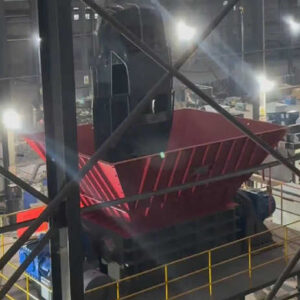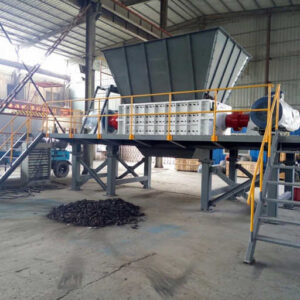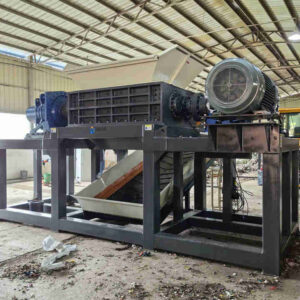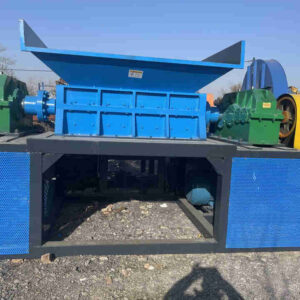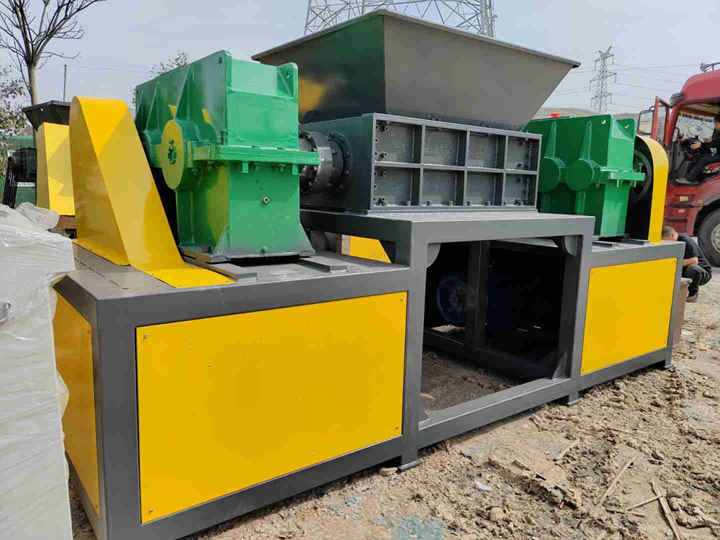
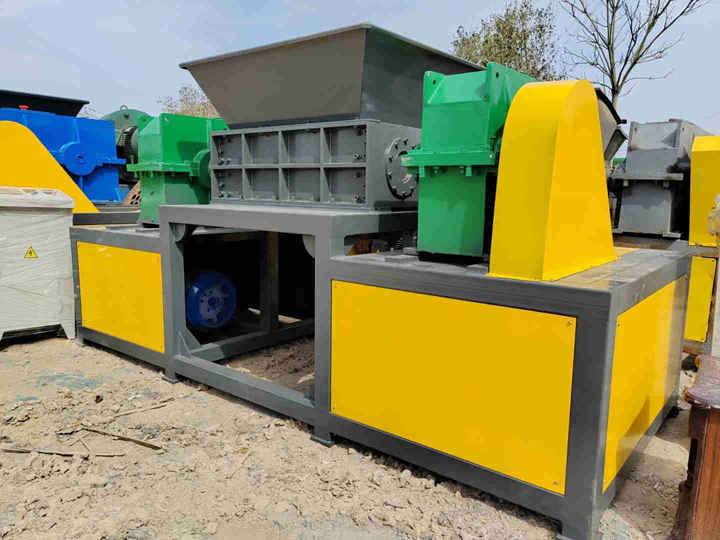
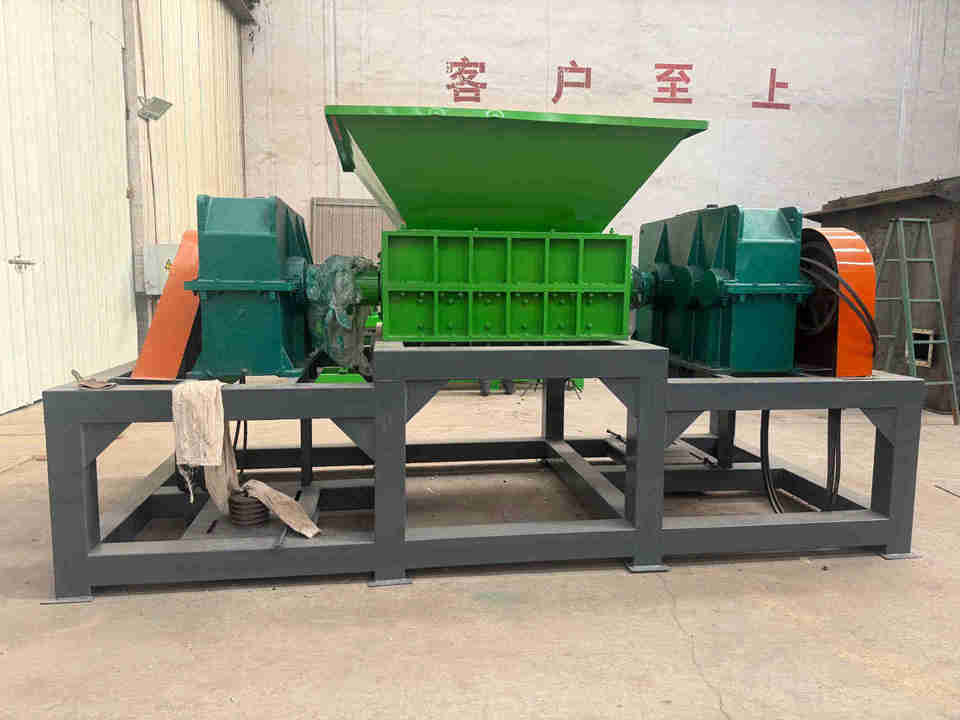
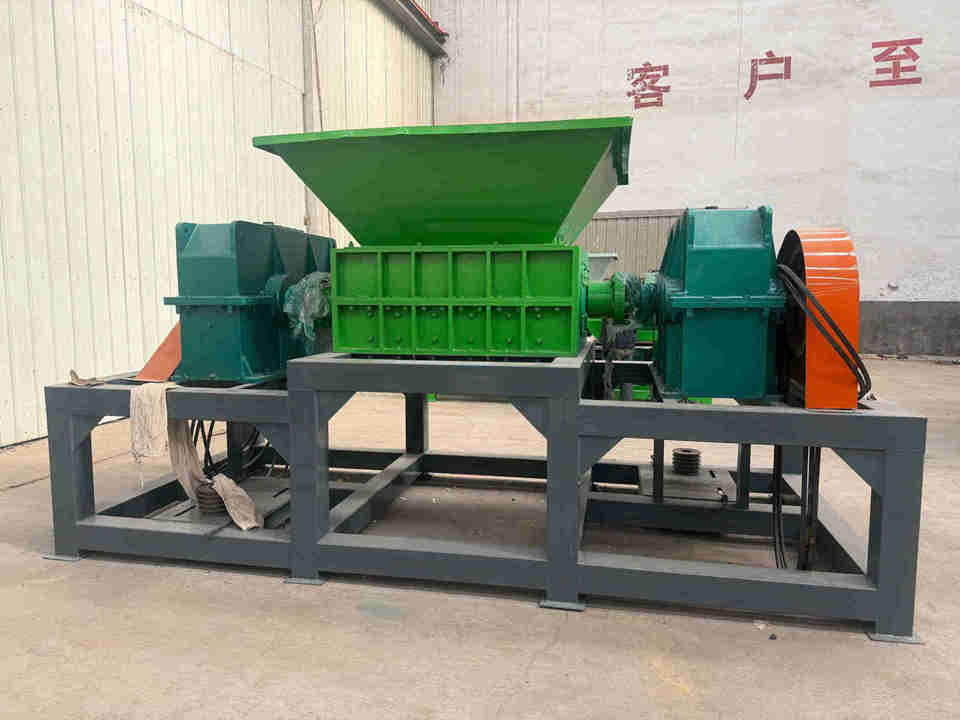
Industrial Scrap Metal Shredder Machine | Dual Shaft 3-10 TPH
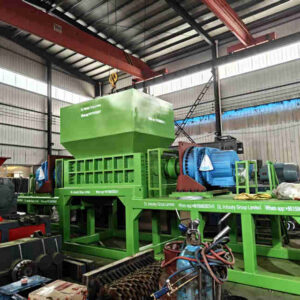
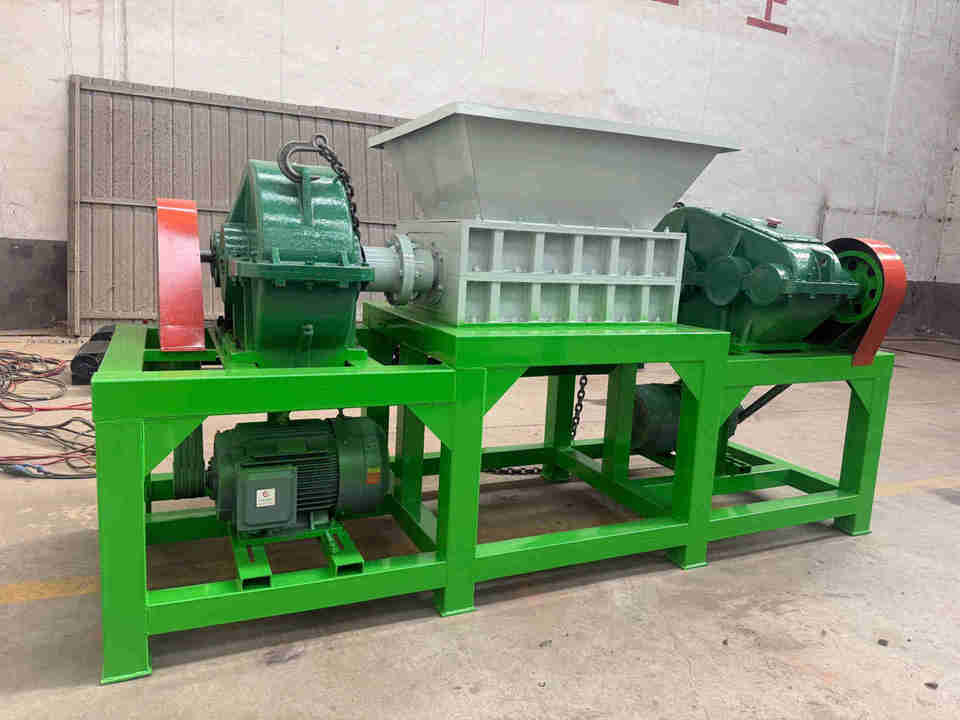
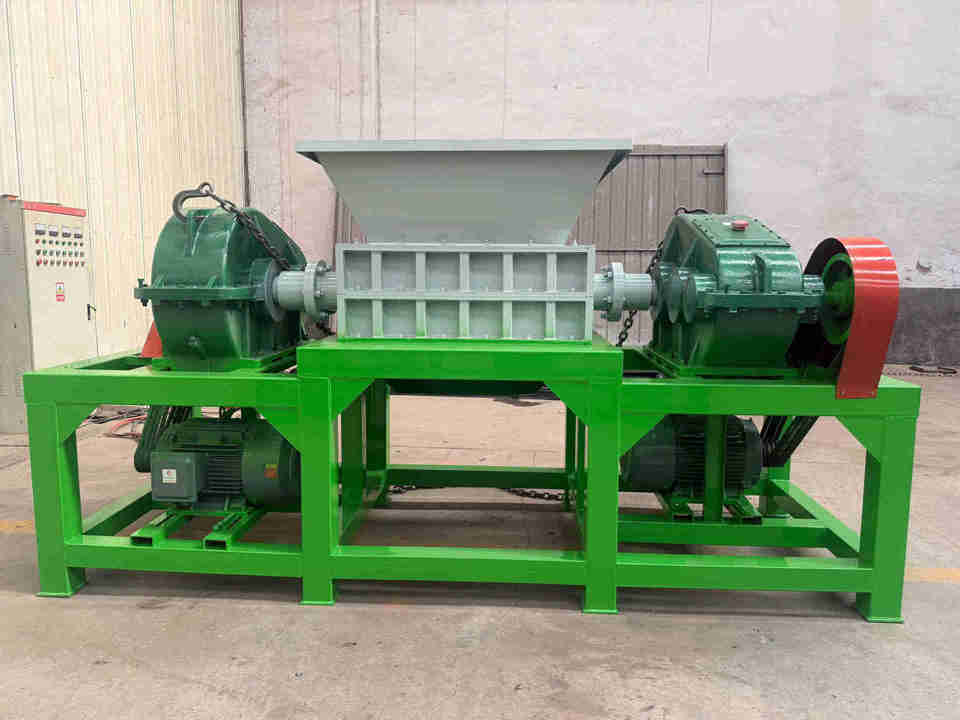
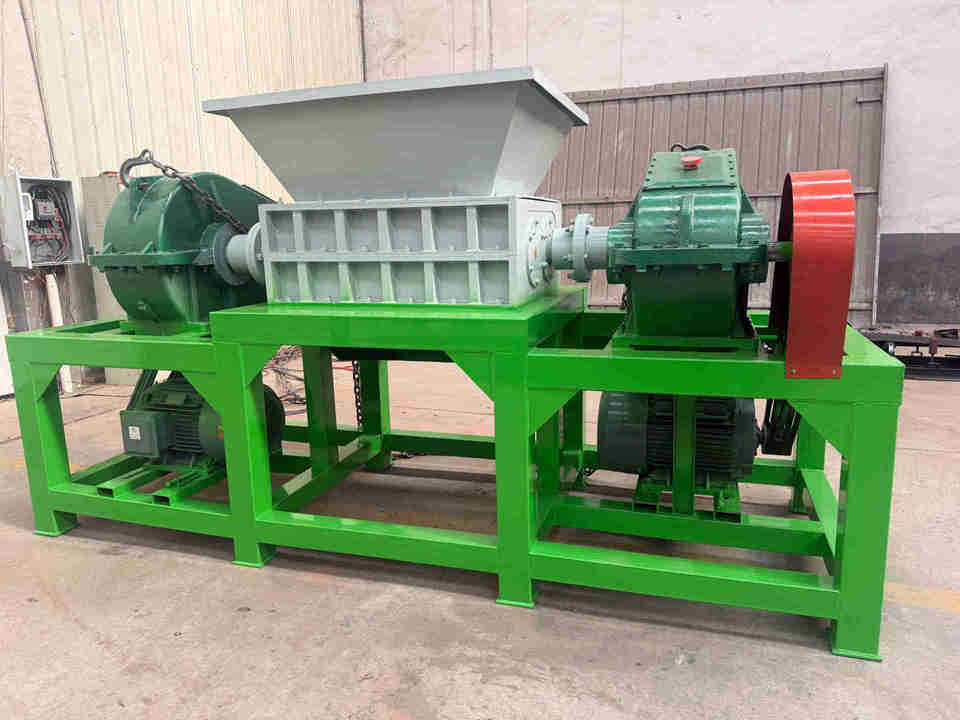
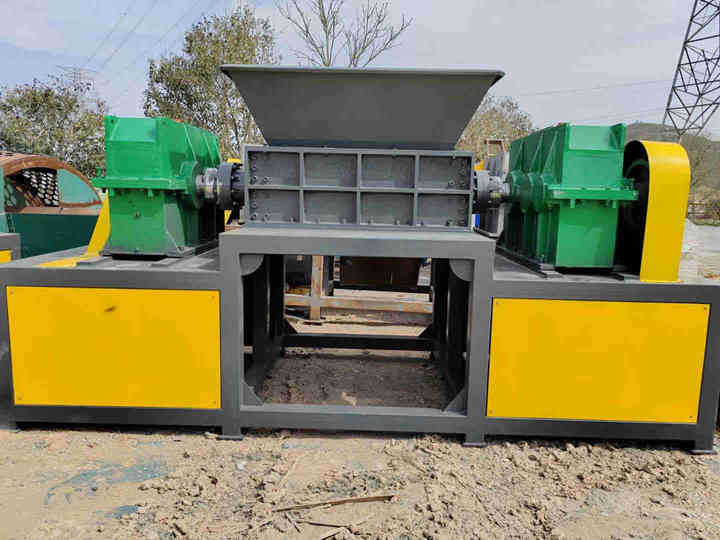
First commercial dual shaft scrap metal shredder for a growing yard. 3–10 tons per hour output from a 1000 mm chamber — the step above a workshop machine, still inside a small site’s power budget.
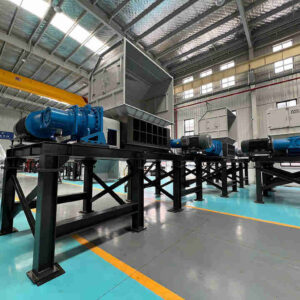
Motor options: 2×55 kW / 2×75 kW / 2×90 kW, dual motor drive.
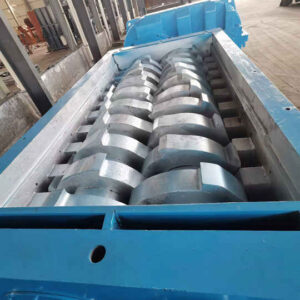
Blade options: M6V, H13 or Hardox 500, 360–550 mm diameter, dense-tooth, 7-tooth or 9-tooth profiles.
Built in-house: blades machined in our own shop, a mortise-and-tenon reinforced chamber frame, and nylon-pin torque protection for the drive.
Best for: yards densifying mixed light intake, metal traders preparing graded fractions, two-shift fabrication waste, collection centres.
Not for: whole car bodies, structural steel in quantity or baled scrap.
Send scrap photos and thickness for a configuration recommendation and a free quotation within 48 hours.
Why Choose Huaxin
- Real Factory, 30+ Years Manufacturing Experience
- 24/7 Technical Support
- Customized Solutions Available
- Installation & Training Support
Description
3-10 Tons Per Hour Scrap Metal Shredder for Sale – The First Commercial Machine for a Growing Yard
The HX-DS1000 is the 1000 mm chamber class in our dual shaft line, rated 3 to 10 tons per hour. It occupies the position most buyers eventually need: more machine than a workshop entry unit, but still inside the power budget of a small site. Buyers who have outgrown hand sorting and manual cutting, and who now measure intake in tonnes per week rather than per month, land on this model.
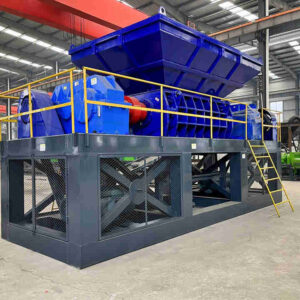
Two motors drive the counter-rotating shafts of this scrap metal shredder at low speed and high torque, so material is gripped and torn rather than struck. On the HX-DS1000 that means mixed light steel alongside aluminum, copper and brass in the same feed — the realistic intake of a yard, not a clean single-material stream. Motor options run from 2×55 kW up to 2×90 kW, giving three meaningful steps rather than one compromise setting.
Who the HX-DS1000 Is Built For
This chamber class suits the operation that has already proved the business case for shredding and now needs the next capacity step:
- Small recycling yards moving up from manual processing — the first machine where shredding becomes a line item in the budget rather than a trial.
- Metal traders buying and densifying mixed light scrap — turning loose, low-density intake into a graded fraction that ships economically.
- Fabrication plants running two shifts — production waste arriving continuously, needing a machine sized for duty rather than for occasional use.
- Regional collection centres consolidating light material — aluminum, copper, thin steel and containers handled before onward sale.
If your business plan already calls for more than 10 tons per hour of mixed material, tell us — we will quote the 1200 mm class instead, and you will thank us in year two rather than year one.
Where the HX-DS1000 Sits in the Shredder Range
Our eight chamber classes run from 800 mm to 2600 mm and 2 to 60 tons per hour. The 1000 mm chamber sits second from the bottom, and its rating overlaps at both ends by design: it holds the upper half of the DS800’s band and reaches the lower half of the DS1200’s. Overlap is not sloppy specification — it reflects the fact that material, not the model number, sets output.
Thin aluminum fed steadily reaches the top of the band on a 1000 mm scrap metal shredder of 3 to 10 tons per hour without effort. Mixed light steel with occasional section sits in the middle. Anything dense or thick pulls the figure down, and the honest response to that is a larger chamber, not a smaller discharge opening. We will tell you which side of the band your material sits on before you order.
Key Specifications – HX-DS1000
| Item | Specification |
|---|---|
| Model | HX-DS1000 dual shaft scrap metal shredder |
| Throughput | 3–10 tons per hour (material-dependent) |
| Chamber length | 1000 mm |
| Motor quantity | 2 motors |
| Motor power options | 2×55 kW / 2×75 kW / 2×90 kW |
| Rotating speed | 5–10 r/min |
| Blade diameter | 360–550 mm (configured to output size and material) |
| Blade materials | M6V, H13 or Hardox 500 |
| Blade hardness | 50–62 HRC options |
| Shaft material | 45# steel or 40Cr |
| Gearbox | ZQ series, ZSY series or planetary reducer |
| Input voltage | 380V / 400V / 415V / 230V, 50 Hz or 60 Hz |
| Power sources | Electric, generator or diesel engine |
| Certification | CE / ISO 9001 |
| Origin | Tangshan, China |
Capacity note: the rated band assumes continuous feeding of the material described. Intermittent grab loading, mixed density and a coarse discharge target all move the number downward, and we would rather quote you a realistic figure than an optimistic one.
Applications – Where the HX-DS1000 Earns Its Keep
At this size the dual shaft scrap metal shredder stops being a workshop convenience and starts being a production asset. The four settings below account for most of what we build in the 1000 mm chamber class.
Growing scrap yards densifying mixed intake
A yard taking in loose light material has a transport problem before the scrap metal shredder is even switched on before it has a processing problem. Loose scrap fills a trailer without filling its payload, so the freight bill and the sale price work against each other. Shredding to a dense, uniform fraction fixes both at once, and at 3 to 10 tons per hour the machine clears a day’s intake comfortably.
Metal traders preparing graded, saleable fractions
Traders who buy mixed light scrap and sell on specification need liberation, not just size reduction. The HX-DS1000 opens up composite material — appliance shells, radiators, small assemblies — so that the ferrous, aluminum and copper fractions separate cleanly downstream and each fetches its own price rather than a blended discount.
Fabrication and stamping plants on two shifts
Single-shift workshop waste suits the 800 mm class. Once a press shop runs a second shift, waste arrives faster than a small chamber can clear it and the backlog becomes a floor-space problem. The 2×75 kW or 2×90 kW packages on this class are specified for that continuous duty.
Regional collection centres consolidating light material
Collection points aggregate small volumes from many sources: window frames, roofing offcuts, copper wire offcuts, empty containers. Consolidating that into a single graded output before onward sale is where the machine pays, and the footprint still fits a modest leased site.
Materials the HX-DS1000 Processes
Blade steel and tooth count follow the material, and the table shows how this scrap metal shredder is configured in practice for 1000 mm chamber work.
| Material | Suitability | Typical configuration |
|---|---|---|
| Sheet offcuts and stamping scrap | Core duty of this class | Dense-tooth blades, 2×55 kW |
| Aluminum profiles and window frames | Core duty | Dense-tooth blades, 2×55 kW |
| Copper and brass scrap | Good | H13 blades, 2×55 kW |
| Light steel plate and mixed light scrap | Good across the band | M6V blades, 2×75 kW |
| Thin-wall containers, drums, appliance shells | Good — liberation is the priority | Dense-tooth blades, 2×55 kW |
| Scrap rebar and small section | Acceptable in cut lengths | 7-tooth Hardox 500, 2×90 kW |
| Structural steel and heavy plate | Marginal — only in short lengths | 9-tooth Hardox 500, 2×90 kW |
| Car bodies, whole shells, baled scrap | Not recommended | Step up to the 1800 mm class or above |
Photographs of your actual intake plus a thickness estimate will get you a specific knife and motor recommendation from our engineers, at no cost, before any order is placed.
How the HX-DS1000 Works
Loaded material falls into the hopper of the scrap metal shredder and is drawn between two counter-rotating shafts carrying overlapping knives. Shaft speed stays low — 5 to 10 revolutions per minute — while torque at the knife edge stays high, which is what allows the machine to tear rather than shatter. Tearing produces a controlled flake with less airborne dust and less shock loading than impact shredding, and that difference shows up in both wear life and site housekeeping.
Dense-tooth knives suit soft, thin, high-volume material. Where the feed contains heavier sections, a 7-tooth or 9-tooth hook profile takes a larger bite per revolution and pushes the work toward the upper motor options. Discharge lands on a conveyor and leaves the chamber, then moves to a stockpile, a scrap metal crusher, a magnetic separator for ferrous recovery or an eddy current separator for non-ferrous.
What happens when something unshreddable arrives
Mixed yard intake contains surprises. The nylon pin coupling between gearbox and drive is engineered to fail first: when torque rises past its limit the pin shears, the drive disengages and the operator clears the obstruction. The cost is a pin. Without it, the cost is a gearbox and a month of downtime waiting for parts.
Choosing the Right Configuration
By material
Clean aluminum, copper and thin steel run well on 2×55 kW. Mixed light scrap with a steel fraction belongs on 2×75 kW. If short rebar or small section appears regularly in your intake, take 2×90 kW with Hardox 500 knives — on lower power those pieces labour, heat the knives and shorten intervals between regrinds.
By thickness
Under 3 mm sheet is comfortable throughout the band. Between 3 and 5 mm, expect output toward the lower end of 3 to 10 tons per hour. Above that in volume, the 1200 mm chamber is the correct answer and we will say so rather than let you discover it on site.
By duty cycle
Single-shift operation with breaks suits 2×55 kW. Eight continuous hours suits 2×75 kW. Two shifts, or a yard running the machine whenever intake allows, should be specified at 2×90 kW so the motors never become the bottleneck that limits the day’s output.
By available power supply
380V, 400V, 415V or 230V at 50 Hz or 60 Hz are all standard. Generator or diesel drive remains available at this power level for sites without dependable grid supply, which is one of the practical advantages of staying in the smaller chamber classes.
Why Buy the HX-DS1000 from HUAXIN
You are buying the knife factory, not a reseller. Wear parts are the recurring cost of scrap metal shredder ownership and the hardest thing for a buyer to verify. We machine our own blades, so the specified grade — M6V, H13 or Hardox 500, heat treated into the 50–62 HRC band — is what arrives in the crate.
The chamber frame takes real load. A mortise-and-tenon reinforced structure holds shaft alignment under the side loads that mixed light scrap produces in practice. Thin-walled chambers crack at the weld lines; this one is designed against that failure mode.
Reducers are selected per duty. ZQ, ZSY and planetary units are all offered on this class. Where the machine runs long hours we recommend planetary reducers, because the difference in efficiency appears directly on the electricity account.
Factory-direct pricing on a first commercial machine. For a yard buying its first production shredder, capital is the binding constraint. Removing importer margin from the machine and from every subsequent spares order changes what is affordable.
The line arrives matched. Conveyors, crusher, magnetic separation and eddy current separation can be supplied against this machine as one engineered package, so the interfaces are settled in the drawing office rather than resolved with a cutting torch on your site.
Options and Customization
- Knife profile and tooth count set to your scrap mix — dense tooth, 7-tooth or 9-tooth
- Blade diameter from 360 mm to 550 mm to hit a target discharge size
- Blade steel: M6V, H13 or Hardox 500
- Automatic lubrication of bearings and shaft seals
- Hopper geometry adapted to grab loading, conveyor feeding or manual charging
- Discharge conveyor length and discharge height matched to your downstream equipment
- Electrical panel, control logic and safety interlocks to your regional standard
- Generator or diesel drive instead of fixed electric supply
- Full recycling line integration including crusher, magnetic and eddy current separation
- Skid- or frame-mounted arrangement to suit an existing concrete pad
Footprint, Installation and Commissioning
This scrap metal shredder is supplied on a levelled concrete foundation with a power feed and, where fitted, a discharge conveyor take-off. There is no specialised pit and no purpose-built structure required, which matters for yards and plants adding a shredder to a working site rather than designing a greenfield plant around one.
We supply assembly drawings, electrical schematics, a commissioning manual and an operator training programme. Start-up support from our engineers can be arranged on site, and a first-year spares kit — knives, shear pins, seals and bearings — is quoted alongside the machine so the wear parts are in your stores before they are needed.
Honest Limits: When to Buy Something Else
Two cases make this the wrong purchase.
The first is heavy duty. Whole car bodies, structural steel in quantity and baled or bundled material exceed what a 1000 mm chamber can bite. Forced through, they damage knives, trip the drive and produce output far below the rated band. That work starts at the 1800 mm chamber class. The second is a business plan that has already passed 10 tons per hour; buying capacity you will need within eighteen months costs less than buying twice. For lighter, single-shift work the HX-DS800 (2–6 tons per hour) is the more economical machine, and for anything above this class see the HX-DS1200 (5–15 tons per hour).
Browse the complete ladder in the dual shaft scrap metal shredder range, or send us your material data and a quotation within 48 hours.
Frequently Asked Questions
What throughput should I actually plan for?
Plan against the middle of the 3 to 10 tons per hour band until you have run your own material. Continuous feeding of thin, light scrap reaches the top; intermittent grab loading of mixed density sits lower. We quote the number we expect for your material rather than the catalogue maximum.
Does this machine handle ferrous and non-ferrous together?
Yes — running ferrous and non-ferrous together is what this scrap metal shredder is most often bought to do. Mixed light steel with aluminum and copper in the same feed is the normal duty. What changes between materials is the knife steel and tooth pitch — Hardox 500 for abrasive and heavier fractions, H13 for mixed non-ferrous work.
Can it process car bodies?
No, not as a production duty. Whole shells need a bite that the 1000 mm chamber does not have, and repeated attempts cost knives and drivetrain life. End-of-life vehicle shredding begins at the 1800 mm class; we will quote that class for any buyer whose intake is dominated by car bodies.
What discharge size can I specify?
Anything from a coarse flake upward, set by blade diameter and tooth spacing across the 360 mm to 550 mm range. Tell us what the next step requires — bale density, a mill specification, or separation efficiency — and we will size the knives accordingly.
Which motor package do you recommend for a yard with mixed intake?
2×75 kW is the usual answer for a yard running a single shift on genuinely mixed light material. Move to 2×90 kW if the stream contains short rebar or section, or if the machine will run into a second shift.
Can you supply the rest of the line?
Yes. Conveyors, a scrap metal crusher, magnetic separation, eddy current separation and a scrap metal baler for the non-ferrous fraction are all offered against this machine as one matched system.
What if the grid supply at my site is unstable?
A generator set or diesel engine drive can be specified in place of the fixed electric package. At 2×55 to 2×90 kW this remains a practical option, and we size the prime mover against your actual duty rather than a nominal rating.
How do I maintain it?
Daily checks on a scrap metal shredder cover knife clearance and bolt torque; weekly work covers lubrication and bearing temperature. The automatic lubrication option removes the most commonly missed task. Blade regrinding intervals depend on your material abrasiveness, and we quote a spares kit with the machine so nothing is on back order when the first set wears out.
Additional information
| Item | Dual Shaft Scrap Metal Shredder Machine |
|---|---|
| Chamber Length | 1000mm |
| Model | HX-DS1000 |
| Chamber size | Customized according to diameter of the blade |
| Rotating speed | 5-10 r/min |
| Motor Quantity | 2 pcs |
| Motor Power | 2×55 kW / 2×75 kW / 2×90 kW |
| Gear box | ZQ series, ZSY series and Planetary Gear Reducer |
| Blade Quantity | Customized according to different materials |
| Blade Materials | M6V, H13, and Hardox 500 are available as options. |
| Blade Hardness Range | 50-62 HRC as options. |
| Blade Diameter | 360-550mm as options according to different output rate and materials |
| Blade Teeth | For soft materials, a dense-tooth configuration is used. |
| Shaft | 45# or 40Cr |
| Input voltage | 380V, 400V, 415V, 230V with 50HZ or 60HZ. |
| Power sources | Customized: electric, generator or diesel engine |