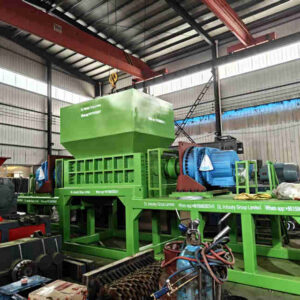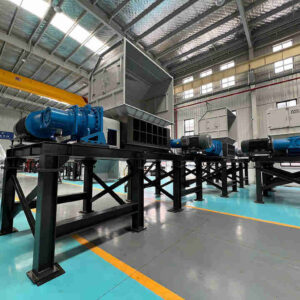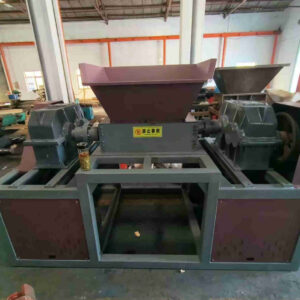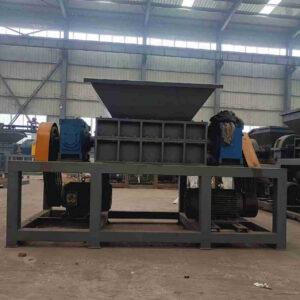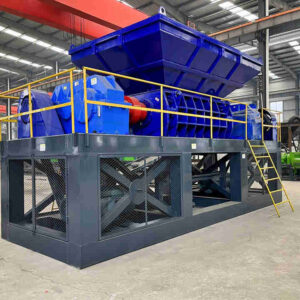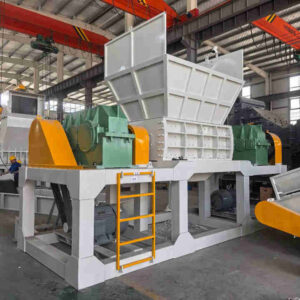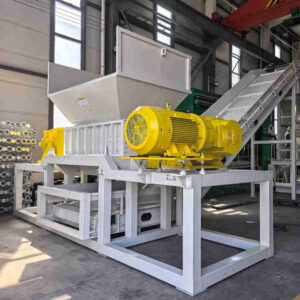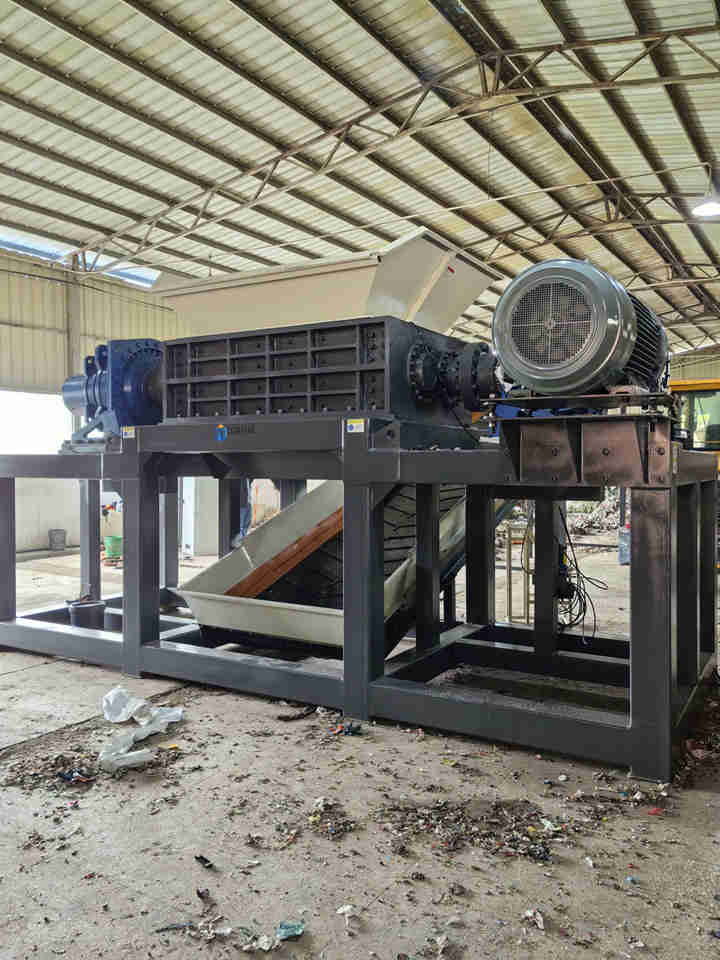
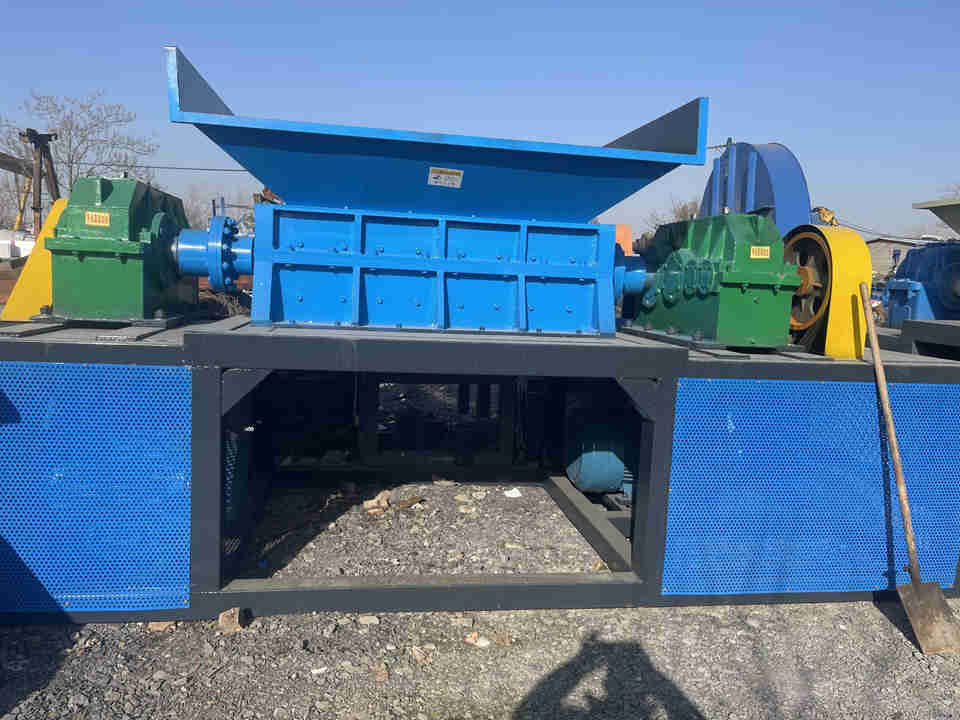
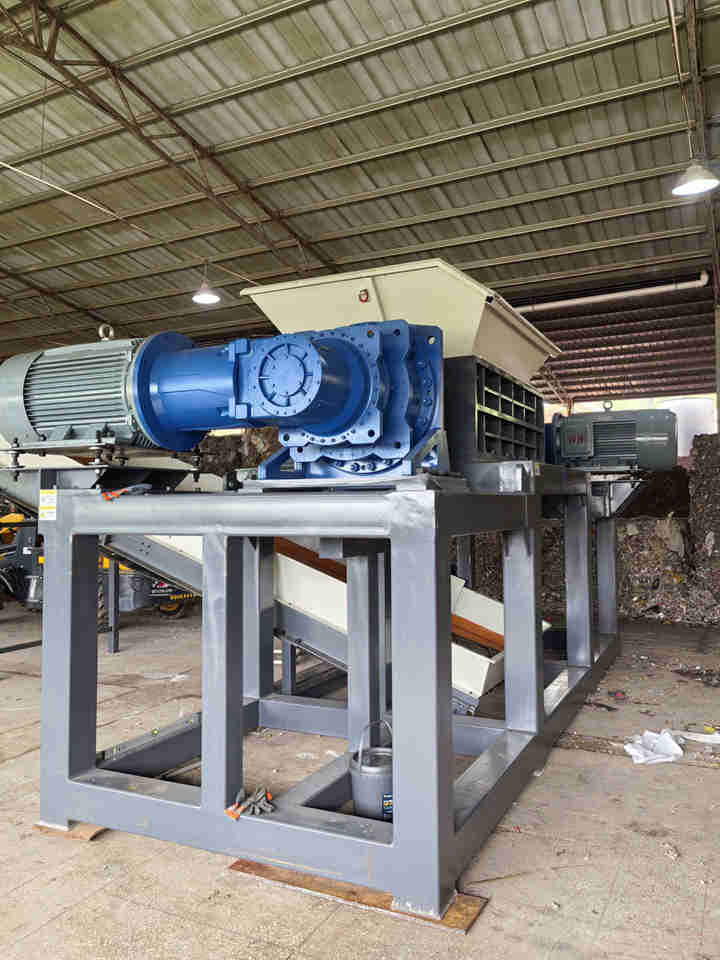
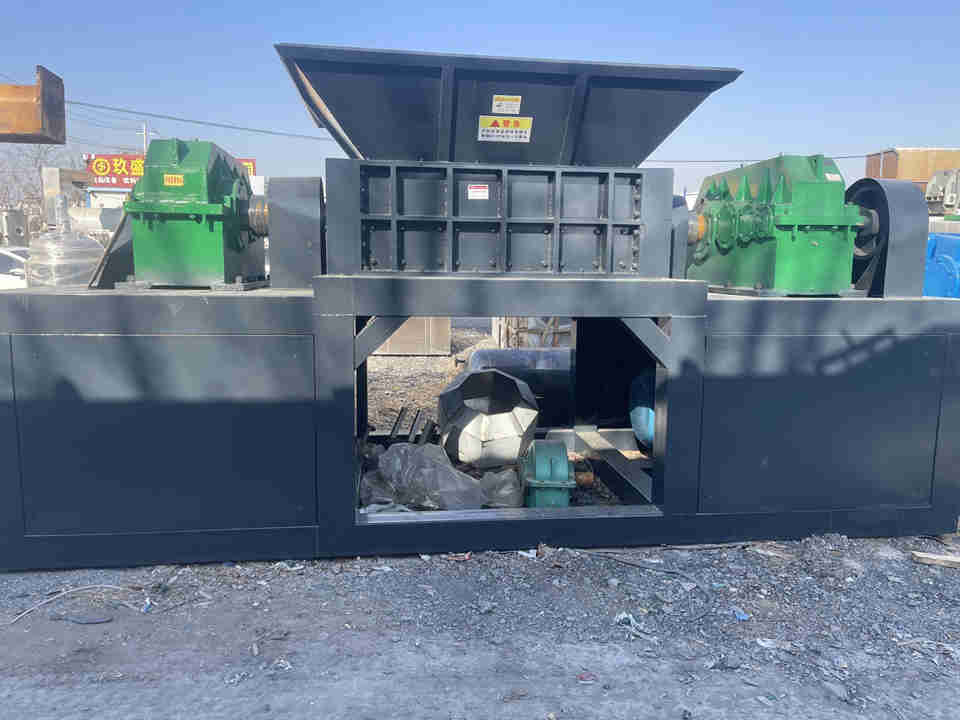
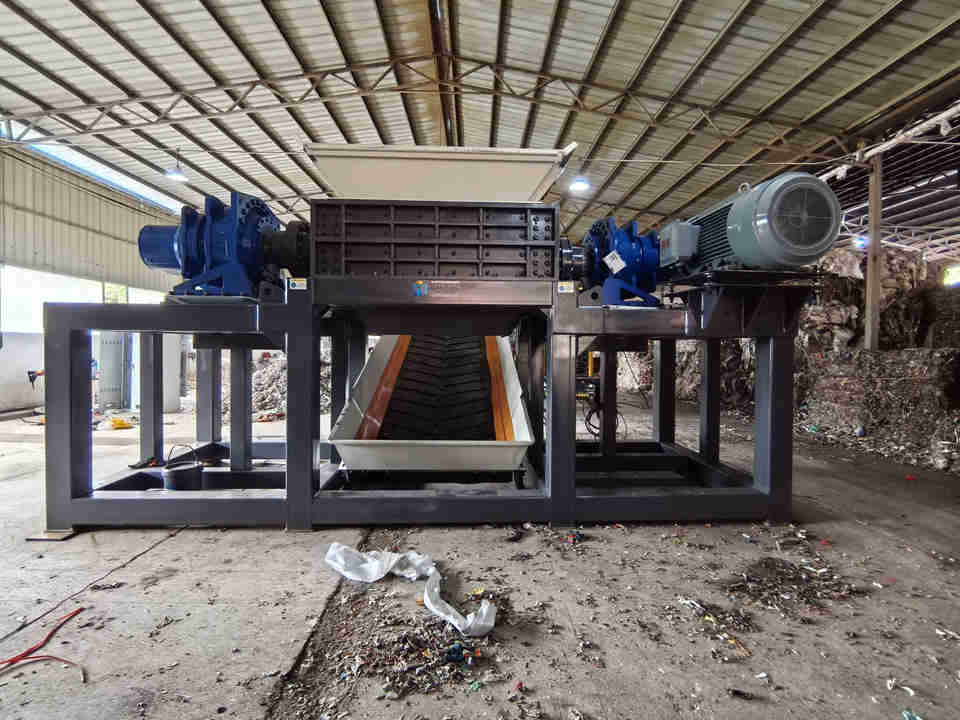
Industrial Scrap Metal Shredder Machine | Dual Shaft 8-20 TPH
The commercial recycler’s main machine: dual shaft scrap metal shredder rated 8–20 tons per hour from a 1500 mm chamber. Steel-dominant duty for mid-size plants with a tonnage target behind them.
Motor options: 2×110 kW / 2×132 kW / 2×160 kW, dual motor drive.
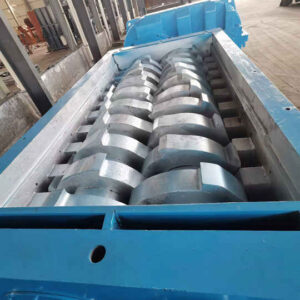
Blade options: M6V, H13 or Hardox 500, 360–550 mm diameter, 7-tooth and 9-tooth profiles for section and plate.
Built in-house: our own blade machining facility, the chamber frame reinforced with mortise-and-tenon joints, nylon-pin torque protection on the drive.
Best for: mid-size commercial plants, steel-dominant processors, export shredders to mill specification, demolition contractors at volume.
Not for: vehicle-dominated intake or baled bundles.
Send a material analysis and a written output figure plus free quotation follows within 48 hours.
Why Choose Huaxin
- Real Factory, 30+ Years Manufacturing Experience
- 24/7 Technical Support
- Customized Solutions Available
- Installation & Training Support
Description
8-20 Tons Per Hour Scrap Metal Shredder for Sale – The Commercial Recycler’s Main Machine
The HX-DS1500 is an 8 to 20 tons per hour dual shaft scrap metal shredder with a 1500 mm chamber. In our line this is the workhorse: the model bought by commercial recyclers whose business is measured in daily tonnage rather than projects. It is the last class in the range configured around light-to-medium material, and the first where we routinely supply 2×160 kW as a standard rather than an extended option.
Steel dominates at this size. A commercial recycler feeding a foundry or an export contract needs a machine that holds its figure on mixed structural offcuts and plate, not one that excels only on clean aluminum sheet. The dual shaft arrangement delivers the torque to do that while keeping the tearing action that produces consistent flake.
Who the HX-DS1500 Is Built For
This chamber class is bought by operations where the shredder sits at the centre of the revenue model:
- Mid-size commercial recycling plants with a daily tonnage target and a sale contract behind it.
- Steel-dominant processors handling mixed structural offcuts, plate and section rather than clean light sheet.
- Export-oriented shredders producing a consistent graded fraction for overseas mills.
- Industrial demolition contractors recovering metal from plant clearances and building projects at volume.
If your business is end-of-life vehicles, this is the wrong side of the range — the 1800 mm class and above exist for that work, and we will quote it without hesitation.
Where the HX-DS1500 Sits in the Shredder Range
Eight chamber classes run from 800 mm to 2600 mm, covering 2 to 60 tons per hour. The 1500 mm chamber closes the light-to-medium group: everything below it is sized for mixed light material and non-ferrous work, and everything above it is sized for vehicle shells, heavy section and mill-scale tonnage. The HX-DS1500 is where the transition happens, and it is the model we specify when a customer’s material is mixed but weighted toward steel.
The rated band overlaps its neighbours deliberately. Output is set by material, thickness, feeding continuity and the discharge target — four variables the buyer controls and the model number does not. Consistent mixed structural scrap fed continuously reaches the upper part of 8 to 20 tons per hour; thicker plate or intermittent loading pulls it down. We quote against your material, not against the top of the band.
Key Specifications – HX-DS1500
| Item | Specification |
|---|---|
| Model | HX-DS1500 dual shaft scrap metal shredder |
| Throughput | 8–20 tons per hour (material-dependent) |
| Chamber length | 1500 mm |
| Motor quantity | 2 motors |
| Motor power options | 2×110 kW / 2×132 kW / 2×160 kW |
| Rotating speed | 5–10 r/min |
| Blade diameter | 360–550 mm (configured to output size and material) |
| Blade materials | M6V, H13 or Hardox 500 |
| Blade hardness | 50–62 HRC options |
| Shaft material | 45# steel or 40Cr |
| Gearbox | ZQ series, ZSY series or planetary reducer |
| Input voltage | 380V / 400V / 415V, 50 Hz or 60 Hz |
| Power sources | Electric supply (generator set available on request) |
| Certification | CE / ISO 9001 |
| Origin | Tangshan, China |
Capacity note: the band assumes a controlled feed of the material described. Recyclers planning against a contract should build their schedule on the mid-band figure and treat the upper end as capacity held in reserve.
Applications – Where the HX-DS1500 Earns Its Keep
At this output the scrap metal shredder is a revenue asset, and the applications reflect that. These are the four settings where the 1500 mm chamber class is the correct specification rather than an available one.
Commercial recycling plants on a daily tonnage target
A plant running 15 tons on a good day and 9 on a bad one has a scheduling problem, not a machine problem — provided the machine is sized correctly in the first place. The HX-DS1500 is specified so that the mid-band figure is achievable every shift, which is what makes forward-selling of graded output possible rather than speculative.
Steel-dominant processors handling structural offcuts
Mixed structural offcuts, section ends and plate require torque rather than tooth count. This class supplies it at 8 to 20 tons per hour, with Hardox 500 knives and 7-tooth or 9-tooth hooks where pieces arrive uncut. The plant sells a consistent flake into a foundry charge mix and is paid on cleanliness and size rather than on weight alone.
Export shredders producing a graded fraction for overseas mills
Export buyers specify tightly. A shredder producing a narrow size distribution with low fines and low contamination is worth a premium per tonne, and the difference between a premium and a discount covers the machine’s blade bill. Specifying knife geometry against the mill’s stated size range is the whole exercise.
Demolition contractors recovering metal at volume
Plant clearances and building projects generate mixed metal in bulk and on a deadline. Processing on site avoids double handling — one movement from the structure to the shredder to the trailer — and the contractor sells the recovered fraction rather than paying to landfill it. Portability and setup time matter here, which this class still supports.
Materials the HX-DS1500 Processes
Steel dominates this class, and configuration follows. The table reflects how the machine is specified in practice for 1500 mm chamber work.
| Material | Suitability | Typical configuration |
|---|---|---|
| Mixed structural offcuts and section | Core duty of this class | 7-tooth Hardox 500, 2×160 kW |
| Steel plate and sheet up to 8 mm | Core duty | M6V blades, 2×132 kW |
| Mixed light steel from collection rounds | Good — runs at the top of the band | Dense-tooth blades, 2×110 kW |
| Cut rebar and small section | Good in cut lengths | 7-tooth Hardox 500, 2×132 kW |
| Aluminum profiles and castings | Good, but oversized for the duty | Dense-tooth blades, 2×110 kW |
| Copper, brass and radiator scrap | Good | H13 blades, 2×132 kW |
| Demolition-recovered mixed metal | Good, with sorting at the feed | M6V blades, 2×160 kW |
| Whole car bodies and baled bundles | Not recommended | Step up to the 1800 mm chamber class |
Send the material analysis for this scrap metal shredder — or photographs and a representative sample — and we will return the knife specification, the motor package and the expected output figure in writing.
How the HX-DS1500 Works
Material is drawn into this scrap metal shredder between two counter-rotating shafts carrying overlapping knives, turning at 5 to 10 revolutions per minute. The shafts grip rather than strike, and the tearing action produces a controlled flake instead of a cloud of fines. At 1500 mm the chamber is long enough to hold larger pieces in the cutting zone until they are reduced, which is what allows it to take structural offcuts that would simply sit in a smaller machine.
Dense teeth suit soft, thin, high-volume feed; 7-tooth and 9-tooth hooks suit heavier pieces and take a larger bite per revolution. Discharge leaves the chamber on a conveyor toward the next stage: a stockpile for graded sale, a scrap metal crusher for further reduction, a magnetic separator for ferrous recovery or an eddy current separator for non-ferrous.
What protects the drive
On a scrap metal shredder the nylon pin coupling between gearbox and drive is the designed failure point. Torque past its limit shears the pin and disengages the drive, so an unshreddable item in the feed costs a pin and a few minutes rather than a gearbox and a month of parts lead time. On a machine whose whole purpose is holding a production figure, that is the feature that matters most on a bad Tuesday.
Choosing the Right Configuration
By material
Mixed light steel at volume suits 2×110 kW. Plate, section and demolition-recovered material belong on 2×132 to 2×160 kW with Hardox 500 knives. If the stream carries uncut structural pieces, the 2×160 kW package with 9-tooth hooks is the specification that holds output; anything less will stall on the heavy fraction and the plant will average below its target.
By thickness
Up to 6 mm runs comfortably. Between 6 and 10 mm, output moves toward the lower part of 8 to 20 tons per hour. Beyond 10 mm in volume, the 1800 mm chamber class is the honest recommendation, and we will make it before taking the order.
By duty cycle
This class is built for continuous running. We recommend 2×160 kW, automatic lubrication and planetary reducers for any operation running more than one shift or feeding the machine from a loader rather than intermittently.
By available power supply
380V, 400V or 415V at 50 Hz or 60 Hz are standard, with the electrical package built to the destination market’s standard. At 2×160 kW a fixed supply is the practical configuration for sustained output; a generator set is feasible for the lower motor options where the site requires it.
Why Buy the HX-DS1500 from HUAXIN
Knife supply is in-house, and at this output blade cost decides margin. A plant processing 15 tons per hour consumes knives on a schedule, and a scrap metal shredder that cannot supply verified-grade wear parts at factory prices is a long-term liability. We machine our own blades to M6V, H13 or Hardox 500, heat treated into the 50–62 HRC band the specification calls for.
The chamber frame is built for the load a plant actually applies. Side loads from structural pieces are far higher than anything light scrap produces. The mortise-and-tenon reinforced structure holds shaft alignment under those loads, which is why the machine does not drift out of tolerance after a year of heavy feed.
Drive train matched to continuous duty. ZQ, ZSY and planetary reducers are all offered; for sustained running we recommend planetary units, and the efficiency difference shows up directly in the plant’s power account.
Factory-direct terms where the capital sum is largest. Removing importer margin from the machine and from every wear-part order changes the total cost of ownership at this scale more than at any smaller class.
The whole line from one supplier. Conveyors, crusher, magnetic separation and eddy current separation can be engineered against this machine as a single matched package, so the plant’s interfaces are agreed before the machine ships.
Options and Customization
- Knife profile and tooth count — dense tooth, 7-tooth or 9-tooth — set to the plant’s material mix
- Blade diameter between 360 mm and 550 mm to meet a contracted discharge specification
- Blade steel: M6V, H13 or Hardox 500
- Automatic lubrication for bearings and shaft seals
- Loader-height hopper and feed arrangement for grab or conveyor charging
- Discharge conveyor matched to the downstream machine’s intake height and speed
- Control panel, PLC interface and safety interlocks to the plant’s standard
- Dust suppression and noise attenuation where the plant is adjacent to occupied premises
- Heavier shaft and bearing specification for abrasive or high-impact streams
- Full recycling line integration including crusher, magnetic and eddy current separation
Footprint, Installation and Commissioning
A reinforced concrete foundation and a power feed sized to the selected motor package are the site’s contribution. This scrap metal shredder requires no specialised pit, and the arrangement can be matched to the existing conveyor run so the plant’s layout does not have to be rebuilt around the new machine.
Foundation and assembly drawings, electrical schematics, a commissioning manual for this scrap metal shredder and operator training are supplied with the machine, and our engineers can attend start-up. A spares kit covering knives, shear pins, seals, bearings and lubricants is quoted alongside the machine so the first year of wear parts is already in the plant’s stores.
Honest Limits: When to Buy Something Else
Two situations make this the wrong purchase.
The first is vehicle-dominated or baled material. Whole car bodies, large shells and bundles exceed what a 1500 mm chamber can bite; forced through, they destroy knives and drive components and the plant never reaches its rated band. For that duty the chamber must grow to 1800 mm. The second case in which this machine is wrong is a material stream that is predominantly clean light sheet or non-ferrous — the plant will pay for power it cannot use, and the HX-DS1200 (5–15 tons per hour) delivers the same tonnage at lower capital and running cost. Where the tonnage requirement is genuinely above 20 tons per hour, look at the HX-DS1800 (10–36 tons per hour).
Compare all eight classes in the dual shaft scrap metal shredder range, or send your material analysis for a quotation within 48 hours.
Frequently Asked Questions
What output can I build a contract on?
The mid-band figure of 8 to 20 tons per hour, achieved with continuous feeding of the material described. Treat the upper end as reserve capacity rather than as the planning number, and we will state in writing what we expect for your specific material.
Is this the largest machine I can run without a dedicated substation?
At 2×110 to 2×132 kW most industrial supplies are adequate. The 2×160 kW package should be checked against your incoming supply and starting method, and we will confirm the electrical requirement before quotation.
Can it handle structural steel and rebar?
Cut lengths of section and rebar, yes — on a 1500 mm scrap metal shredder — specify 7-tooth or 9-tooth Hardox 500 knives and 2×160 kW. Long uncut structural members should be pre-cut at the feed, and anything above roughly 10 mm in volume belongs in a larger chamber.
Can it shred car bodies?
Not as a production duty. Whole shells exceed the bite of the 1500 mm chamber and will damage knives and drivetrain components. Vehicle work begins one chamber size up at 1800 mm, and that is the quotation we will issue when car bodies dominate the intake.
How do I hold a mill’s discharge specification?
Knife diameter and tooth spacing set the size distribution, and both are configurable across 360 mm to 550 mm. Give us the specification and we will set the knife geometry to hold it, then confirm the expected distribution for your material.
What is the largest motor worth specifying?
2×160 kW is the largest available on this class and is our recommendation for continuous duty with plate, section or demolition-recovered material. Specifying it also extends blade life, because the knives are not being asked to work at their limit.
Can the machine be integrated with existing plant equipment?
Usually yes. Send the layout, conveyor run and downstream intake details and we will match discharge height, conveyor length and control interface. The scrap metal crusher, scrap metal baler and separation equipment can be quoted in the same package.
What maintenance should the plant schedule?
Daily knife clearance and bolt torque checks on the scrap metal shredder, weekly lubrication and bearing temperature checks, and blade regrinding at intervals set by material abrasiveness. Automatic lubrication is strongly recommended at this duty, and the quoted spares kit covers the first year of wear parts.
Additional information
| Item | Industrial Scrap Metal Shredder Machine |
|---|---|
| Chamber Length | 1500mm |
| Model | HX-DS1500 |
| Chamber size | Customized according to diameter of the blade |
| Rotating speed | 5-10 r/min |
| Motor Quantity | 2 pcs |
| Motor Power | 2×110 kW / 2×132 kW / 2×160 kW |
| Gear box | ZQ series, ZSY series and Planetary Gear Reducer |
| Blade Quantity | Customized according to different materials |
| Blade Materials | M6V, H13, and Hardox 500 are available as options. |
| Blade Hardness Range | 50-62 HRC as options. |
| Blade Diameter | 360-550mm as options according to different output rate and materials |
| Blade Teeth | For soft materials, a dense-tooth configuration is used. |
| Shaft | 45# or 40Cr |
| Input voltage | 380V, 400V, 415V, 230V with 50HZ or 60HZ. |
| Power sources | Customized: electric, generator or diesel engine |