In heavy industrial metal reclamation and furnace feedstock preparation, deploying a high-performance industrial scrap metal shredder directly dictates shift throughput, recovery efficiency, and operating safety. For scrap processors operating the HX-DS1000 Dual Shaft Scrap Metal Shredder manufactured by Huaxin Co., Ltd., optimizing rotor mechanics, blade hook clearances, and torque management is essential to eliminating shaft binding and maximizing net tonnage per operating hour.
The Metallurgy of Scrap Motors: Cast Iron Housings vs. Copper Windings
Scrap electric motors, automotive alternators, and hermetic compressor units represent dense non-ferrous treasure troves. A typical induction motor consists of 10% to 15% high-purity copper wire, 45% to 55% silicon steel stator laminations, and 30% to 40% cast iron or cast aluminum end-bells and housings. However, manual extraction using torch-cutting or handheld chisels requires up to 15 minutes of intensive labor per motor, destroying commercial margins.
Modern high-recovery recycling lines utilize high-torque dual-shaft shredding. The objective is not pulverized dust, but selective mechanical fracture: shattering brittle cast iron frames, peeling outer aluminum shells, and bending stator cores just enough to loosen internal copper coils for downstream sorting.
Dual-Shaft Shredder Rotor Configuration for Tough Motor Scrap
Processing rigid steel shafts and heavy motor cores requires robust mechanical construction:
- Integral Hexagonal Alloy Shafts: Huaxin rotors are machined from single-piece forged 42CrMo high-tensile alloy steel, quenched and tempered to withstand torsional shock loads up to 45,000 N·m (33,190 lbf·ft) without shaft twisting.
- High-Impact Blade Steels: Motor shredding discs are fabricated from M6V, H13, X45, D2 alloy, combining high surface hardness (55–57 HRC) with superior core impact toughness to absorb impacts against solid motor shafts.
- Progressive Tooth Profiles: Discs feature staggered dual-claw profiles that crush brittle cast iron end-bells against counter-combs before biting into the laminated stator core.
Integrated Line Configuration: Pre-Shearing & Downstream Refining
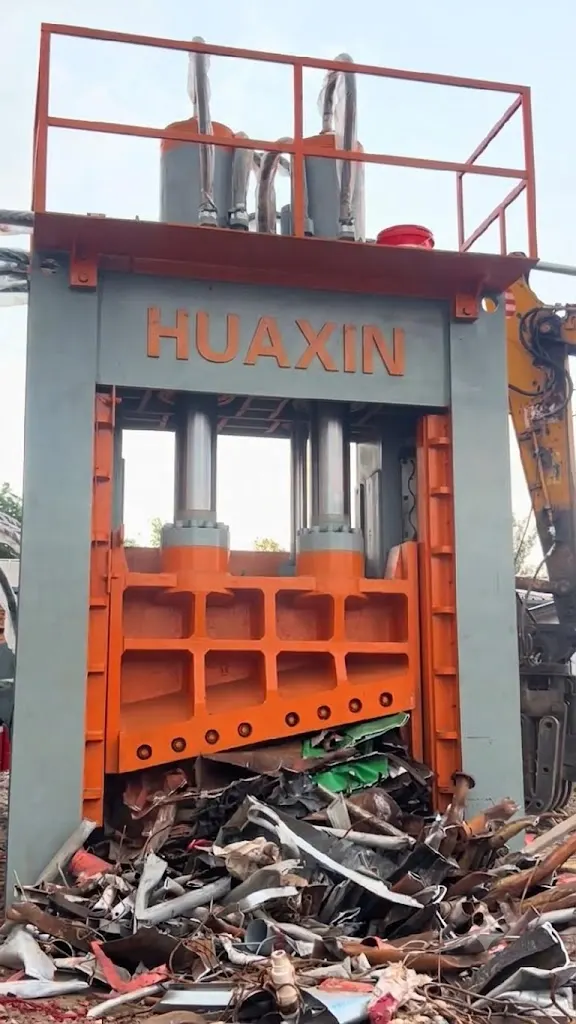
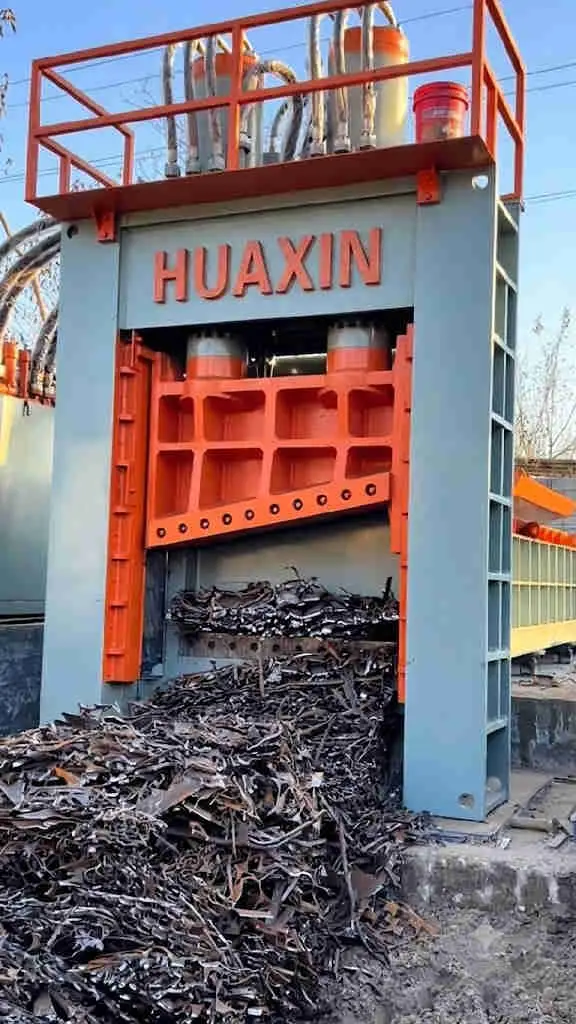
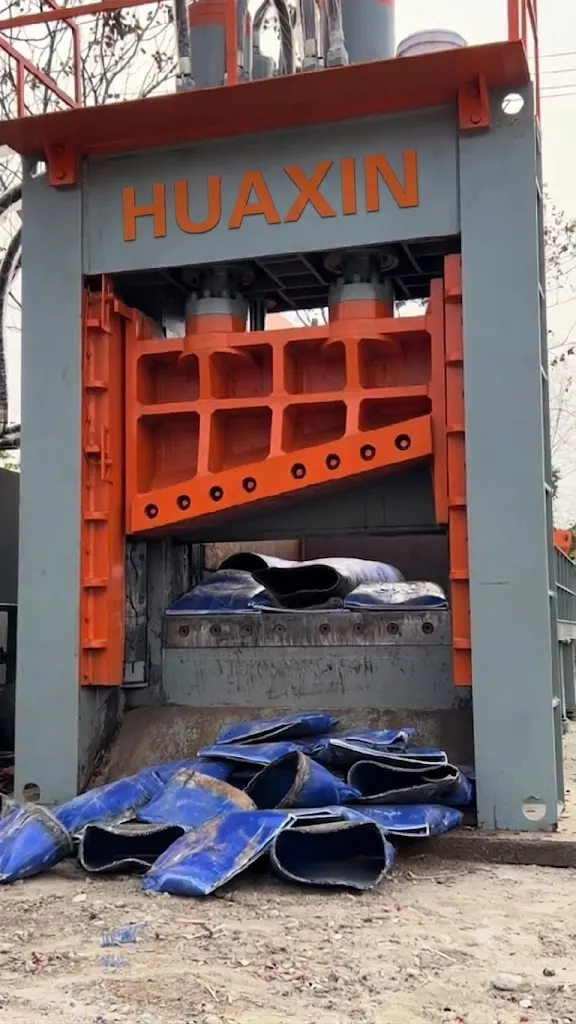
System Pairing & Output Maximization: For large electric motors exceeding 20 kW (27 HP) or large industrial transformer cores, pairing your shredder with an upstream scrap metal shear to split the heavy stator core in half boosts shredder processing capacity by 20% to 30% while drastically reducing rotor blade wear.
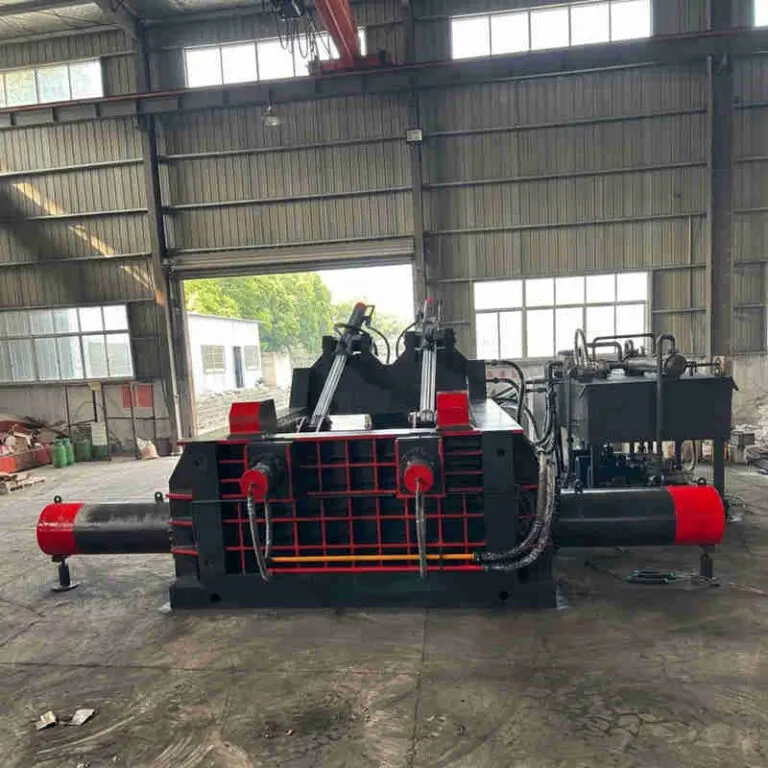
Downstream of the shredder, routing shredded motor fractions through a high-energy scrap metal crusher shatters laminated silicon steel plates away from the copper coils, while loose aluminum motor housings can be gathered and compacted into high-density cubes on a 125 ton scrap metal baler for direct smelter delivery.
Automated Downstream Separation Economics
Operating a synchronized processing line yields immediate payback. After passing through the shredder, an overband cross-belt magnetic separator extracts 99% of ferrous silicon steel and iron housing fragments. The non-magnetic discharge—containing pure copper winding nests and aluminum end-caps—passes over an eddy current separator (ECS), producing clean, mill-ready copper scrap that commands premium prices at secondary copper refineries.
Ready to configure your processing line or request factory-direct FOB/CIF pricing? Review full technical specifications on our HX-DS1000 Dual Shaft Scrap Metal Shredder product page, explore our complete industrial scrap metal shredder machinery catalog, or contact our technical sales engineering team with your scrap material sample specifications and daily tonnage targets.