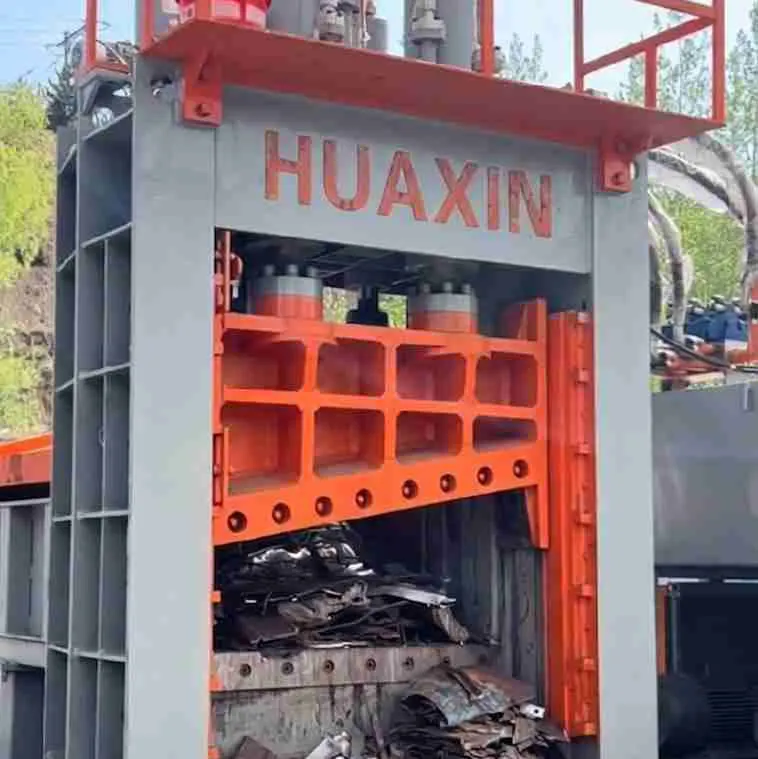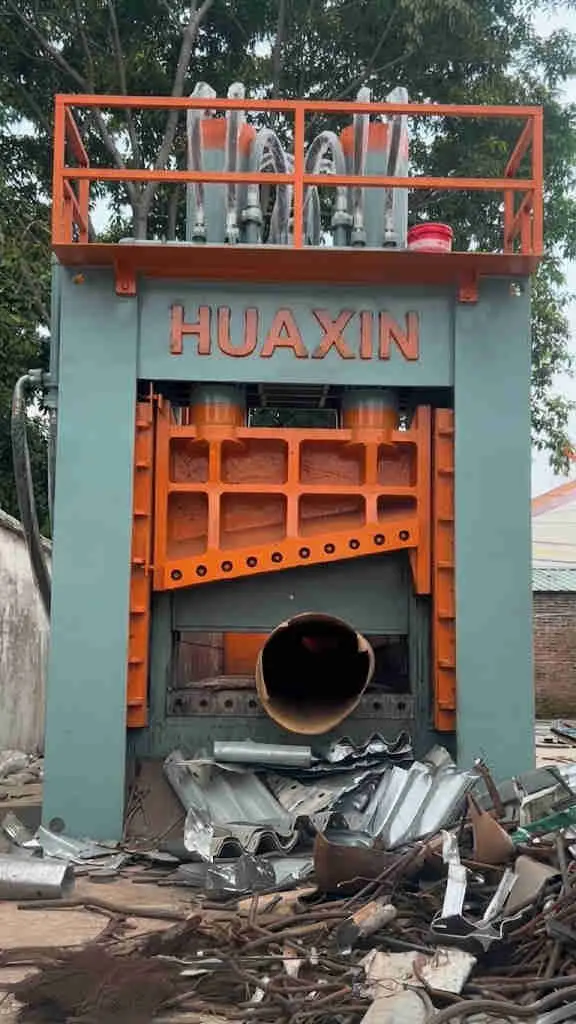
In heavy scrap metal densification and furnace feedstock logistics, deploying a high-efficiency scrap metal baler directly governs cycle speed, shipping container payload, and melting economics. For recycling yards operating the Y81K-315 Scrap Metal Baler Machine manufactured by Huaxin Co., Ltd., optimizing compression kinematics, hydraulic pressure staging, and chamber wear protection is essential to producing tight, high-density dealer bundles that command premium mill pricing.
Core Structural Architectures: Vertical vs. Horizontal vs. Three-Side
For recycling entrepreneurs, scrap metal yard managers, and industrial manufacturing plants, selecting the appropriate structural configuration for a scrap metal baler is a foundational capital expenditure decision. Equipment buyers frequently struggle to determine whether a compact vertical downstroke baler, a horizontal single/double-ram baler, or a heavy-duty three-side compression industrial baler best matches their scrap stream, daily tonnage goals, and available warehouse ceiling height.
Purchasing an undersized baler results in material bottlenecks and excessive manual scrap pre-cutting, while purchasing an oversized 500-ton press for a small 5-ton-per-day collection depot creates unnecessary electrical power demand and poor return on investment. At Huaxin Co., Ltd., we manufacture the full spectrum of vertical, horizontal, and heavy three-side compression metal baling presses.
Engineering Comparison Matrix Across Baler Classifications
| Engineering Parameter | Vertical Downstroke Baler | Horizontal Single/Two-Ram | Three-Side Compression (Y81 Series) |
|---|---|---|---|
| Tonnage Capacity Range | 15 T to 40 T (147–392 kN) | 40 T to 125 T (392–1,225 kN) | 125 T to 2,000 T (1,225–19,613 kN) |
| Daily Throughput Ceiling | 2 to 8 Tons per day | 8 to 25 Tons per day | 20 to 250+ Tons per day |
| Scrap Material Suitability | UBC cans, aluminum siding, thin brass | Stamping trim, extrusions, drums, light sheet | Heavy plate, auto bodies, HMS 1/2, structural steel |
| Bale Density Achieved | 0.35–0.70 t/m³ (22–44 lbs/cu ft) | 0.80–1.40 t/m³ (50–87 lbs/cu ft) | 1.80–2.40 t/m³ (112–150 lbs/cu ft) |
| Manual Wire Strapping | Mandatory (manual wire tie per bale) | Optional / semi-automatic tying | None required (mechanical self-interlocking) |
| Ceiling Height Requirement | High clearance (3.5–5.5 m / 11–18 ft) | Low clearance (2.0–3.0 m / 6.5–10 ft) | Moderate clearance (2.5–4.5 m / 8–15 ft) |
Plant Material Flow: Upstream Shearing & Shredding Pairing
System Pairing for 20% to 30% Output Gains: Integrating your baler with an upstream dual-shaft scrap metal shredder pre-chops bulky, springy metal into uniform strips, while pre-cutting long rebar and pipe scrap using a hydraulic scrap metal shear increases baler processing throughput by 20% to 30%.
Downstream, fragmented light metal can be routed to a scrap metal crusher for paint removal and density enhancement prior to foundry delivery.
Return on Investment (ROI) and Sizing Economics
When calculating machinery payback, scrap processors must evaluate logistics savings and price premiums earned per ton. Upgrading from loose scrap transport to a Huaxin three-side compression baler yields freight savings of ~$35/ton by maximizing flatbed container weights, plus a mill density premium of ~$25/ton for certified #1 dealer bundles. For an average yard processing 150 tons monthly, this represents a gross monthly advantage of $9,000, fully amortizing equipment acquisition within 6 to 9 months.
Ready to configure your processing line or request factory-direct FOB/CIF pricing? Review full technical specifications on our Y81K-315 Scrap Metal Baler Machine product page, explore our complete scrap metal baler machinery catalog, or contact our technical sales engineering team with your scrap material sample specifications and daily tonnage targets.