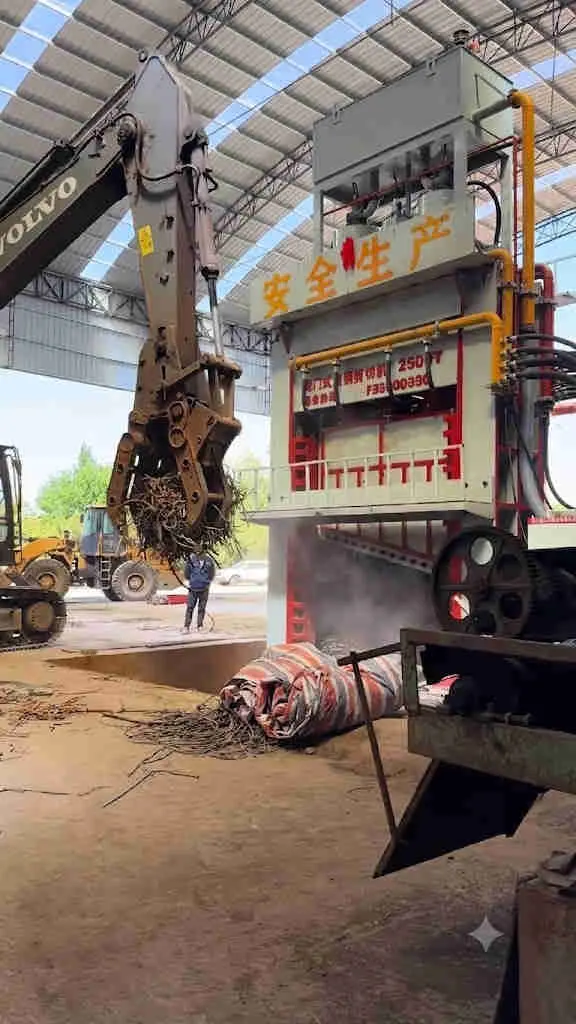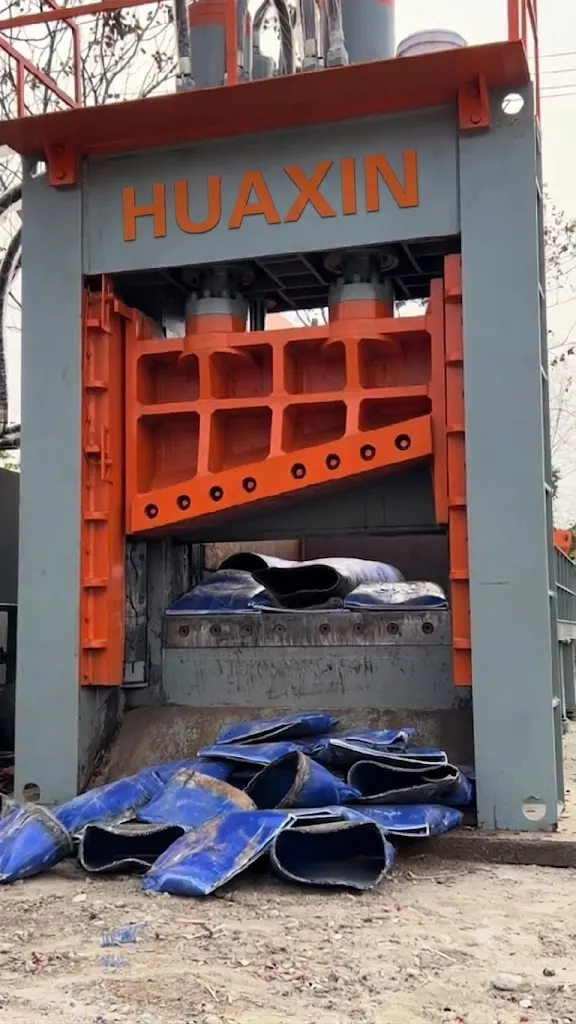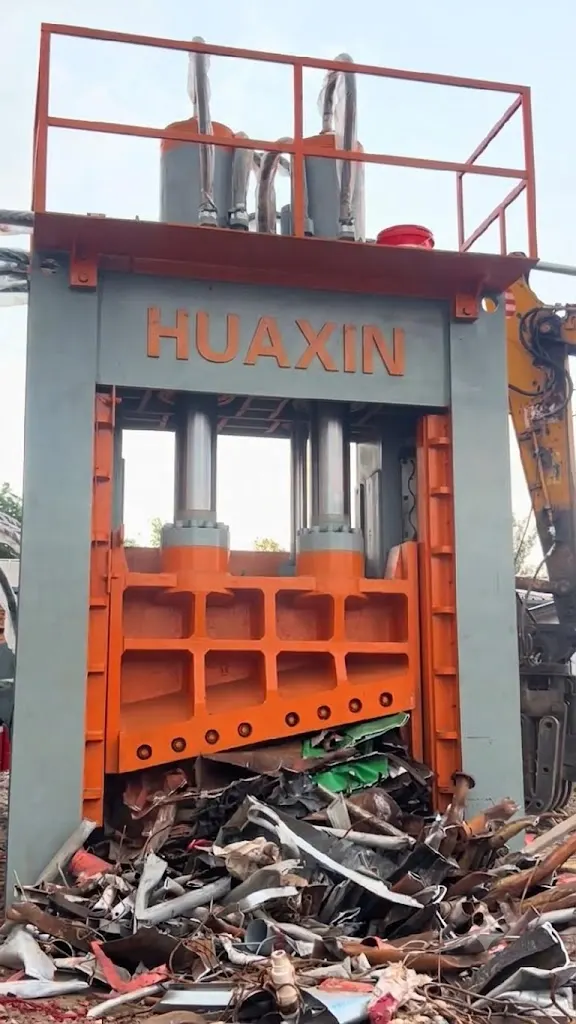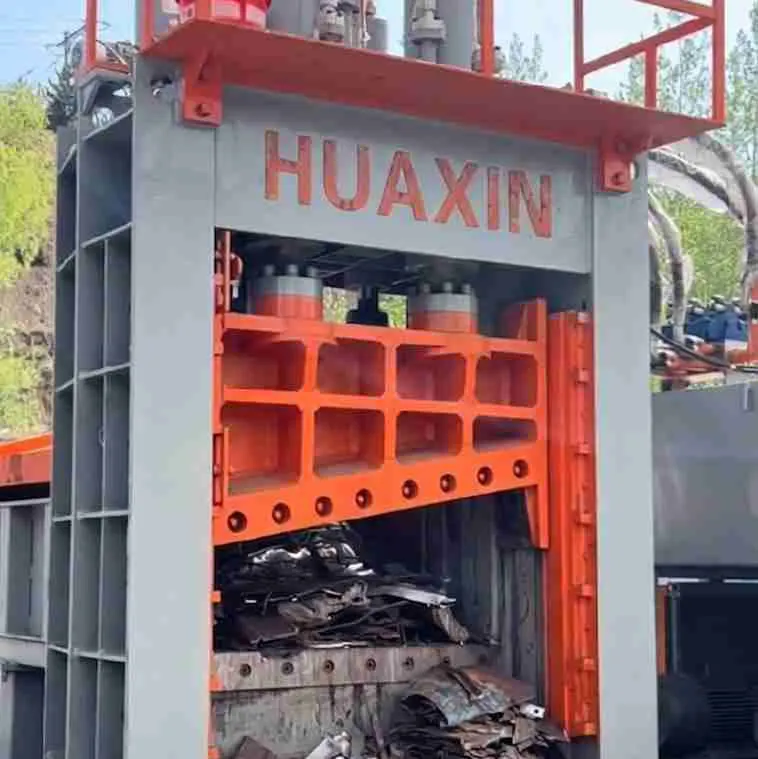
In heavy scrap metal densification and furnace feedstock logistics, deploying a high-efficiency hydraulic scrap metal baler directly governs cycle speed, shipping container payload, and melting economics. For recycling yards operating the Y81F-200 Scrap Metal Baler Machine manufactured by Huaxin Co., Ltd., optimizing compression kinematics, hydraulic pressure staging, and chamber wear protection is essential to producing tight, high-density dealer bundles that command premium mill pricing.
Kinematic Principles: How Each Discharge System Works
Choosing the correct bale discharge kinematic system is one of the most consequential decisions when designing a high-throughput scrap metal processing facility. While press tonnage and chamber dimensions dictate the maximum thickness of scrap steel, aluminum extrusions, or copper wire that a baler can crush, the discharge mechanism governs cycle time, layout footprint, and how seamlessly the machine integrates with downstream sorting conveyors, magnetic cranes, and container loading ramps.
At Huaxin Co., Ltd., scrap yard operators frequently consult our engineering team regarding the mechanical differences and operational trade-offs between our three primary baler configurations: flap turn-out (Y81F series), horizontal side-push out (Y81K series), and forward-out / front-eject designs (Y81Q series). Each mechanism introduces distinct hydraulic valving, foundation requirements, and material-handling kinematics that directly influence daily throughput and operating costs.
Technical Parameter Comparison Across Discharge Formats
| Engineering Parameter | Flap Turn-Out (Y81F) | Horizontal Side-Push (Y81K) | Forward-Out / Front-Door (Y81Q) |
|---|---|---|---|
| Standard Tonnage Range | 125 T to 315 T (1,225 kN – 3,089 kN) | 250 T to 2,000 T (2,450 kN – 19,613 kN) | 100 T to 250 T (980 kN – 2,450 kN) |
| Bale Ejection Time | 12–16 seconds | 6–9 seconds (Rapid Translation) | 10–14 seconds |
| Total Dry Cycle Time | 65–90 seconds | 45–60 seconds | 70–95 seconds |
| Discharge Orientation | Lateral pivot flip (85°–90° tumble) | Direct horizontal inline push | Straight forward push through front gate |
| Conveyor Line Compatibility | Moderate (requires drop baffle) | Exceptional (direct roller alignment) | Good (linear outfeed track) |
| Overhead Crane Clearance | 100% open top when lid retracts | 100% open top when lid retracts | 100% open top when lid retracts |
Upstream Line Integration: Pairing with Shredders & Shears
System Pairing for 20% to 30% Throughput Gains: Operating your baler in combination with an upstream dual-shaft scrap metal shredder pre-sizes voluminous bulky materials into uniform strips, while pre-cutting long structural scrap with a hydraulic scrap metal shear increases baler chamber packing efficiency and boosts total line throughput by 20% to 30%.
For fine casting scrap or motor stator fragments, integrating a downstream scrap metal crusher further optimizes furnace charge density and paint delamination.
Cycle Time Synchronization and Hydraulic Safety Interlocks
The primary advantage of the horizontal side-push out mechanism (Y81K) is rapid cycle execution. Because the ejection stroke is an inline horizontal translation, the exit door opens concurrently as the main cylinder completes its pressure dwell. The side ram pushes the bale onto an outfeed conveyor in under 8 seconds, retracts immediately, and the chamber lid begins opening while the bale is already rolling toward the weighing station.
Huaxin balers integrate dual-channel inductive proximity sensors paired with Siemens S7-1200 PLCs. Hydraulic pilot check valves prevent pressure accumulation in the ejection circuit until the optical gate confirmation signal is verified, eliminating cylinder rod buckling risks.
Ready to configure your processing line or request factory-direct FOB/CIF pricing? Review full technical specifications on our Y81F-200 Scrap Metal Baler Machine product page, explore our complete hydraulic scrap metal baler machinery catalog, or contact our technical sales engineering team with your scrap material sample specifications and daily tonnage targets.