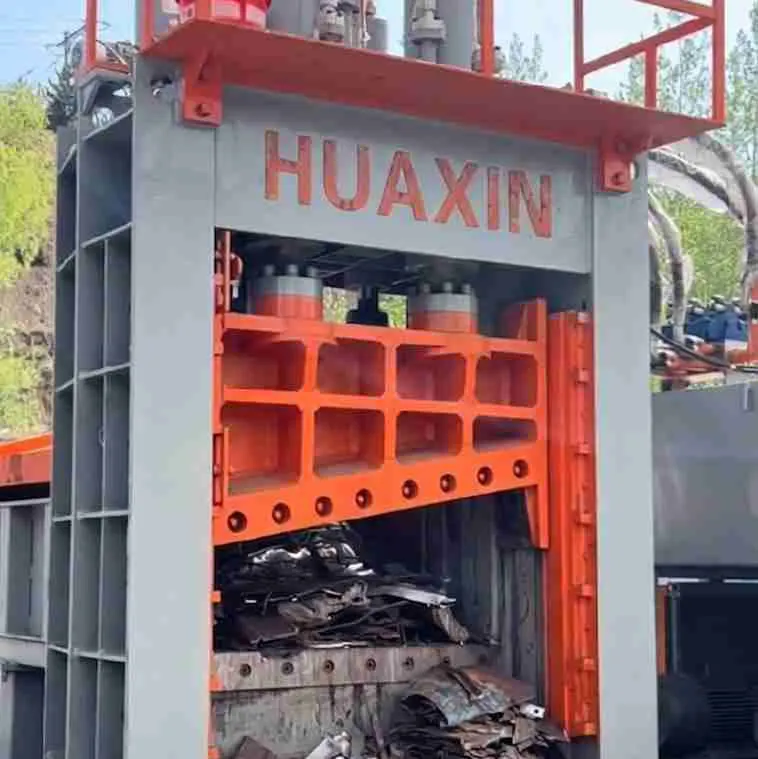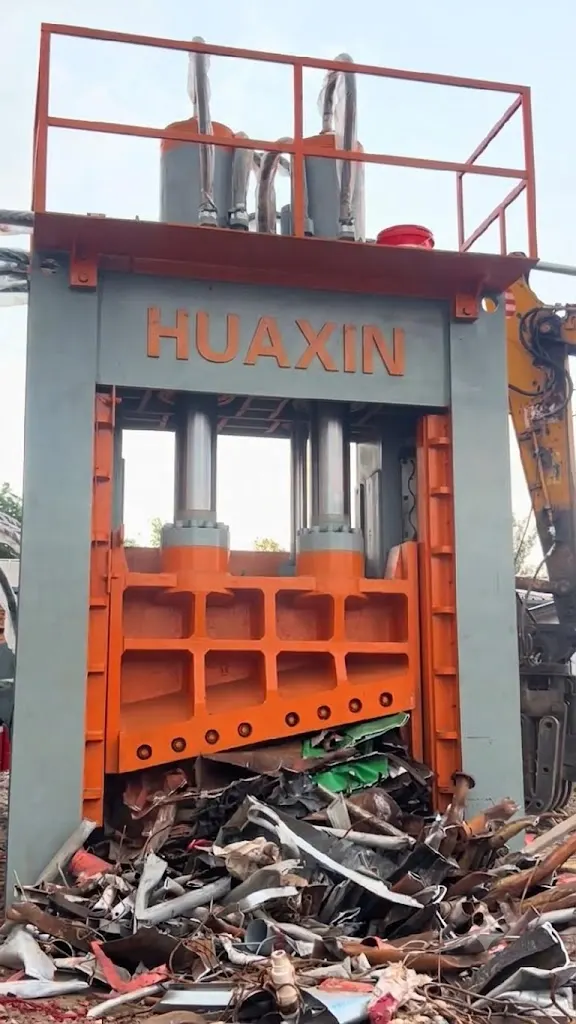
At 100 mm, plate stops being a material the machine handles and becomes the number that decides which machine you buy. Cutting force climbs steeply as plate gets thicker. A 1000-ton machine is rated for exactly 100 mm continuous, so weekly 100 mm plate runs it at its limit. A 1250 ton scrap metal shear, rated for 120 mm continuous, cuts the same plate with headroom to spare. This article covers what 100 mm plate demands from force, blade, frame and hydraulics, and how to check the fit against your own material. Across our industrial scrap metal shear installations, material preparation and hydraulic maintenance drive long-term profitability.
What 100 mm plate does to the force
Cutting force rises with thickness, and on heavy plate the material’s resistance grows faster than the plate looks on paper. A 630-ton machine rated for 60 mm continuous works far harder at 80 mm. At 100 mm it is out of its depth. Each class in the range has one continuous rating, and the step from one to the next is where the purchase gets decided.
| Class | Continuous plate | Output |
|---|---|---|
| Q91-1000 | 100 mm | 100–120 t/day |
| Q91-1250 | 120 mm | 160–200 t/day |
| Q91-1600 | 150 mm | 200–240 t/day |
Read the table by the weekly plate, not the record piece. Weekly 100 mm plate sits at the very top of the 1000-ton class and comfortably inside the 1250-ton class. Routine plate past 120 mm belongs on the 1600-ton class.
Headroom is the point. A machine working at its limit on 100 mm plate stretches its cycle, shortens its blade interval and runs its hydraulics hot. All three show up in the tonnage before they show up as a fault. The 1250-ton rating leaves room for the heavy tail of a normal month, which is what continuous duty actually means. The force rule covers the headroom logic.
All nine classes, from 200 to 2,000 tons, are in our gantry shear range.
What the 1250 ton gantry shear frame has to carry
Thick plate puts the highest loads of any feed through the frame. At 100 mm the frame must absorb up to 12,500 kN of cutting force without flexing. Flex is what makes the cut wander and wears the blade unevenly. A frame specified for lighter duty will still cut thick plate, but it flexes, and you see it as a drifting cut line and a shorter blade interval.
That is why frame specification is part of what the class buys. On thick plate, the headroom from the force rule lives in the frame as much as in the cylinders.
Hydraulic load on thick plate
Thick plate runs the hydraulics at sustained high pressure, shift after shift. The 1250-ton class uses multi-pump groups of 4×45 to 6×45 kW, and the cooling package, pump sizing and oil specification are all quoted against your plate duty. A system that copes with light feed for a shift can run hot on 100 mm plate. Heat shortens the life of seals, valves and hoses.
Oil temperature is the signature to watch. A machine that climbs in temperature on routine thick plate is working at the edge of its hydraulic specification. The cycle time guide explains what temperature and a stretching 20–35 second cycle are telling you. Ask to see the cooling package as its own line in the quotation.
What the blade needs on thick plate
Thick plate needs a tough blade more than a hard one. A hard edge can chip under the shock of a 100 mm cut, and one chip takes the whole set out of service. A tough edge dulls gradually and rotates on schedule, which a thick plate operation can plan around. Our four-edge reversible blades come in H13, M6V, X45 or D2 tool steel. Grade and edge geometry are quoted against the plate you actually cut.
The blade steel guide covers the choice, and the maintenance guide covers rotation. On 100 mm plate the rotation log matters more than on lighter feed. Wear arrives faster, and a missed rotation costs a chipped set rather than a dull edge.
Why the duty declaration is the build
The duty declaration is the specification the whole build keys off. A machine quoted for two shifts of thick plate has a different frame, cooling package and blade specification than one quoted for light structural work. None of those differences show on a price sheet. We write the declaration into the quotation as the build basis, and your engineers should check that line before the deposit.
Three lines matter most for thick plate: frame, cooling and blade grade, each quoted against your declared plate thickness and shift pattern. If one is missing, the build has not been specified for the duty. The line-by-line quotation guide covers what each line should say. The red-flag guide lists what their absence looks like.
How to check the fit against your plate
The check is a measurement, and it takes an afternoon. Find the thickest plate that arrives weekly, measure it, and count how often pieces past each threshold arrive. Weekly plate between 100 and 120 mm is a 1250-ton conversation. If 100 mm turns up only a few times a month and the rest is well below it, the 1000-ton class can cover it. Plate that thick only a few times a year is a blade note rather than a class decision.
Frequency decides because the class follows the weekly piece, not the record piece. A yard that sizes for the record plate pays for force it uses once a month. A yard that sizes for the average runs at its limit on the weekly piece. The HMS 1 and 2 guide applies the same frequency logic to a related material.
Discharge for heavy sections
Thick plate leaves the machine as heavy sections, and the discharge has to take them at the box’s rate. A destination sized for light scrap banks up under 100 mm plate, and the machine waits with a full 7 to 8 m box while handling catches up. Size the discharge for the heaviest routine piece, and size the buffer against the minutes a truck takes to return.
The 20 tons per hour guide covers the flow arithmetic, and the box guide covers the geometry that admits the plate whole.
Plate condition and contamination
Thick plate rarely arrives clean. Plate from demolition carries paint, rust and sometimes concrete, all of which hit the blade before the steel does. Plate from a fabrication shop arrives as offcuts with the odd weld bead or attachment, and the weld is harder than the plate around it. A sorting gate strips what it can. On thick plate the gate protects the blade and recovers value in the same step.
Skip the gate and blade life drops with no cutting return. The wear bill then arrives monthly rather than seasonally.
What the first heavy month tells you
The first month on thick plate is a verification exercise, and the log proves the build. By week four, three things should hold. Cycle time stays inside 20–35 seconds on routine plate. Oil temperature stays in range through the shift. The blade interval holds against the tonnage.
If all three hold, the build was specified correctly and the duty declaration matched reality. If the cycle stretches while temperature climbs, the hydraulics are at the edge of their specification. If the blade interval collapses without a material change, the plate is harder than the specification assumed. If all three look healthy but tonnage misses, look at the feed before the machine.
Thick Plate FAQ: 100 mm on a 1250 Ton Shear
What plate can a 1250 ton shear cut?
Mild steel plate up to 120 mm as continuous duty. That puts 100 mm plate inside the working range with headroom, which is what continuous thick plate cutting requires.
Can a 1000 ton shear cut 100 mm plate?
Yes, 100 mm is its continuous rating. If 100 mm plate is your weekly diet rather than an occasional piece, the 1250-ton class gives the margin that keeps cycle time, oil temperature and blade life stable.
Is thick plate duty a different build from structural duty?
Same force class, different build. Frame, cooling and blade specification follow the declared duty. A machine quoted for structural work will cut thick plate, but it tends to flex, run hot and chip blades.
What do you need to recommend the right class?
The thickest routine plate, how often pieces past 100 mm arrive, your shift pattern and your daily tonnage. You will have a written quotation within 48 hours, restated against the duty you declared.
Sizing cutting force, blade length and hydraulic power for thick plate? Compare full machine parameters on our 1250 Ton Scrap Metal Shear page or review our gantry and NS scrap shear hub. You can also contact HUAXIN’s Tangshan engineering team with feedstock photos and your target daily tonnage.