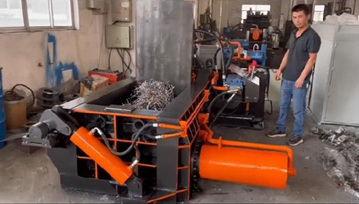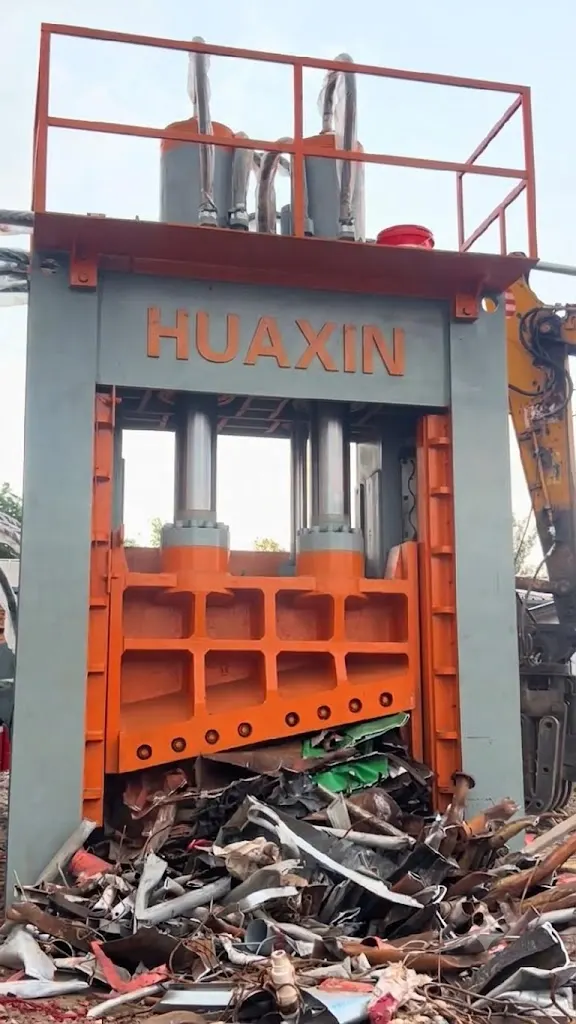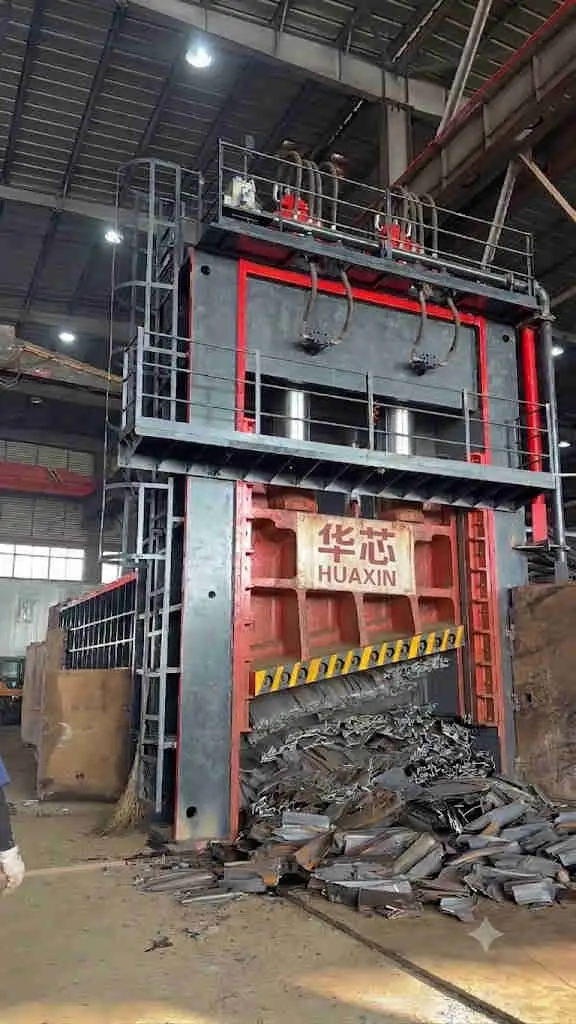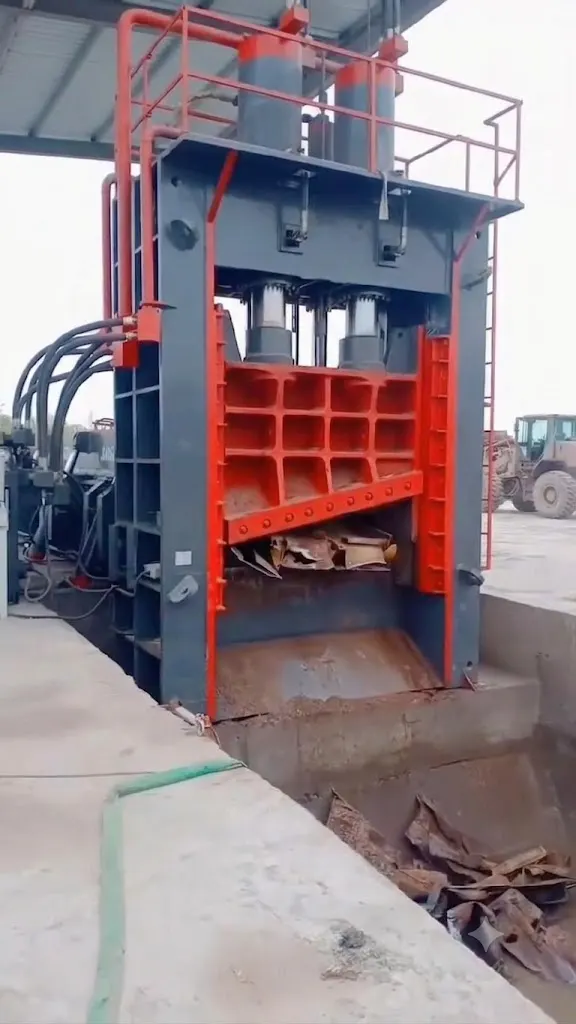
When a scrap processing yard upgrades into heavy ferrous baling, model selection typically narrows to three industrial classes: the 315 Ton Scrap Metal Baler (Y81K-315), the 400 Ton Scrap Metal Baler (Y81K-400), and the 500 Ton Heavy-Duty Scrap Metal Baler (Y81K-500). Within our complete hydraulic scrap metal baler lineup at Huaxin Co., Ltd. (HUAXIN), these three side push-out (Y81K) presses share a two- to three-shift structural duty rating but differ in chamber volume, hydraulic pump kW, and target bale cross-section.
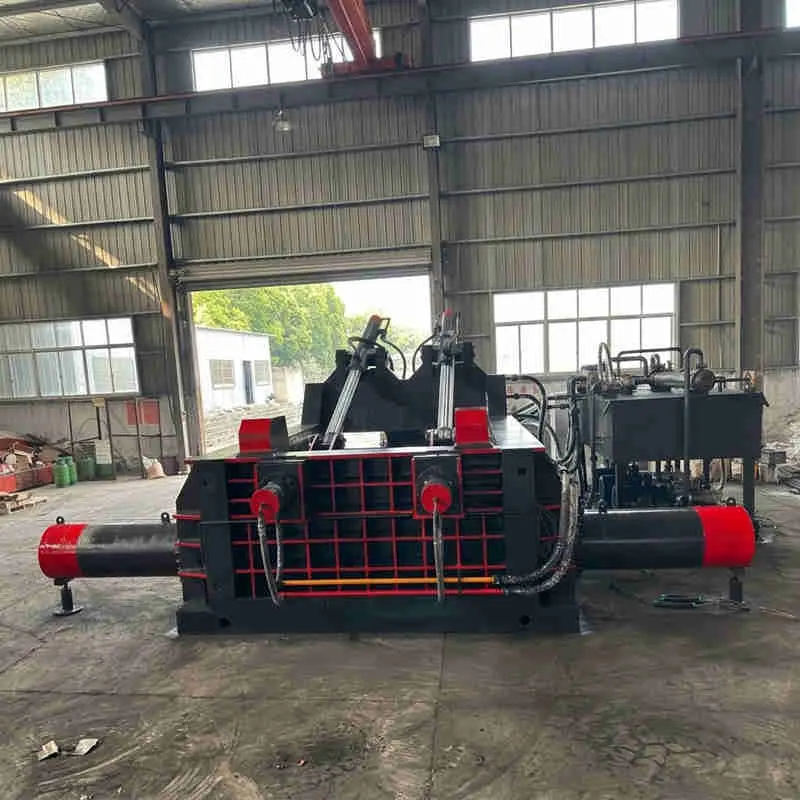
The 400 ton machine sits in the middle, which makes it the natural place to start the comparison. Our Y81K-400 400 Ton Scrap Metal Baler is described on its page as being for steel mills, large scrap yards and export processors. This article compares it with the 315 Ton Hydraulic Scrap Metal Baler (Y81K-315) and the 500 Ton Heavy-Duty Scrap Metal Baler (Y81K-500).
Looking for Full Machine Specifications & Factory-Direct Pricing?
Model Y81K-400: 400T (or 400×2T) Pressing Force | 3500×3000×1300mm & 4000×3000×1300mm Chambers | 700×700mm (600–1,000 kg) Furnace-Ready Bales | 110–135 kW Drive
View 400 Ton Hydraulic Scrap Metal Baler (Y81K-400) Full Specs, Videos & Request a Quote → | Browse All Hydraulic Scrap Metal Baler Machines
The three machines side by side
| Item | Y81K-315 | Y81K-400 | Y81K-500 |
|---|---|---|---|
| Main cylinder force | 315 ton | 400 ton | 500×2 ton |
| Motor | 2×45 kW | 3×45 kW or 2×55 kW | 2×55 kW |
| Bale sizes (mm) | 600×600, 700×700 | 700×700 | 500×500 to 800×800 |
| Chamber options | 2 | 2 (single or twin cylinder) | 5 configurations |
| Duty rating | Two to three shifts | Two to three shifts | Two to three shifts |
| Discharge | Gantry-type | Gantry-type | Gantry-type |
The duty rating is the same across all three, which tells you something. The step between them is not about running longer hours. It is about chamber capacity, bale size and the volume the plant has to move.
What the 400T specifically offers
The Y81K-400 has two chamber options.
| Chamber (mm) | Cylinder | Bale size | Bale weight (kg) |
|---|---|---|---|
| 3500×3000×1300 | Single main cylinder | 700×700 | 650 to 950 |
| 4000×3000×1300 | Twin cylinder (400×2) | 700×700 | 600 to 1000 |
The page suggests the first for stacked yard storage and the second for export shipping. Its power pack is either 3×45 kW or 2×55 kW, which the page says is between 110 and 135 kW depending on configuration.
The materials listed are heavy HMS, steel turnings and mixed ferrous scrap, with steel mills, large scrap yards and export processors named as typical users. A few notes from the page deserve attention. Charge depth should match the chamber, not the grab, because overcharging to fill a grab faster lengthens compression time and shortens bale quality. Semi-automatic control is described as the usual specification for a working yard, since it automates the sequence and leaves the charge to the operator.
Reasons to stay at 315T
The smaller machine is not a lesser one. The page describes it as the heavy ferrous entry, and for many plants it is enough. Stay at 315 tons if:
- Your bales are meeting your buyer’s specification.
- Trucks, not the chamber, are the thing you wait for.
- Your handling equipment is sized for bales in the 550 to 990 kg range.
- You prefer a lower installed power. The Y81K-315 totals 90 kW.
Our article on the Y81K-315 sets out what that machine does well.
Reasons to choose the 400T
The Y81K-400 page says its sweet spot is larger yards and mills stepping up from the 315 ton class. A few situations point that way.
- Queues at the chamber. If your bales are waiting to be made, rather than waiting to be shipped, you need more capacity.
- A single bale format. The 400T offers 700×700 bales in both chamber options. If that is the size your buyer wants, you avoid the choice of sizes.
- Export bales in larger chambers. The twin-cylinder version with the longer chamber is the one the page links to export shipping.
The page also says that repeat-order plants usually keep the same chamber configuration across the fleet, so bales are interchangeable on the truck. If you are adding to an existing line, send the bale specification you already use.
Reasons to move on to the 500T
The Y81K-500 page describes steel mills and large regional recyclers entering the gantry class. It lists electric steel mills, large scrap yards and furnace-direct charging as applications. It offers five chamber configurations and bales from 500×500 to 800×800, with weights up to 1,100 kg.
The page for the 400T says that if heavy HMS, steel turnings and mixed ferrous scrap starts arriving in bale-sized volume rather than bag-sized volume, the Y81K-500 is the next conversation. The page for the 500T makes a counterpoint: it is not a compromise tier, and the Y81K-400 saves money on duty that does not need that much force.
Two reasons stand out for stepping up. The first is bale size variety. If your buyers each want different dimensions, the wider choice of chambers is worth having. The second is furnace-direct charging, where the page suggests the 3500×3000×1400 chamber with 800×800 bales. Check your furnace charging box dimensions before assuming that size will fit.
Where the real differences show up
On paper, the three machines differ by a hundred tons here and a few kilowatts there. In daily life, the differences appear in other places.
- Foundation and site. Larger machines need more planning. All three quotations include a drawing package, and the page for the 500T notes that sending it to your civil contractor early removes the most common commissioning delay.
- Handling. A tonne-class bale needs a crane or a heavy forklift. Check capacity at the working radius.
- Power. Compare 90 kW, up to 135 kW, and 110 kW totals against your supply, and have an electrician confirm.
- Wire. The 500T page notes that export containers need wire that holds through handling, and we specify the gauge at order. It is a good reminder for any heavy bale.
- Spares. Wire guides and tying hooks wear faster than buyers expect, according to the 400T page, because they see every bale. Order a spare set with the machine.
A way to decide
Start with three numbers: the tons of heavy ferrous scrap you bale each day, the bale dimensions your best buyer wants, and the point where your current process queues. Put those next to the three tables above.
- If one chamber of the 315T meets your buyer and your volume, stop there.
- If the queue forms at the chamber and your buyer wants a 700×700 bale, the 400T is the likely match.
- If you need more bale size choices, or furnace-direct charging at larger dimensions, look at the 500T.
This is a guide, not a rule. Your buyer’s specification can override all of it.
Upstream and downstream
The 400T page includes a limit. It is a chamber-fill machine, not a shear-baler, and oversized pieces that will not enter the feed opening must be cut upstream. Forcing them jams the chamber and voids warranty on the damaged parts. A shear before the baler solves this, and a shredder serves mixed light intake. See also our baler buying guide.
Required Yard Parameters for 400 Ton Scrap Metal Baler (Y81K-400)
Give us your material and bulk density, your buyer’s bale specification, your daily tonnage, your handling equipment, your power supply and your destination. The page invites you to send a sample or analysis if your feed falls outside the standard list.
Send everything through our contact page. We will quote against your material, and if a smaller or larger machine fits your numbers better, we will say so.
Planning a yard upgrade or need site-specific foundation drawings? Compare full machine parameters on our 400 Ton Scrap Metal Baler (Y81K-400) page, review our scrap metal baler engineering hub, or contact HUAXIN’s Tangshan engineering team with your feedstock photos and target daily tonnage.