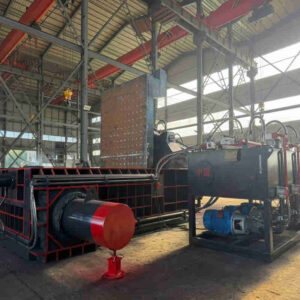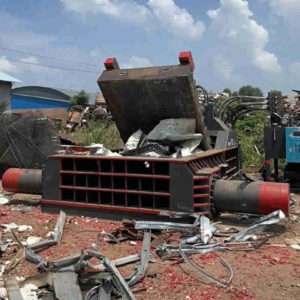
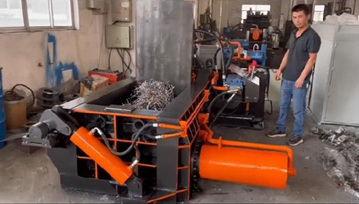
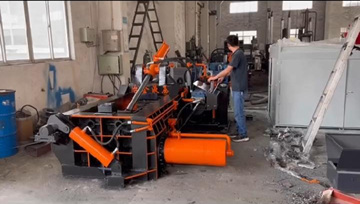
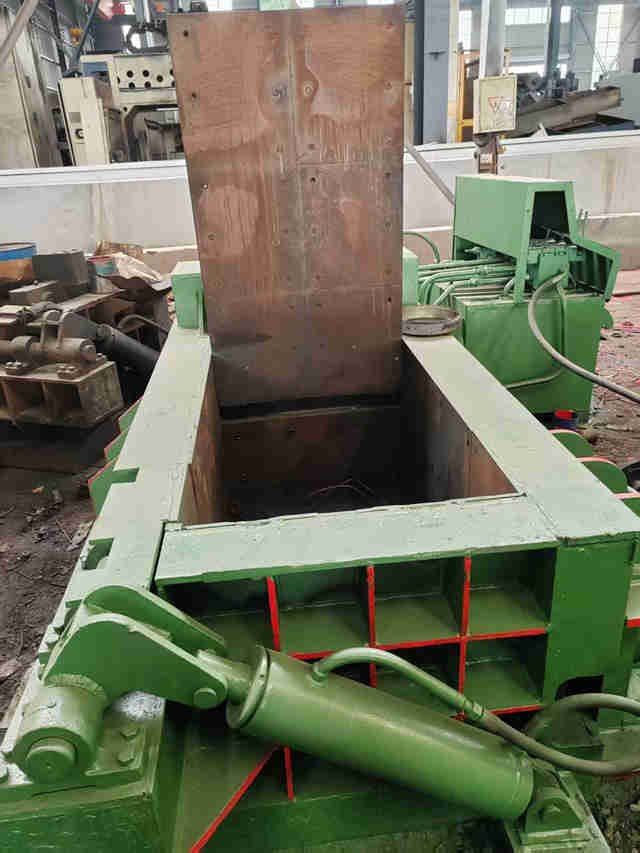
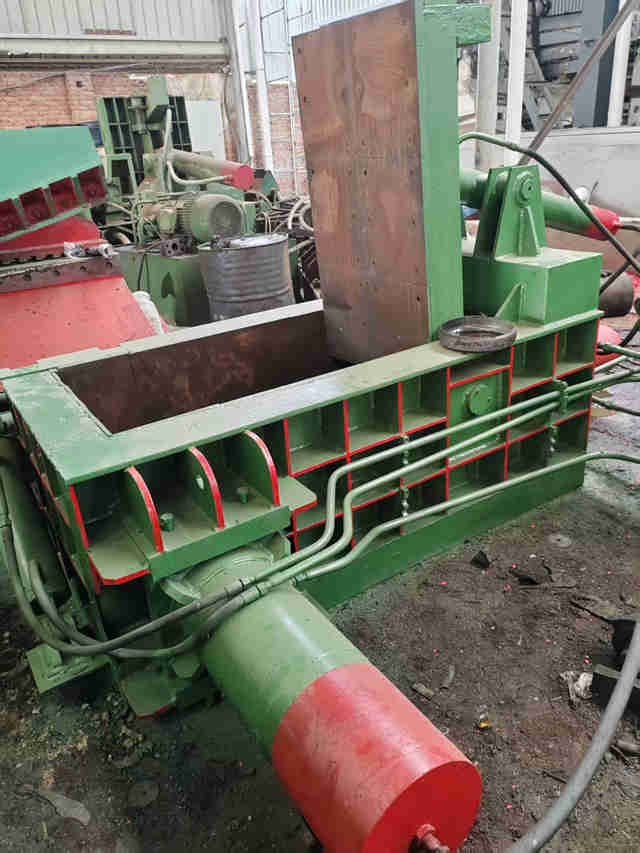
125 Ton Scrap Metal Baler Machine | Y81-125 Hydraulic Baling Press
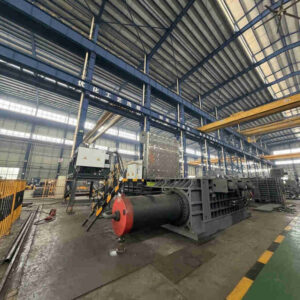
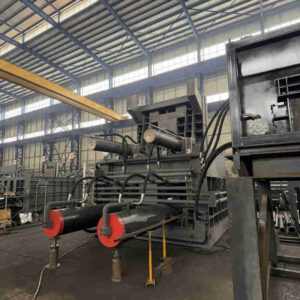
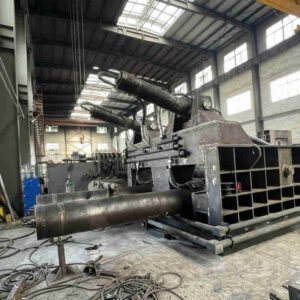
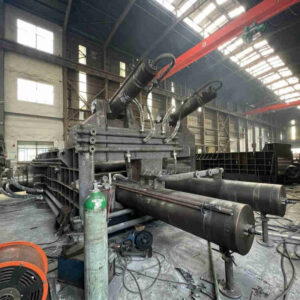
The Y81-125 125 Ton Scrap Metal Baler is a factory-direct hydraulic metal recycling press designed for small-to-mid-scale scrap yards and recycling stations. It efficiently bales UBC aluminum cans, copper wire, light mixed scrap, thin sheet steel and more into compact blocks of 200×200-300×300 mm (12″×12″) at 0.8-1 ton per hour (8-10 t/day).
Powered by a 15kW motor at 25MPa, the Y81-125 is available in manual, semi-automatic, and PLC automatic control modes, with an optional diesel engine for off-grid sites. No foundation is required, making installation fast and flexible.
Available in turn-out (side tilt) and push-out discharge configurations. CE & ISO certified. Get a quote within 48 hours.
Why Choose Huaxin
- Real Factory, 30+ Years Manufacturing Experience
- 24/7 Technical Support
- Customized Solutions Available
- Installation & Training Support
Description
125 Ton Hydraulic Scrap Metal Baler for Sale – Key Benefits
The Y81-125 (125 ton scrap metal baler) is a 125 ton hydraulic scrap metal baler built for recycling businesses that want real pressing force without a construction project. There is no pit to dig and no anchor bolts to cast. You set it on a flat floor, wire it up, and bale.
It suits startup yards and established stations alike, because the build is the same in both cases: a welded steel frame, a proven hydraulic system, and a control panel you can specify three ways. What changes between buyers is the material, and this machine covers the light end of the scrap spectrum properly.
Key figures at a glance:
- 125-ton maximum pressing force
- Output: 0.8 to 1 t/h (8 to 10 t/day)
- Bale size: 200×200 mm (8″×8″) to 300×300 mm (12″×12″), customizable
- Motor: 15 kW | System pressure: 25 MPa
- Manual, semi-automatic or PLC automatic control
- Turn-out or push-out discharge
- No foundation needed
- Optional diesel engine for off-grid sites
- CE certified | ISO compliant
Why Small Yards Pick the Y81-125 (125 ton scrap metal baler)
The footprint is compact and the force is not. That combination is the whole point of this class.
Most of our Y81-125 buyers run collection stations, junkyards or small recycling plants. They choose it for three reasons. It bales the material they actually receive. It does not need a civil works budget. And one operator can run it, which on a two-person crew is the difference between a machine that pays and a machine that sits.
The maintenance side is simple too. Seals, hoses and filters are stock items, and the hydraulic circuit is the same one we have built for years. When something wears, you replace it in an afternoon.
Applications and Materials – UBC Cans, Copper Wire, Light Scrap
The Y81-125 handles non-ferrous and light ferrous scrap. The list below covers what most buyers send through it. If your material is not here, ask us before you order. We will tell you straight whether this class fits or whether you need something else.
UBC Aluminum Can Baler Press
Baling used beverage cans is the most common job for this machine. It compresses loose cans into dense, stackable blocks that smelters will pay for and trucks will carry cheaply. The small bale size, down to 200×200 mm (8″×8″), matters here: the blocks stack tight in storage and ship without wasting air.
Freight is where UBC baling earns its money. Loose cans cost several times more per ton to move than baled ones, so the machine usually pays for itself on transport alone.
Copper Wire Hydraulic Baler Press
For copper recyclers, the Y81-125 turns loose wire into compact blocks. Baled wire weighs accurately, stores cleanly and sells better than the same wire in a heap. The 25 MPa system pressure handles insulated and bare wire, including the tangled bundles that defeat weaker machines.
Light Mixed Scrap, Thin Sheet Steel and Stainless Trimmings
This machine takes a broad mix of light material:
- Thin sheet steel offcuts, stampings and press scrap
- Stainless trimmings from fabrication shops and kitchen equipment work
- Aluminum extrusion offcuts from window and door frame production
- Assorted light ferrous pieces and low-density steel
Yards that process mixed loads like this one because switching materials needs no reconfiguration. Feed aluminum in the morning and stainless in the afternoon without touching the setup.
Aluminum Chips, Steel Turnings and Swarf
Dry chips and turnings can be baled here as a secondary job. The condition matters: if your chips come off the machine oily, tell us first. Oily swarf needs a briquetting press with oil separation, and that is a different machine. We would rather say so at quotation than sell you the wrong one.
Key Specifications – 15 kW, 25 MPa, 200×200 to 300×300 mm (12″×12″) Bale
These are the standard figures. Custom builds change some of them, so confirm anything unusual with our engineers at inquiry.
Bale Size Options
The standard bale cross-section is 300×300 mm (12″×12″). You can order the chamber configured down to 200×200 mm (8″×8″) if your buyer or your storage needs smaller blocks. Non-standard dimensions are possible during manufacture, so raise them before production starts.
| Parameter | Standard | Customizable |
|---|---|---|
| Bale cross-section | 300×300 mm (12″×12″) | 200×200 to 300×300 mm (12″×12″) |
| Bale length | Variable | Set by feed volume |
Output Capacity
Throughput is 0.8 to 1 ton per hour with steady feed, which comes to 8 to 10 tons per shift on a single eight-hour shift. What moves that number: material density, how continuously you feed, and how well the operator keeps the cycle tight.
If you are counting on 10+ t/day, talk to us about the feed arrangement. Conveyor feed holds output better than hand loading at that rate.
Bale Weight
A finished bale weighs 50 to 70 kg. One person can move it and a forklift can stack it. Aluminum bales land at the light end of that range, copper and steel sheet at the heavy end.
Electrical Options
The motor is rated at 15 kW and can be built for the supply you actually have:
| Voltage | Frequency | Common markets |
|---|---|---|
| 380 V | 50 Hz | China, EU, most of Asia |
| 400 V | 50 Hz | UK, Germany, wider EU |
| 415 V | 50 Hz | Australia, Southeast Asia |
| 460 V | 60 Hz | USA, Canada |
| 220 V | 60 Hz | Latin America (on request) |
Tell us your local voltage and frequency at order. We build to your grid, not the other way around.
Discharge Types – Turn-out vs Push-out
Two discharge configurations are available. The choice is a site question, not a performance question.
Turn-out (Side Tilt)
The chamber tilts sideways after pressing and the bale drops or slides out to the side. Pick this one if you have side clearance, collect bales on a pallet or the floor, and want the simplest mechanism to maintain.
Push-out
A hydraulic ram pushes the finished bale forward out of the chamber. Pick this one if space is tight at the sides, or if you are feeding bales straight onto a conveyor or collection platform and want that step automated.
Installation Without a Foundation
Either way, the machine needs a flat, load-bearing concrete floor. No pit, no civil works, no anchor bolts. Site prep is a morning’s work, not a month’s.
Control and Power Options
PLC Automatic
The PLC configuration runs the cycle from loading to discharge without an operator at the panel. Siemens or Mitsubishi controllers are available on request. The panel shows system pressure, cycle count and fault status. This mode suits plants feeding a conveyor or running light supervision.
Semi-Automatic and Manual
Semi-automatic: the operator starts each cycle and the machine finishes it. Manual: every hydraulic function is under operator control, which suits variable feed and mixed material better than automation does.
Both modes live on the same frame. Specify the control mode at order.
Diesel Engine Option
An engine-driven hydraulic power unit makes the Y81-125 fully operational off-grid. Rural collection points, mining and construction sites, and temporary setups are the usual buyers. Engine brand and size get picked against the fuel available in your region.
Customization and Certification
Bale Size, Chamber and Force Distribution
Chamber dimensions can be adjusted to your target bale size. The feed opening can be lengthened or shortened for your material. Force distribution can be modified for fragile or irregular feed. Submit customization requests before production; our engineers will confirm feasibility and what it does to lead time.
CE and ISO
The Y81-125 is available CE certified for European and international buyers, and ISO certified for buyers who need quality-system documentation. State your requirement at quotation.
Shipping, Installation and Support
Every machine is built to order. Standard lead time is 15 to 25 working days from order confirmation, depending on configuration and the production schedule. The machine crates into a standard 20 ft or 40 ft container. Export packing is in the quoted price.
Installation
A flat concrete floor and a power connection is the whole requirement. You get an installation manual and video guide with the machine. First-time buyers can add on-site commissioning support, travel costs applying. Most single-unit installs finish in one to two days.
Warranty and Spares
- Warranty: 12 months on main structural components, 6 months on hydraulic seals and wear parts
- Spare parts: seals, hoses and filters are stock items, dispatched fast
- Remote support: video-call troubleshooting during business hours, answers within 24 hours
The Rest of the Line
A baler densifies what a yard collects. It does not size anything. Section, tube and plate that has to be cut to length belongs in the scrap metal shear range, from entry alligator classes up to the gantry machines. Mixed light intake goes to a dual shaft scrap metal shredder instead. All three families come out of the same works, so you can start with a baler now and add capacity later against one specification and one spares base.
Starter Baler Field Guide: Matching Discharge Layout & Off-Grid Power in Small Yards
As the entry-level industrial press in the Y81 lineup, the Y81-125 125 ton scrap metal baler is engineered to turn loose UBC aluminum cans, copper wire, stainless trimmings, and light tin into stackable 200×200 to 300×300 mm (12″×12″) bricks on a standard concrete floor with zero pit excavation.
- Layout Tip — Turn-Out vs. Push-Out Clearance: Side turn-out (flip-out) discharge is the simplest, lowest-maintenance choice for 125T yards: leave a 1.5 m clear drop zone beside the press box with a steel skid plate or roller chute so a forklift or two-wheel hand truck can move finished bales directly to the pallet scale.
- Manual Valve vs. PLC Auto-Cycle: For non-ferrous yards hand-sorting copper and aluminum into the box, manual lever valves give the operator tactile control over lid closing; for high-volume UBC can or stamping offcut baling, specify Siemens PLC single-button automatic cycling.
FAQ – Y81-125 125 Ton Scrap Metal Baler
What materials can a 125 ton scrap metal baler process?
UBC aluminum cans, copper wire, light mixed scrap, thin sheet steel, stainless trimmings and aluminum extrusion offcuts. Aluminum chips and steel turnings work too when they are dry and low in oil. Ask us if you are unsure about a specific material.
What is the standard bale size, and what are the options?
The standard cross-section is 300×300 mm (12″×12″). The chamber can be configured from 200×200 mm (8″×8″) to 300×300 mm (12″×12″) at order. Dimensions outside that range are worth a conversation with our engineering team.
How many tons per hour can the Y81-125 produce?
0.8 to 1 ton per hour with continuous feed, or 8 to 10 tons per eight-hour shift. Material type, bulk density and feed continuity all move the number.
What is the Y81-125 scrap metal baler price?
It depends on configuration: control mode, discharge type, power source, bale size and certifications. We sell factory-direct, so there is no trader margin in the number. Send your requirements and you get an itemized quotation within 48 hours.
Turn-out or push-out discharge?
Turn-out if you have side clearance and want the simpler mechanism. Push-out if side space is tight or you are feeding a conveyor. Our team can look at your site layout and recommend one.
Can I choose PLC, semi-automatic or manual control?
Yes, all three. PLC for higher volume or light supervision. Semi-automatic when you want automation with an operator watching. Manual for variable or irregular feed. Say which at inquiry.
Is a diesel engine option available?
Yes. An engine-driven hydraulic power unit runs the machine without grid power. Engine brand and specification follow your region’s fuel supply.
How do I get a quote within 48 hours?
Use the inquiry form on this page. Include your target material, required output, preferred control mode, discharge type, local voltage and frequency, and any certification requirement. You will have a full quotation within 48 business hours.
Pre-Shipment Load Testing, Site Integration & Engineering Library (Y81-125)
Manufactured in-house at HUAXIN’s 12,000 m² Tangshan facility since 1989, each Y81-125 combines heavy-plate fabrication, Hardox wear protection, and 72-hour factory load verification. Draws just 15 kW on standard 3-phase power (or optional diesel engine), requires zero concrete foundation bolts, and produces 200×200 to 300×300 mm (12″×12″) bales at 0.8-1.2 TPH.
Key Industrial Configurations: Tailored for recycling plants sourcing a 125 ton scrap metal baler for sale, Y81-125 small UBC aluminum can and copper wire baling press, 15 kW foundation-free hydraulic scrap baler, 200×200 to 300x300mm (12″x12″) metal baler with certified civil foundation layouts and on-site commissioning options.
Related Technical & Line-Planning Guides
- How Bale Discharge Direction Changes Your Yard Layout
- Full category index: Hydraulic Scrap Metal Baler Machines (Y81 Series)
Request a Y81-125 Factory Quotation & 2D Foundation Layout: Email Huaxin Co., Ltd. Sales Manager Leon Li at [email protected], message WhatsApp +86 159 0036 3543, or submit your feedstock details via our Contact Page to receive FOB/CIF pricing and 2D CAD drawings for the 125 Ton Turn-Out Scrap Metal Baler (Y81-125) (1,250 kN (125 Metric Tons), 15 kW (20 HP)) within 24 hours.
Get A Free Quote
Related products
-
 1000 Ton Scrap Metal Baler Machine | Y81K-1000 Hydraulic Baling Press
-
800 Ton Scrap Metal Baler Machine | Y81K-800 Hydraulic Baling Press
-
500 Ton Scrap Metal Baler Machine | Y81K-500 Heavy-Duty Baling Press
-
315 Ton Scrap Metal Baler Machine | Y81K-315 Hydraulic Baling Press